Blog

  • Deloitte Internship: A Fully Funded Opportunity for International Students in the USA

    Deloitte Internship: A Fully Funded Opportunity for International Students in the USA

    Deloitte Internship: A Fully Funded Opportunity for International Students in the USA

    The Deloitte Discovery Internship Program 2024 is now open for applications from international sophomore students. This fully funded internship will take place across multiple locations in the USA, offering participants a chance to work on client projects, and gain practical skills. The program includes national and local learning and networking events, and a three-day conference. Deloitte aims to support interns with dedicated counselors and advisors. The firm, a leading professional services provider headquartered in London, invites eager international students to apply and advance their careers in various industries.

    • Eligibility: Open to international sophomore students.Location: Multiple sites across the USA.

    Features

  • Australia Awards Scholarships: Opening Doors for Developing Country Scholars

    Australia Awards Scholarships: Opening Doors for Developing Country Scholars

    Australia Awards Scholarships: Opening Doors for Developing Country Scholars

    • Long-Term Development Initiative: Managed by Australia’s Department of Foreign Affairs and Trade, these scholarships are designed to foster international development.
    • Developmental Focus: The scholarships align with Australia’s bilateral and regional agreements, aiming to support the development needs of partner countries.
    • Indo-Pacific Region Priority: They are geared towards individuals from developing countries, especially those situated in the Indo-Pacific region, offering them the chance to pursue full-time undergraduate or postgraduate studies.
    • Academic Institutions:** Studies can be undertaken at Australian universities and Technical and Further Education (TAFE) institutions.
    • Building Future Leaders:** The program equips recipients with vital skills and knowledge to enact change and bolster development within their home countries.
    Scholarship Benefits Include:
    • Tuition and Training: Coverage of all tuition fees and any preparatory training.
    • Travel Expenses: A round-trip economy airfare to Australia via the most direct route.
    • Settlement Support: A one-time establishment allowance for accommodation, textbooks, and study materials.
    • Living Expenses:  A fortnightly contribution to living expenses at a rate set by the department
    • Academic Preparation:** An Introductory Academic Program (IAP) before formal studies begin, detailing life and education in Australia.
    • Health Coverage: Overseas Student Health Cover (OSHC) for the duration of the award.
    • English Language Training: Pre-course English (PCE) fees, if necessary, for training both within the country and in Australia.
    • Academic Support:  Possible supplementary academic support to aid in scholar success.
    • Fieldwork: For certain research programs, fieldwork expenses may be covered for one economy class airfare to the scholar’s home country or within Australia.

    *Award Requirements:**

    • Contract Agreement: Recipients must sign a contract with the Commonwealth of Australia, agreeing to the scholarship conditions.
    • Post-Study Obligation:** Scholars are required to leave Australia for at least two years after completing their scholarship. Non-compliance will result in a debt for the total cost of the scholarship.

    Application Guide: Application Process: For details on the application process for an Australia Awards Scholarship, please refer to the official guidelines. 

    This is a golden chance for eligible candidates to transform their vision into impact with the support of the Australia Awards Scholarships. Find out about more the application process and step into a world of possibilities! https://www.dfat.gov.au/people-to-people/australia-awards/australia-awards-scholarships
  • Integrating Information Communication Technology in Library Collection Development

    Integrating Information Communication Technology in Library Collection Development

    Lecture Notes: Collection Development and Information Communication Technology (ICT)
    Course: Master’s in Library and Information Science**
    Introduction to ICT in Collection Development
    This session explores the critical role of Information and Technology (ICT) in the realm of collection development. ICT’s impact is profound and far-reaching, revolutionizing numerous aspects of our daily lives, including how library operations are conducted. This technology has streamlined previously laborious, dull, and lengthy library tasks, making them more engaging, efficient, and swift. Today, we’ll eplore into how ICT aids in various facets of collection development, including community information gathering, policy formation, material selection, acquisition, weeding, evaluation, preservation, conservation, and resource management. This discussion aims to enhance your appreciation of ICT’s invaluable contributions to collection development.

    *Meaning and Application of ICT in Collection Development

    Defining ICT
    Information Technology (IT), a subset of ICT, involves using computers and other technologies for the acquisition, organization, storage, retrieval, and dissemination of information. IT encompasses both tangible hardware and intangible software components. Hardware refers to the physical electronic devices, while software consists of the programs and instructions that operate the hardware. Key hardware categories include input, output, processing, memory, storage, and telecommunication devices, each paired with corresponding software to facilitate their functions. Notable IT tools and services include computers, the internet, scanners, telecommunication devices like phones and fax machines, multimedia resources, and connectivity solutions such as LAN and WAN.
    Applying ICT to Collection Development
    ICT proves instrumental across all collection development activities. Let’s outline some specific applications:
    1. Community Analysis:** Using ICT tools like iPads, computers with internet access, telephones, and photocopiers can significantly aid in gathering community insights. Online forms can collect data, computers store the information, and iPads record interviews. During community forums, projectors display library resources, enhancing engagement and information sharing.
    2. Collection Development Policy:  The internet provides access to existing collection development policies from various libraries, serving as references for developing new or revised policies.\
    3. Selection: ICT facilitates the selection process through tools such as computers and telephones. Committee members can submit recommendations online, while extensive online bibliographic databases (e.g., the Library of Congress or OCLC) and publishers’ catalogues offer resources for potential acquisition. Social media platforms and email also enable user participation in the selection process.
    4. Acquisition:  Computers are used to create and print order forms, while online forms streamline submission and tracking. Photocopiers produce additional copies as needed. Telecommunication allows for direct contact with publishers and vendors to ensure timely delivery.
    5. Weeding and Evaluation: If the library is automated, software helps identify seldom-used resources, triggering evaluation and potential weeding. Online surveys can collect user feedback on library resources and facilities, facilitating effective decision-making.

    Through these discussions, it’s evident that ICT is not just a facilitator but a transformative force in modern collection development, driving efficiency and enhancing library services to meet contemporary needs.

    Lecturer:
    Dr. Ayodele John Alonge, the University of Ibadan, Nigeria

    (more…)

  • Conservation and Preservation of Information Resources in Libraries

    Conservation and Preservation of Information Resources in Libraries

    Lecture Notes: LIS Master Class on Conservation and Preservation of Information Resources
    Introduction

    Welcome to today’s lecture on an integral aspect of library science—Conservation and Preservation of Information Resources. Today, we will explore the strategies and challenges in maintaining the integrity and prolonging the lifespan of library materials.

    Causes of Deterioration of Library Resources

    Deterioration refers to the change in the condition of library materials from their original state, primarily due to various destructive factors. Understanding these causes is crucial for developing effective conservation strategies.

    Environmental Factors

    Light:  Exposure to natural and artificial light can significantly damage paper through photochemical reactions, leading to weakened and brittle conditions. Both intensity and duration of light exposure accelerate this deterioration.
    • Heat: High temperatures, especially when combined with low humidity, dehydrate cellulose fibers, making paper brittle. Conversely, high temperatures with high humidity promote mold growth.
    • Humidity and Moisture: Excessive moisture can weaken fibers, loosen adhesive bindings, and promote biological growth such as mold, leading to further deterioration.
    • Dust and Dirt:  Airborne particles settle on surfaces, attracting moisture and promoting chemical and biological reactions that can physically and chemically damage library materials.
    • Water: Exposure to water, whether from leaks, floods, or humidity, can cause severe physical and biological damage, including mold growth and structural weakening of materials.

    Biological Factors

    • Microorganisms: Fungi and bacteria can thrive in suitable conditions of humidity and temperature, causing mold growth and cellulose decomposition.
    • -Insects: Pests like silverfish, cockroaches, booklice, and termites feed on paper, glue, and other organic components of books, causing physical damage.
    • Rodents: Mice and rats can cause extensive damage by chewing through books and other materials.

    Chemical Factors

    • – Use of acidic materials in paper manufacturing and environmental pollutants like sulphur dioxide and nitrogen oxides contribute to the chemical breakdown of paper fibers, leading to deterioration.
    • **Human Factors**
    • – Mishandling by users and librarians, such as improper book repairs, rough handling, and defacing, significantly contributes to the deterioration of library resources.
    • **Disasters**
    • – Natural and man-made disasters like fires, floods, and earthquakes pose severe threats to library collections, as evidenced by incidents such as the fire at the University of Jos Main Library.

    Discussion: Preventive Measures and Restoration Techniques

    To mitigate these risks, libraries must adopt comprehensive preservation strategies, including environmental controls, proper storage, regular maintenance, and restoration techniques. Training and awareness programs for staff and patrons are equally important to ensure the proper handling and care of library materials.
    **Conclusion**
    Conservation and preservation are ongoing challenges in library management. By understanding the causes of deterioration and implementing effective preservation strategies, we can ensure that library materials remain available to future generations.
    **Next Steps**
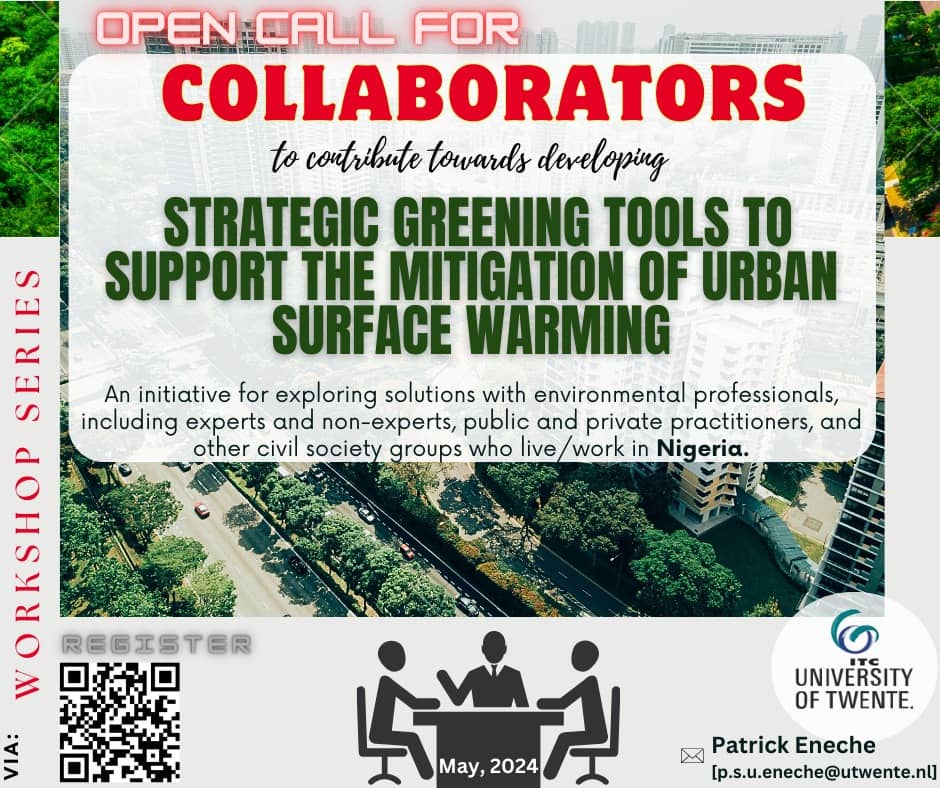
  • Collaboration Opportunity: Tackling Urban Climate Mitigation in Nigeria with the University of Twente, Netherlands

    Collaboration Opportunity: Tackling Urban Climate Mitigation in Nigeria with the University of Twente, Netherlands

    Calling All Stakeholders to Address Urban Surface Warming in Nigeria

    Researchers from the Faculty of Geoinformation Science and Earth Observation (ITC) at the University of Twente, The Netherlands, are extending an invitation for collaborative efforts to tackle the pressing issue of rising urban surface temperatures in Nigeria. This environmental challenge is compromising ecosystem services and the livability of urban areas and is predicted to worsen in the coming years.

    Join a Workshop Series on Green Infrastructure Strategies

    The team is organizing workshops aimed at unifying urban stakeholders from various backgrounds, including both experts in science and those in non-scientific fields. The goal is to devise a green infrastructure plan tailored to mitigate surface warming specific to Nigeria’s urban environments. Recognizing the valuable perspectives and experiences of different stakeholders, the team is eager to collaborate on crafting tools and resources to assist environmental managers in combating the emergence and spread of urban heat islands within the country.

    A Detailed Project Overview and Registration for Collaboration

    For those interested in contributing to this vital cause, collaboration opportunities range from simply staying informed on research progress to active workshop participation. To express your interest and choose your level of involvement, please visit: Workshop Registration.

    The researchers encourage you to share this call with others in your network who are based in Nigeria and might be interested in joining this significant endeavor.

    Anticipating a Joint Effort for Cooler, More Livable Cities

    The team looks forward to a positive response and to fostering partnerships that will lead to more sustainable and comfortable urban living spaces.

    For further engagement and detailed queries:

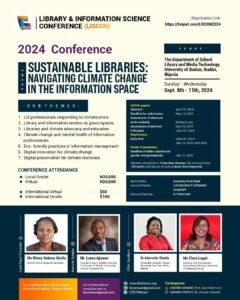
  • LISCON 2024: Charting the Future of Sustainable Libraries Amidst Climate Change

    LISCON 2024: Charting the Future of Sustainable Libraries Amidst Climate Change

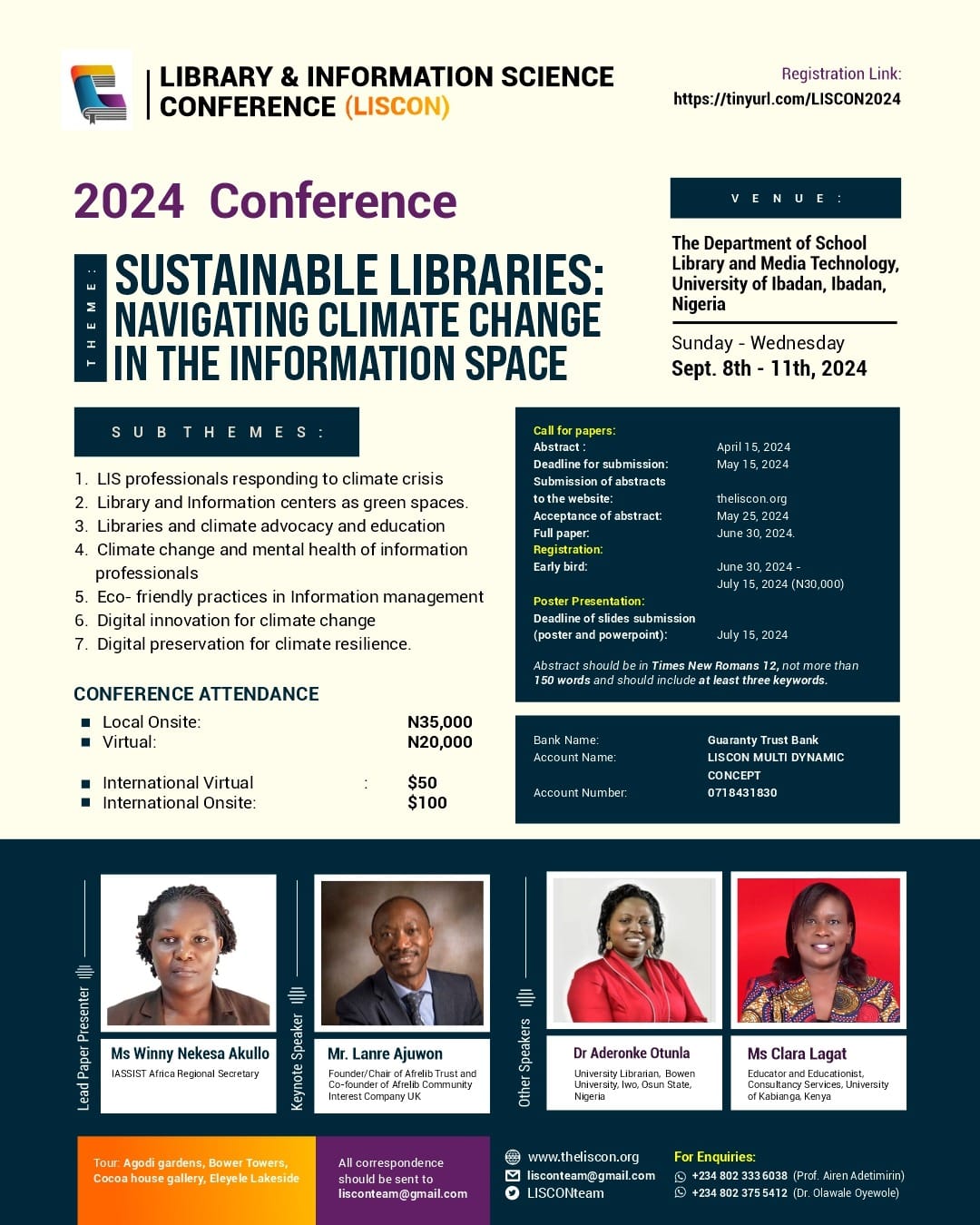
    LISCON 2024: Sustainable Libraries Conference

    • Theme: Sustainable Libraries: Navigating Climate Change in the Information Space
    • Host: Library and Information Science Conference, LISCON
    • Venue: Department of School Library and Media Technology, University of Ibadan, Nigeria
    • Dates: September 8th – 11th, 2024

    The call for papers is now open,

    • Scope: LISCON 2024 seeks submissions from library professionals, educators, and researchers. The focus is on integrating environmental sustainability with library management.
    • Key Themes:
      • Responding to the climate crisis within the library and information science field.
      • Developing libraries as green spaces.
      • Exploring the role of digital innovation in addressing climate change.

    Prospective speakers and attendees are encouraged to send in their abstracts early to Email: lisconteam@gmail.com

    • . Important Dates:
      • Abstract Submission Deadline: May 15, 2024
      • Full Paper Deadline: June 30, 2024
    • Formatting Requirements: Abstracts should be no more than 150 words, formatted in Times New Roman, size 12 font.

    Speakers:

    • Lead Paper Presenter: Ms. Winny Nekesa Akullo, IASSIST Africa Regional Secretary
    • Keynote Speaker: Mr. Lanre Ajuwon, Founder/Chair of Afrelib Trust
    • Additional Speakers: Dr. Aderonke Otunla, University Librarian, Bowen University; Ms. Clara Lagat, Educator and Consultant, University of Kabianga

    Registration and Fees:
    Follow the link to register: https://tinyurl.com/LISCON2024

    • Early Bird Registration Ends: July 15, 2024
    • Local Onsite Fee: N35,000
    • Virtual Attendance Fee: N20,000 (Local), $50 (International)
    • International Onsite Fee: $100

    Venue Highlights:

    • Cultural and Networking Opportunities: Tours of Agodi Gardens, Bower Towers, and Cocoa House Gallery

    Contact Information:

    • Website: www.theliscon.org
    • Email: lisconteam@gmail.com
    • Contact Numbers: +234 8023336038 (Prof. Airen Adetimirin), +234 802 375 5412 (Dr. Olawale)
  • Boosting African Research Funding: Research Support Hub Launch

    Boosting African Research Funding: Research Support Hub Launch

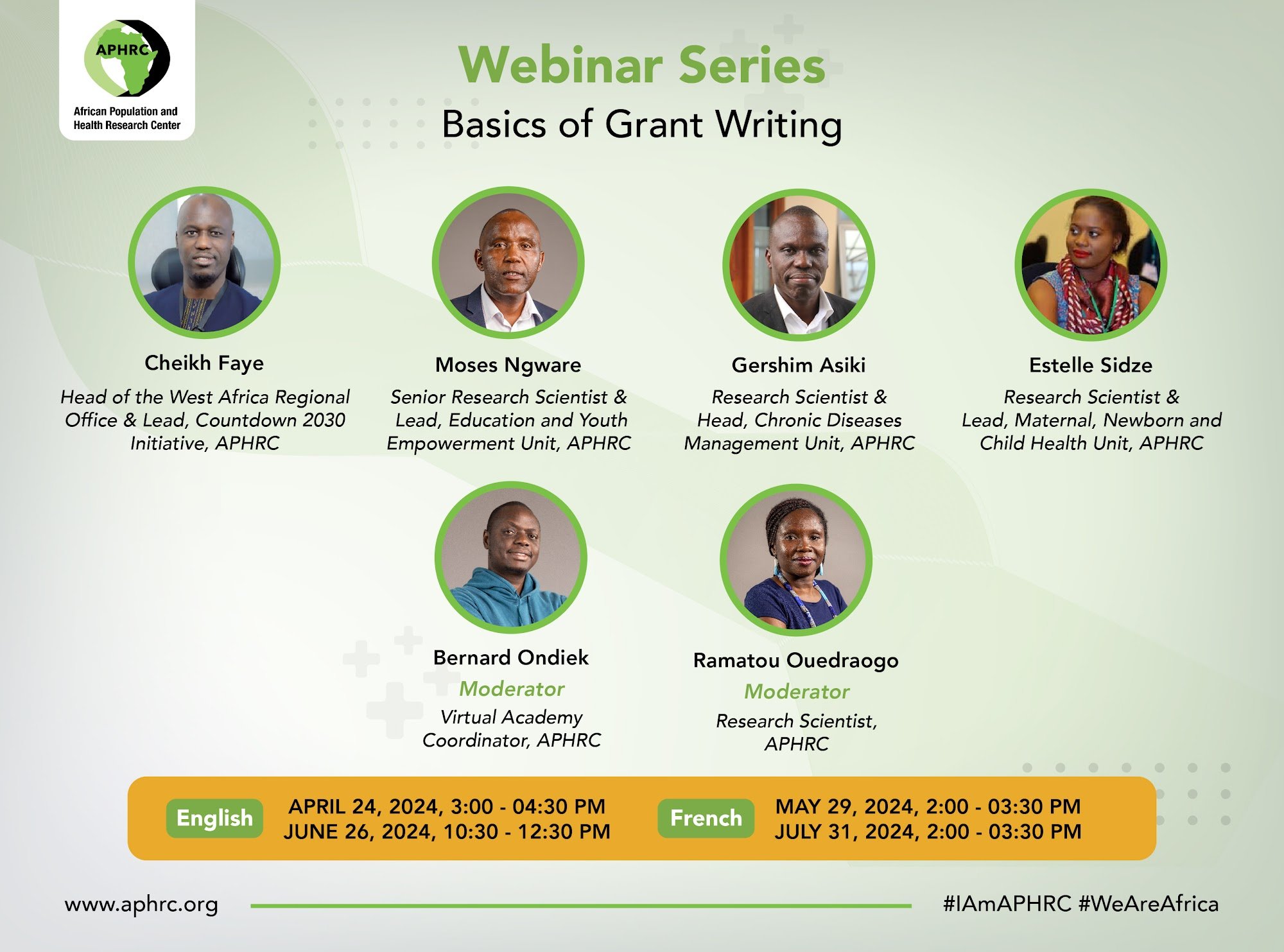
    Empowering African Scholars with Expert-Led Webinars and Workshops to Secure International Funding

    • The African Population and Health Research Center is launching the Research Support Hub initiative with a series of webinars.
    • Aimed at increasing the success rate of African researchers applying for international science grants.
    • Webinars will be conducted in English and French, providing expert tips on effective grant writing. Registration is open to all via this link: REGISTRATION
    • Selected participants from the webinars will be invited to attend further grant writing workshops in both languages.
    • A few standout attendees from the workshops will receive seed grants to help develop and enhance their research proposals.
    • The center encourages everyone to sign up and share the registration link widely to maximize participation and impact.
  • Explore Educational Opportunities and Expert Strategies for Success in Graduate Applications

    Explore Educational Opportunities and Expert Strategies for Success in Graduate Applications

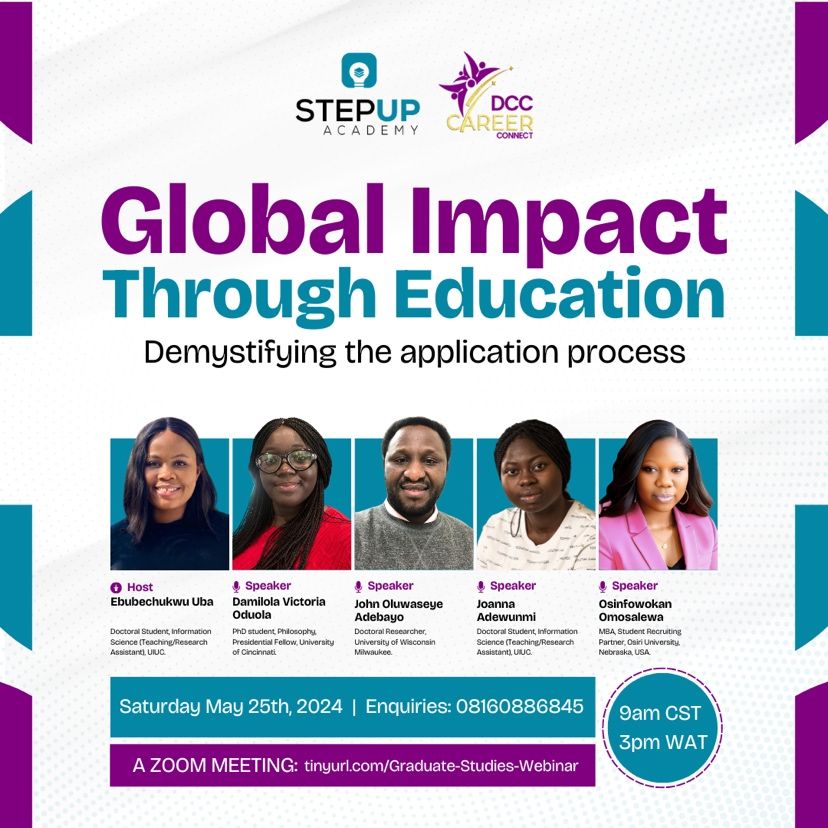
    Unlock Your Future: Join the Global Impact Through Education Webinar!
    • Don’t Miss This Webinar!* Register now for the ‘Global Impact Through Education: Demystifying the Application Process’, a prestigious event in collaboration with David’s Christian Centre (DCC) Career Connect group and featuring Ebubechukwu Uba.
    • Event Date:  Mark your calendars for May 25, 2024, at 3 PM (West Africa Time) / 9 AM (Central Standard Time).
    • Learn from the Best:** Gain insights from top experts including Damilola Oduola, Joanna Adewunmi, and John Oluwaseye Adebayo, as they discuss navigating global education and balancing personal commitments with academic goals.
    • Special Session on Remote Education: Omosalewa Osinfowokan will provide key strategies on how to access affordable graduate education from home, ideal for those unable to relocate.
    • Engage and Ask:** The webinar features an interactive Q&A session where you can pose questions directly to the speakers and get personalized advice.
    • Register Now:  Spots are limited! Secure your seat today by registering through this link: [Register Here](https://illinois.zoom.us/meeting/register/tZYpcO6ppjstGdRAI5PmVbCruwqXww6fCDdL#/registration).
    Seize the opportunity to make a global impact through education! This is your chance to learn, grow, and connect with experts in the field. Register today!
    _________
    Do you have an upcoming event, seminar, workshop, or training session? Or perhaps you want to disseminate your research findings to a global audience? Contact the Optimistic Scholar for extensive publicity.
  • Mastering Adaptability and Innovation in a Rapidly Changing Business Landscape

    Mastering Adaptability and Innovation in a Rapidly Changing Business Landscape

    From Theory to Practice: Dr. Kingsley T. Ihejirika’s Strategic Insights on Evolving Business Analysis

    A fascinating interview conducted by Deirdre Caren and shared on LinkedIn features Dr. Kingsley T. Ihejirika, who provides a comprehensive account of his progression from scholarly pursuits to influential positions in the field of business analysis. The conversation, appropriately named “Academic Theory to Business Analysis with Kingsley Ihejirika,” took place on Monday, April 15, 2024, and has served as an inspiration to both professionals and newbies in the business world.

    Dr. Ihejirika began his academic career in Nigeria, earning a degree in Library Science. His academic journey continued to New Zealand, where he studied social media and involvement in library systems. His research looked on how libraries could employ social media to increase user engagement and improve reading, giving Dr. Ihejirika a core skill set that he would later use in his business analysis career.

    Dr. Ihejirika’s transition into business analysis appeared to be a natural step. His interest and drive to interact directly with people and processes prompted him to pursue additional schooling in information systems. This transition was prompted by considerable changes in the university system during his tenure, including severe personnel reductions. These experiences demonstrated the value of adaptation and direct interaction in professional contexts.

    Dr. Ihejirika described his first steps in business analysis at the Ministry of Justice in New Zealand, beginning as a strategic business analyst and progressing to a more project-focused job within the digital team. His current responsibilities include designing critical solutions for project success, which he finds both tough and rewarding.

    Reflecting on the fundamental concepts of business analysis, Dr. Kingsley T. Ihejirika emphasised the critical role that data and information management play in today’s business environment. While the integration of artificial intelligence (AI) and other technical breakthroughs is necessary, he believes they should be used to supplement rather than replace the important human capacity for critical thinking and problem-solving. Dr. Ihejirika emphasised that AI and related technologies are best employed as tools to improve human decision-making processes, ensuring that strategic insights and operational decisions are guided by both data-driven analytics and human intuition.

    Dr. Ihejirika emphasised the dynamic nature of the business analysis, emphasising the need for professionals to constantly learn and adapt to rapid changes and difficulties in the business world. He emphasised the importance of adaptability not only in keeping up with technical changes, but also in understanding the larger business environment in order to properly match tech solutions with business goals. Dr. Ihejirika pushed for a proactive learning mentality that includes formal training, self-study, and hands-on experience to gain a better grasp of both emerging technology and strategic business demands. His thoughts assist professionals in managing the complexity of a data-driven business environment while emphasising creativity and strategic thinking.

    Dr. Ihejirika recommends that anyone joining the profession of business analysis or considering a similar career commit to continual learning and be open to mentorship. He emphasises the necessity of having a diverse and problem-solving mindset, which he believes are essential for not only navigating, but thriving in the field of business analysis.

    Dr. Ihejirika’s path from academic theory to practical commercial application exemplifies the dynamic interaction of education and professional practice, providing useful insights for professionals at all stages of their lives. For further insights and discussions, he welcomes connections and conversations on LinkedIn, where he remains an active and influential figure in the business analysis community.

    To watch the full interview with Dr. Kingsley T. Ihejirika, you can visit the provided LinkedIn link.  Watch the full interview on LinkedIn

    Written by
    Dr. Ayodele John Alonge 
    for Optimistic Scholar

  • Mastering the Art of Acquisition in Library and Information Centres 

    Mastering the Art of Acquisition in Library and Information Centres 

     Introduction to the Paradigm of Acquisition in Modern Libraries

    Let’s explore the meaning of acquisition within the sphere of library and information science, an area of paramount importance for advanced students like yourselves, pursuing or holding master’s degrees in this field. The acquisition isn’t merely a transactional process; it is the cornerstone of strategic library management, ensuring collections are dynamic, relevant, and tailored to meet the evolving needs of the community they serve.

     Conceptualizing Acquisition in the Library Ecosystem

     The acquisition is the bloodstream of a library, facilitating the inflow of information resources and thereby enabling libraries to fulfill their mission. This process transcends the simple act of purchasing or obtaining materials; it involves a strategic approach to deciding what becomes part of the library’s collection based on its objectives, the needs of its users, and the overarching vision for its growth.

     Strategic Responsibilities Within Acquisition Management

     The Acquisition Department, the nucleus of this process, undertakes a gamut of responsibilities, including:

    1. Tool Management**: maintaining essential tools such as bibliographies and publisher catalogues, which are critical for informed decision-making in the acquisition process.
    2. Order File Maintenance**:Keeping an accurate and organized record of orders to prevent duplications and ensure efficient tracking of acquisitions.
    3. Bibliographical Due Diligence**: Conduct thorough pre-order searches to verify bibliographic details, thereby ensuring that the library only acquires materials that align with its collection and have not been previously ordered or already exist within the collection.
    4. Method Selection**:Choosing the most appropriate acquisition methods, whether through purchase, donation, or other means, to optimize the library’s budget and collection development strategy.
    5. 5. Resource Reception :Overse the arrival of new resources, ensuring they meet the specified criteria and are in good condition.
    6. Financial Oversight**: Approving invoices to ensure that expenditures align with the budget and financial policies of the library.
    7. Accessioning**: Integrating new books into the library’s collection in a manner that is organized and accessible to users.

      The Critical Role of Budgeting in Acquisition

    The acquisition budget is the blueprint that guides the library’s investment in new resources. It is a comprehensive financial plan that accounts for:

     The maintenance and preservation of existing resources.

    – The projected growth of the collection to accommodate new subjects, technologies, and user needs.

    – The introduction of new programs or services that necessitate additional resources.

    This budget is pivotal in aligning the library’s strategic goals with its financial resources, ensuring sustainable collection development.

    Acquisition Procedures: From Ideation to Integration

     The journey of a book from selection to shelving is intricate:

    1. 1. Collation**: Gathering requests and recommendations from library stakeholders.
    2. 2. Carding**:Organizing these requests for further action.
    3. 3. Verification**: Conducting bibliographic searches to confirm details and avoid redundancies.
    4. Ordering**: Formalizing the request into an order.
    5. Dispatching**: Sending the order to the publisher or supplier.
    6. Receiving**: Accepting delivery of the books.
    7. Quality Control**: Checking the consignment for accuracy and condition.
    8. 8. **Processing**: Stamping, cataloging, and preparing the book for the shelf.

    Exploring the Multifaceted Methods of Acquisition

    Beyond purchasing, libraries employ a variety of methods to enrich their collections:

     – **Gifts and Donations**: Navigating the complexities of unsolicited and solicited materials to enhance the collection thoughtfully.

    – **Legal Deposit**Leveraging statutory deposits as a means of acquisition, particularly in national and designated libraries.

    – **Internal Generation**: Utilizing the library’s resources to create unique materials, particularly in educational settings.

    – **Collaboration and Networking**: Engaging in inter-library loans, consortia, and partnerships to extend the reach of the library’s collection without incurring significant costs.

    – **Exchanges**: Participating in reciprocal agreements to acquire materials that support the library’s mission.

     Real-World Application: Analyzing a Case Study

     Consider the scenario where Macmillan Publishers distributes free books to libraries, including Hallmark Library, as part of their 20th-anniversary celebration. This scenario exemplifies acquisition through gifts and donations, highlighting the strategic considerations libraries must weigh when accepting such materials to ensure they align with the collection’s focus and quality standards.

     Concluding Reflections and Forward-Looking Perspectives

    As we conclude, it’s evident that the acquisition is a sophisticated blend of art and science, requiring a deep understanding of library science, strategic planning, and fiscal management. The future of acquisition, particularly in the digital age, promises even greater complexity and opportunity, challenging us to rethink traditional models and embrace innovative approaches to collection development.
    ______