Category: Library and Information Science

  • Data Science Summer School Reflections -FIMS -Western University  – Transforming Library & Information Science

    Data Science Summer School Reflections -FIMS -Western University – Transforming Library & Information Science

    Closing Speech at the Data Science for Information Professionals Summer School, Faculty of Information and Media Studies, Western University, Canada

    Delivered by Ayodele Alonge on July 12, 2024, on behalf of the Data Science Summer Class for LIS, 2024

    On July 2, as we assembled from various parts of Africa, little did we know that we were embarking on an experience that would transform our research and professional lives forever.

    Initially, many of us viewed Data Science—particularly the coding aspect—as a field distant from Library and Information Education, an area we approached with apprehension.

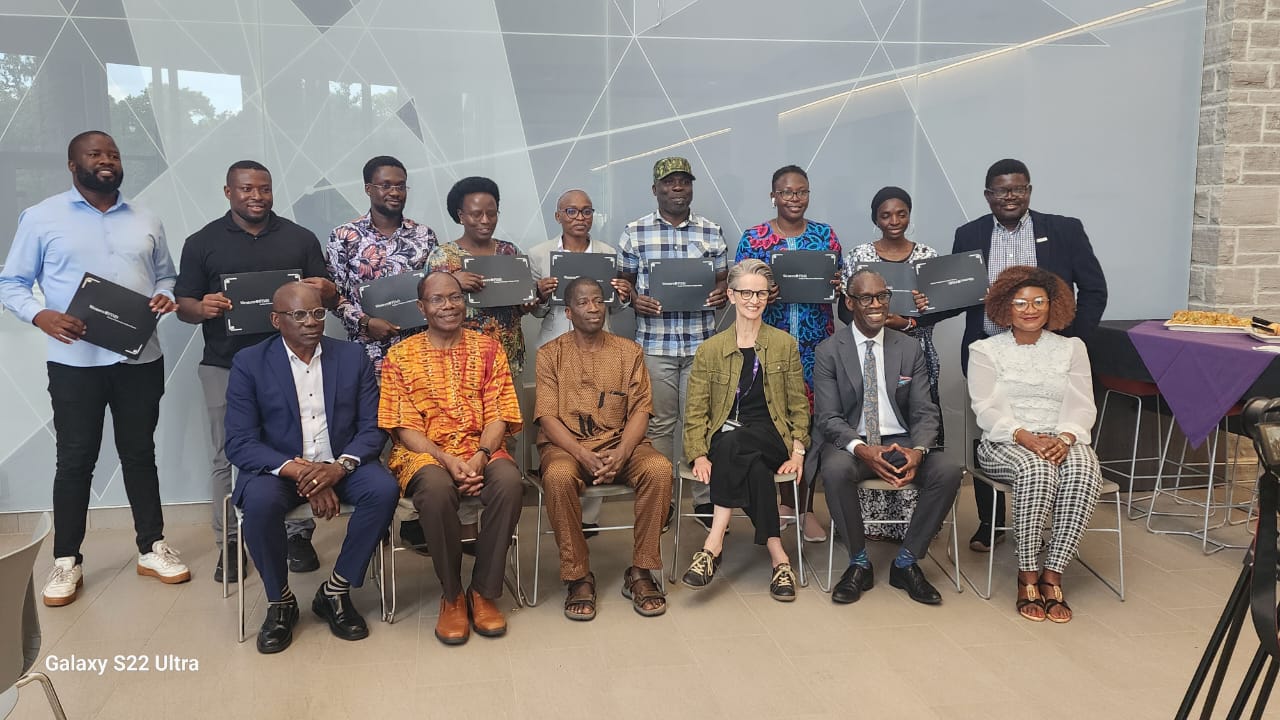
    Participants and facilitators at the Data Science Summer School, Western University, London, Ontario.

    Greetings once again to Dean Professor Lisa Henderson, and Professor Anabel Quan-Haase, Associate Dean of Graduate and Postdoctoral Studies at the Faculty of Information and Media Studies, Western University. With all due respect acknowledged, I stand here representing all of us who have immensely benefited from this intensive program.

    As many of us have mentioned, our motivation for attending this summer school was to learn, unlearn, and relearn, to understand Data Science within the context of LIS education and to practically understand how to use data to tell stories. I believe we all agree that our hopes and motivations for attending this summer school have been thoroughly fulfilled. We are no longer novices in data science. A seed has been planted, and it is now up to us to nurture this knowledge through practice and become the experts that the FIMS Summer School envisioned.

    Dr A.J. Alonge delivering  the closing remarks

    The structure of this summer school was truly effective. Week one served as an introduction, moving from the known to the unknown. We explore into topics such as Introduction to Statistics, including sampling methods and sample size determination, Hypothesis Testing, and Common Parametric and Non-parametric Inferential Statistical Methods.

    We were introduced to R and RStudio, and tackled Predictive Analytics through Multiple Linear Regression, Logistic Regression, and Time Series Analysis. We also explored Classification and Cluster Analysis.

    Today’s project presentations gave us the opportunity to apply some of the knowledge we acquired over these two weeks.

    We recognize that there are gaps in the area of Statistics and Data Science in many LIS curricula across Africa. This summer school has reinforced our resolve to revolutionize LIS curricula to include relevant statistics and data science. We intend to lead the vanguard of curriculum updates, integrating essential elements of data analytics and business analysis—reflecting the modern trends in the LIS profession.

    L-R:  Professor Alfred Akinsete, Professor Felix Famoye & Professor Isola Ajiferuke,

    We sincerely thank our facilitators, led by Professor Isola Ajiferuke, alongside his long-time friends and classmates from the prestigious University of Ibadan—Professor Felix Famoye and Professor Alfred Akinsete—for their innovative teaching and practical sessions. These three scholars, who graduated from the University of Ibadan in 1980, have grown together professionally over the decades. From them, we’ve learned the significant benefits and advantages of maintaining strong friendships for mutual professional and personal growth.

    I must not forget to appreciate Dr. Jumoke Ajanaku, who provided exceptional support during the practical sessions. We are also grateful to the ICT and Media team for their invaluable assistance.  Ebenezer Martin-Yeboah, PhD Candidate, Health Information Science. at Western, was fantastic; he showed great dedication by ensuring our evening fun and transportation, and we especially enjoyed the jazz music in his spacious bus.

    Abundant delicious dinner at Mandarin Chinese Restaurant in Hyde Park, London.

     All work without play makes Phila a dull Mama
    In addition to our intensive engagement in data science, we were well catered for – I will say we were well fed and “fed-up”; we had fun and explored fun… —the visits to Niagara Falls and Grand Bend Beach were fantastic, creating lasting memories.
    Delivered  at the Closing ceremony on July 12, 2024, on behalf of the Data Science Summer Class for LIS, 2024

    Thank you for listening
    _______________

    Stories and articles on Data Science for Information Professionals Summer School, Faculty of Information and Media Studies, Western University, Canada___

    ___________________________

  • Generative AI and the Library of Babel: Delusion or Reality.

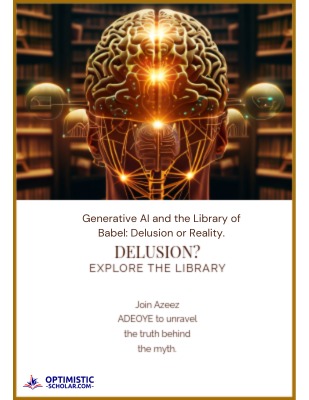
    Generative AI and the Library of Babel: Delusion or Reality.

    Generative AI and the Library of Babel: Delusion or Reality.
    By  Azeez ADEOYE (Wizard Librarian)

    The Library of Babel! It’s a fascinating concept that has captivated the imagination of many. The Library of Babel is a thought experiment proposed by Argentine author Jorge Luis Borges in his 1949 short story “The Library of Babel.”

    Imagine a vast, labyrinthine library containing every possible book that could ever be written. Each book has 410 pages, with 40 lines per page, and 80 characters per line. The library is infinite, with an endless number of hexagonal rooms, each containing 410 shelves, and each shelf holding 32 books.

    Here’s the mind-boggling part: every book in the library contains a random combination of letters and symbols, meaning that most books are complete nonsense. However, because the library is infinite, it’s theorized that somewhere within its walls, there must exist books that contain meaningful information, including:

    1. The complete works of every author who has ever written
    2. Every book that will be written in the future
    3. The secrets of the universe and the meaning of life
    4. Books that contradict each other, containing opposing truths

    The Library of Babel raises intriguing questions about the nature of knowledge, language, and reality. It’s a metaphor for the search for meaning and the futility of seeking absolute truth. The library’s infinite nature and the randomness of its contents also allude to the concept of the multiverse and the idea that every possibility exists somewhere.

    Borges’ thought experiment has inspired philosophical debates, mathematical explorations, and artistic interpretations, cementing the Library of Babel as a cultural icon of intellectual curiosity and wonder.

    Based on the nature of generative AI: the ability to generate original content from existing information. Much of the information that would be published from the inception of generative AI would be repetitive and lack originality.

    Libraries, institutions, organisations, nations and all information-driven entities should develop ethical policies and practices for adopting and use of destructive technology. Before it generates into a singularity and extinction of human intelligence.

    The end of the human race is what actors of the invention used to describe AI tools.
    Do you agree?

    written by
    Azeez ADEOYE,
    Wizard Librarian. 22nd May 2024

  • Emphasizing Equitable Access: Innovative Library Services to Bridge Information Gaps

    Emphasizing Equitable Access: Innovative Library Services to Bridge Information Gaps

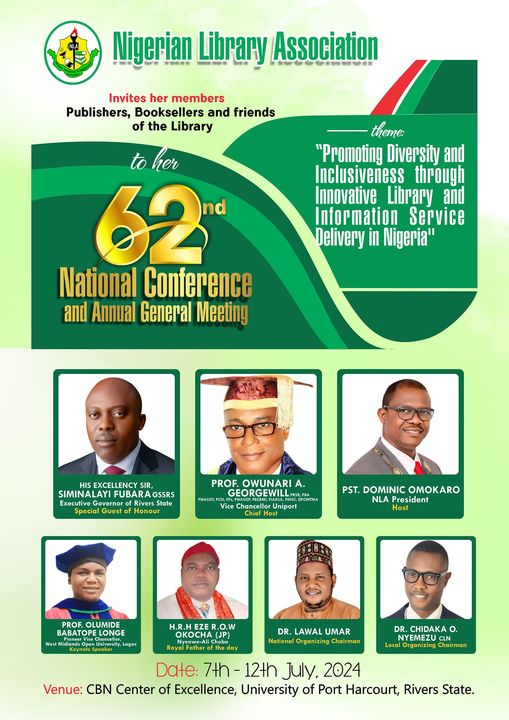
    Nigerian Library Association to Host 62nd National Conference with a Focus on Diversity and Inclusiveness

    The Nigerian Library Association (NLA) is gearing up for its 62nd National Conference and Annual General Meeting, themed  “Promoting Diversity and Inclusiveness through Innovative Library and Information Service Delivery in Nigeria.  This year’s conference aims to highlight the critical role of advanced library and information services in addressing the diverse needs of communities and ensuring equitable access to information for all, irrespective of their background.

    This event is set to be a hub for innovative practices and strategies that bridge existing gaps in information access. Attendees will engage in interactive sessions, listen to insightful keynote presentations, and participate in collaborative workshops. These activities are designed to provide participants with the knowledge and tools necessary to implement inclusive practices in their own libraries and information centers.

    Key Guests and Hosts:

    • His Excellency Sir, Siminalayi Fubara GSSRS**, Executive Governor of Rivers State, Special Guest of Honour
    • Prof. Owunari A. Georgewill**, Vice Chancellor, University of Port Harcourt, Chief HostPst. Dominic Omokaro**, NLA President
    • Prof. Olumide Babatope Longe , Pioneer Vice Chancellor, West Midlands Open University
    • H.R.H Eze R.O.W Okocha (JP) ,  Royal Father of the Day
    • Dr. Lawal Umar, National Organizing Chairman
    • Dr. Chidaka O. Nyemezu , Local Organizing Chairman

    The conference will take place from **7th to 12th July, 2024**, at the **CBN Center of Excellence, University of Port Harcourt, Rivers State

    NLA President, Pst. Dominic Omokaro, expressed his enthusiasm for the upcoming event, emphasizing its pivotal role in promoting a more inclusive and diverse information landscape in Nigeria. He highlighted the need for innovative approaches to ensure equal access to information resources for all community members.

    Special Guest of Honour, His Excellency Sir, Siminalayi Fubara GSSRS, Executive Governor of Rivers State, along with other distinguished guests, will share their insights and expertise, underscoring the importance of this theme.

    This conference is not only for professionals but is also open to publishers, booksellers, friends of the library, and the general public. It is a call to all who are passionate about promoting diversity and inclusiveness through library and information services.

    If you are interested in joining this important discussion and contributing to the future of inclusive library services in Nigeria, visit the Nigeria Library Association conference Page to secure your spot.

    Support innovative library and information services in Nigeria!

  • Integrating Information Communication Technology in Library Collection Development

    Integrating Information Communication Technology in Library Collection Development

    Lecture Notes: Collection Development and Information Communication Technology (ICT)
    Course: Master’s in Library and Information Science**
    Introduction to ICT in Collection Development
    This session explores the critical role of Information and Technology (ICT) in the realm of collection development. ICT’s impact is profound and far-reaching, revolutionizing numerous aspects of our daily lives, including how library operations are conducted. This technology has streamlined previously laborious, dull, and lengthy library tasks, making them more engaging, efficient, and swift. Today, we’ll eplore into how ICT aids in various facets of collection development, including community information gathering, policy formation, material selection, acquisition, weeding, evaluation, preservation, conservation, and resource management. This discussion aims to enhance your appreciation of ICT’s invaluable contributions to collection development.

    *Meaning and Application of ICT in Collection Development

    Defining ICT
    Information Technology (IT), a subset of ICT, involves using computers and other technologies for the acquisition, organization, storage, retrieval, and dissemination of information. IT encompasses both tangible hardware and intangible software components. Hardware refers to the physical electronic devices, while software consists of the programs and instructions that operate the hardware. Key hardware categories include input, output, processing, memory, storage, and telecommunication devices, each paired with corresponding software to facilitate their functions. Notable IT tools and services include computers, the internet, scanners, telecommunication devices like phones and fax machines, multimedia resources, and connectivity solutions such as LAN and WAN.
    Applying ICT to Collection Development
    ICT proves instrumental across all collection development activities. Let’s outline some specific applications:
    1. Community Analysis:** Using ICT tools like iPads, computers with internet access, telephones, and photocopiers can significantly aid in gathering community insights. Online forms can collect data, computers store the information, and iPads record interviews. During community forums, projectors display library resources, enhancing engagement and information sharing.
    2. Collection Development Policy:  The internet provides access to existing collection development policies from various libraries, serving as references for developing new or revised policies.\
    3. Selection: ICT facilitates the selection process through tools such as computers and telephones. Committee members can submit recommendations online, while extensive online bibliographic databases (e.g., the Library of Congress or OCLC) and publishers’ catalogues offer resources for potential acquisition. Social media platforms and email also enable user participation in the selection process.
    4. Acquisition:  Computers are used to create and print order forms, while online forms streamline submission and tracking. Photocopiers produce additional copies as needed. Telecommunication allows for direct contact with publishers and vendors to ensure timely delivery.
    5. Weeding and Evaluation: If the library is automated, software helps identify seldom-used resources, triggering evaluation and potential weeding. Online surveys can collect user feedback on library resources and facilities, facilitating effective decision-making.

    Through these discussions, it’s evident that ICT is not just a facilitator but a transformative force in modern collection development, driving efficiency and enhancing library services to meet contemporary needs.

    Lecturer:
    Dr. Ayodele John Alonge, the University of Ibadan, Nigeria

    (more…)

  • Conservation and Preservation of Information Resources in Libraries

    Conservation and Preservation of Information Resources in Libraries

    Lecture Notes: LIS Master Class on Conservation and Preservation of Information Resources
    Introduction

    Welcome to today’s lecture on an integral aspect of library science—Conservation and Preservation of Information Resources. Today, we will explore the strategies and challenges in maintaining the integrity and prolonging the lifespan of library materials.

    Causes of Deterioration of Library Resources

    Deterioration refers to the change in the condition of library materials from their original state, primarily due to various destructive factors. Understanding these causes is crucial for developing effective conservation strategies.

    Environmental Factors

    Light:  Exposure to natural and artificial light can significantly damage paper through photochemical reactions, leading to weakened and brittle conditions. Both intensity and duration of light exposure accelerate this deterioration.
    • Heat: High temperatures, especially when combined with low humidity, dehydrate cellulose fibers, making paper brittle. Conversely, high temperatures with high humidity promote mold growth.
    • Humidity and Moisture: Excessive moisture can weaken fibers, loosen adhesive bindings, and promote biological growth such as mold, leading to further deterioration.
    • Dust and Dirt:  Airborne particles settle on surfaces, attracting moisture and promoting chemical and biological reactions that can physically and chemically damage library materials.
    • Water: Exposure to water, whether from leaks, floods, or humidity, can cause severe physical and biological damage, including mold growth and structural weakening of materials.

    Biological Factors

    • Microorganisms: Fungi and bacteria can thrive in suitable conditions of humidity and temperature, causing mold growth and cellulose decomposition.
    • -Insects: Pests like silverfish, cockroaches, booklice, and termites feed on paper, glue, and other organic components of books, causing physical damage.
    • Rodents: Mice and rats can cause extensive damage by chewing through books and other materials.

    Chemical Factors

    • – Use of acidic materials in paper manufacturing and environmental pollutants like sulphur dioxide and nitrogen oxides contribute to the chemical breakdown of paper fibers, leading to deterioration.
    • **Human Factors**
    • – Mishandling by users and librarians, such as improper book repairs, rough handling, and defacing, significantly contributes to the deterioration of library resources.
    • **Disasters**
    • – Natural and man-made disasters like fires, floods, and earthquakes pose severe threats to library collections, as evidenced by incidents such as the fire at the University of Jos Main Library.

    Discussion: Preventive Measures and Restoration Techniques

    To mitigate these risks, libraries must adopt comprehensive preservation strategies, including environmental controls, proper storage, regular maintenance, and restoration techniques. Training and awareness programs for staff and patrons are equally important to ensure the proper handling and care of library materials.
    **Conclusion**
    Conservation and preservation are ongoing challenges in library management. By understanding the causes of deterioration and implementing effective preservation strategies, we can ensure that library materials remain available to future generations.
    **Next Steps**