Category: Webinar

  • Empowering Parents & Teachers to Nurture Children’s Faith

    Empowering Parents & Teachers to Nurture Children’s Faith

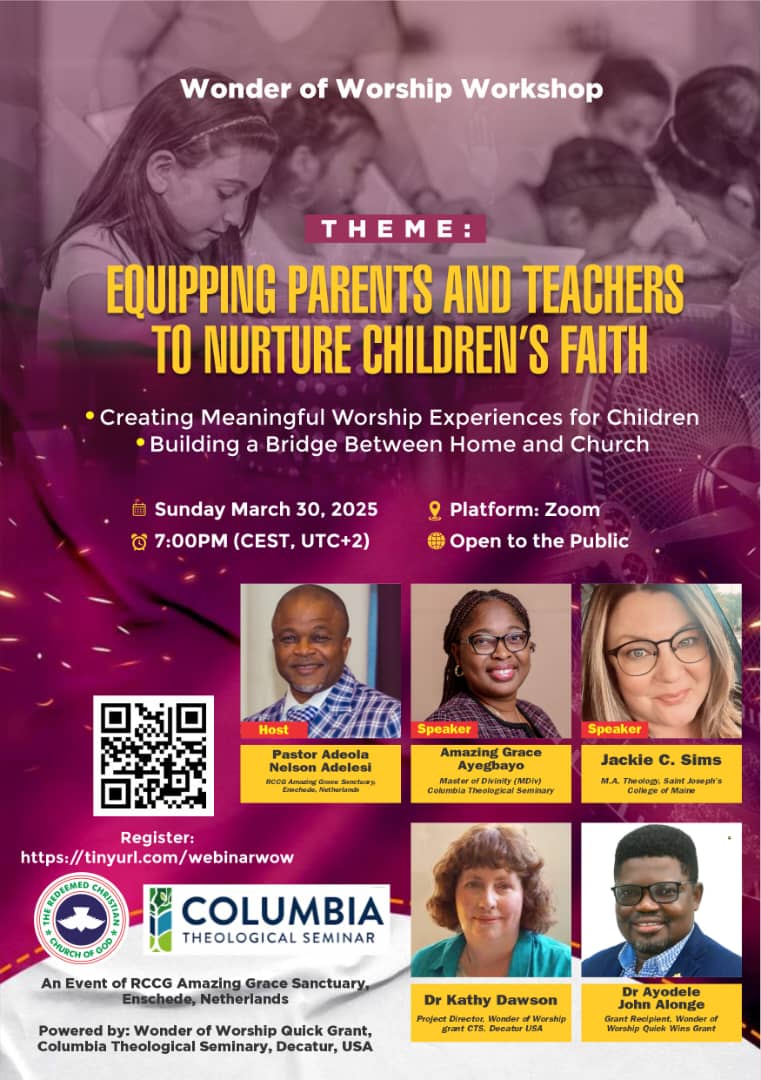
    The Wonder of Worship Workshop: Empowering Parents & Teachers to Nurture Children’s Faith

    Date: Sunday, March 30, 2025
    Time: 7:00pmCEST, UTC+2
    Platform: Zoom (link will be sent to registered participants.)
    Register Now: https://tinyurl.com/webinarwow
    Certificate of Participation will be issued

    As parents, teachers, and church leaders, we all desire to see children grow in faith, develop a love for worship, and build a strong spiritual foundation. But how can we effectively engage them in meaningful worship at home and in church?

    That’s where The Wonder of Worship Workshop comes in—a transformative, free, and open-to-the-public event designed to equip you with practical tools and insights to nurture children’s faith.

    Why Should You Attend?

    🔹 Gain Practical Strategies – Learn how to make worship engaging for children using storytelling, music, and interactive activities.
    🔹 Bridge the Gap Between Home & Church – Discover ways to reinforce faith beyond Sunday services.
    🔹 Learn from Experts – Be inspired by experienced speakers with a passion for children’s spiritual development.
    🔹 Engage with Like-Minded Individuals – Connect with parents, teachers, and faith leaders who share your vision.
    🔹 Receive a Certificate of Participation – A great addition for volunteers, teachers, and ministry workers.

    Event Highlights

    🎤 Keynote Speaker: Dr. Kathy Dawson, Columbia Theological Seminary, USA
    📚 Session 1: Creating Meaningful Worship Experiences for Children
    🔹 Speaker: Jackie C. Sims, M.A. Theology, Saint Joseph’s College of Maine, USA
    🔹 Focus: Engaging children in corporate worship through storytelling, music, and interactive activities.

    📚 Session 2: Building a Bridge Between Home and Church
    🔹 Speaker: Amazing Grace Ayegbayo, Master of Divinity (MDiv), Columbia Theological Seminary
    🔹 Focus: Helping parents and teachers nurture children’s faith beyond Sunday services.

    👤 Moderator: Dr. Ayodele John Alonge
    Benton Family Associate Professor of Christian Education at Columbia Theological Seminary.

    🙌 Welcome Address: Pastor Nelson Adeola

    Who Should Attend?

    ✅ Parents
    ✅ Teachers
    ✅ Church Leaders
    ✅ Youth Workers
    ✅ Children’s Ministry Volunteers
    ✅ Anyone passionate about guiding children’s faith journey

    How to Join

    Simply register now at https://tinyurl.com/webinarwow and mark your calendar for Sunday, March 30, 2025, at 7:00 PM (CET).

    Don’t miss this opportunity to be part of a movement shaping the next generation’s faith. Share this with fellow parents, teachers, and ministry leaders!

    📢 See you at the Wonder of Worship Workshop!

    #WonderOfWorship #FaithFormation #ChildrenMinistry #WorshipWorkshop #RCCGAmazingGrace #ColumbiaSeminary

  • Frontiers of AI: Insights from the Latest Trends in Artificial Intelligence Research Webinar

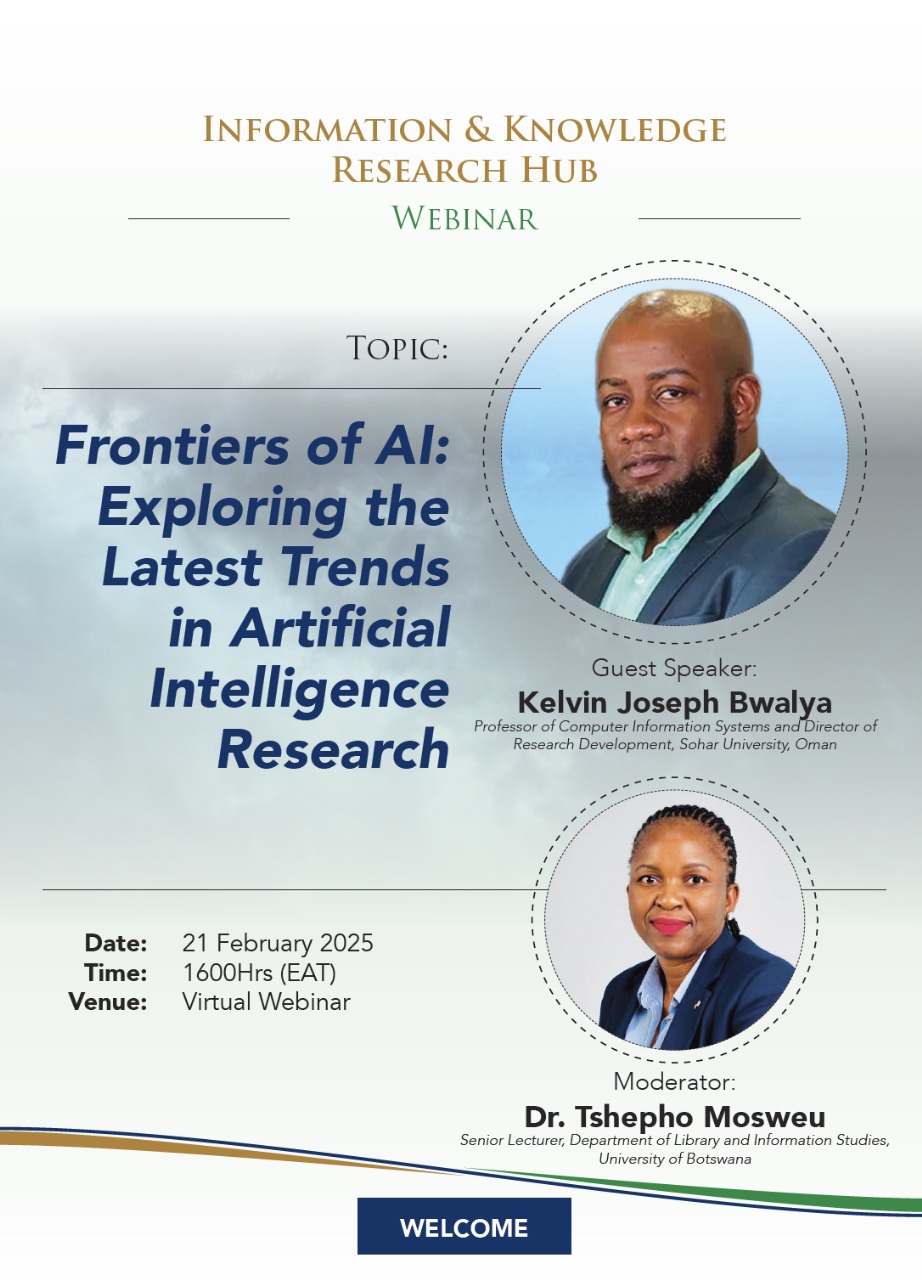
    Frontiers of AI: Insights from the Latest Trends in Artificial Intelligence Research Webinar

    Artificial Intelligence (AI) is here to stay, whether we like it or not. The recent webinar titled “Frontiers of AI: Exploring the Latest Trends in Artificial Intelligence Research” brought together leading AI experts to discuss the latest advancements, challenges, and opportunities in the field.

    AI for Research: SciSpace-Research for Students, Academics, and Librarians with All-in-One AI Tools

    Webinar Recap

    The webinar, held on 21 February 2025, was organized by the Information & Knowledge Research Hub, a group dedicated to fostering discussions and exploration in diverse aspects of information and knowledge management. The hub serves as a space for curious minds and lifelong learners, and is coordinated by Prof. Tom Kwanya.

    The event featured distinguished guest speaker Professor Kelvin Joseph Bwalya, Professor of Computer Information Systems and Executive Director of Research Development at Sohar University, Oman. The session was moderated by Dr. Tshepho Mosweu, Senior Lecturer, Department of Library and Information Studies, University of Botswana.

    Key Takeaways from the Webinar

    1. Human-Machine Collaboration is the Future

    One of the critical discussions in the webinar highlighted the need for human-machine collaboration in AI development. Professor Bwalya emphasized that AI and humans must work together, with machines learning from data while humans push innovations further. Encouraging continuous man-machine interaction will be key to improving AI capabilities and ensuring AI works equitably across different applications.

    2. Africa Must Invest in Groundbreaking AI Innovations

    Despite Africa’s growing AI landscape, there is still a lack of groundbreaking innovations. While Kenya has attracted major AI investments, including Microsoft, many African nations are not yet leveraging their full potential in AI research and development. The webinar stressed the importance of Africa moving beyond being consumers of AI and instead becoming creators of homegrown AI solutions that can shape global AI advancements.

    3. The Role of AI Governance and Policy Frameworks

    The conversation around AI governance and policy remained central. Discussions covered the European AI Act (July 2024) and the African Union’s Continental AI Strategy (July 2024), both of which aim to regulate AI responsibly. Participants highlighted the need for African governments to create AI policies that not only regulate but also promote innovation while safeguarding ethical AI practices.

    4. AI’s Impact on Information Science and Knowledge Management

    AI is reshaping library and information science by automating metadata management, semantic analysis, and knowledge organization. Professor Bwalya emphasized that AI thrives on structured, linked data, necessitating a shift in skill sets and curricula for African information professionals.

    He stressed that traditional information management approaches are evolving, and professionals must embrace AI-driven data analysis, knowledge representation, and machine learning applications to stay relevant in the digital age.

    5. The Need for Africa-Based AI Development

    A major concern raised was the fact that most AI systems are designed in Western countries, often overlooking African data and perspectives. This lack of representation in AI development results in bias and misinformation when applied to African contexts.

    Participants called for African-centered AI development, focusing on local languages, cultures, and socio-economic realities. There was also a discussion on data sovereignty, ensuring that African data remains under African control rather than being monetized by external entities.

    6. AI and the Global Innovation Race

    The global AI competition is accelerating, with China, the US, and Europe leading the way. Elon Musk’s Grok AI, along with China’s latest AI advancements, have heightened the competition in superintelligent AI systems. The discussion raised concerns about Africa’s position in this AI race, with a call for governments and institutions to prioritize AI investment and participate more actively in international AI development.

    Looking Ahead: Africa’s AI Future

    The webinar concluded with a call to action: Will Africa lead in AI, or will it continue playing catch-up? Policymakers, researchers, and industry leaders must take bold steps to ensure Africa is not merely a consumer of AI technology but an innovator and contributor.

    With initiatives like Agenda 2063 and emerging AI governance frameworks, Africa has a strong foundation to build upon. However, the continent must move beyond discussions and take concrete actions toward AI research, policy development, and cross-sector collaborations.

    Final Thoughts

    The webinar reinforced the urgency for African researchers and policymakers to actively participate in shaping AI regulations, developing AI-driven solutions, and integrating AI into various industries.

    Participants emphasized that collaboration is key, advocating for interdisciplinary partnerships between AI researchers, legal experts, policymakers, and business leaders. Only by working together can Africa bridge the gap and establish itself as a force in AI development.

    Appreciation goes to Professor Kelvin Joseph Bwalya and Dr. Tshepho Mosweu for leading this engaging and thought-provoking discussion, as well as Prof. Tom Kwanya and the Information & Knowledge Research Hub for organizing the event.

    Register for a similar webinar, –Practical AI Applications in Research & Professional Fields

  • Being & Becoming Bobrisky: Agency, Subjectivity, and Politics

    Being & Becoming Bobrisky: Agency, Subjectivity, and Politics

    Being Bobrisky Symposium: Agency, Subjectivity, and Politics

    The LSA African Studies Center at the University of Michigan and the University of Kansas invite you to the  Being Bobrisky Symposium, a deep exploration into the influence of Bobrisky—controversial Nigerian crossdresser Okuneye Idris—on social relations, queer politics, and self-expression in Nigeria. This event will explore how Bobrisky challenges traditional norms and redefines identity in African society.

    Join the Conversation:
    This symposium is for anyone interested in the intersection of gender, identity, and politics in Africa. Reflect on how public figures like Bobrisky confront societal expectations and inspire new forms of activism and self-fashioning.

    • Date: November 2, 2024
    • Time: 10.00 AM US Central Time
    • Venue:  Virtual Zoom

    Keynote Address:
    Africa’s Second Struggle for Freedom: The Legal Subject Revisited
    Professor Olúfémi Táiwò, Cornell University

    To join the Symposium, Register here 

    The symposium will feature an esteemed panel of scholars and experts, including Rudolf Gaudio from Purchase College, NY; Adunni Adelakun from the University of Texas, Austin; Matthias Krings from the University of Mainz; Paul Onanuga from the University of Oye-Ekiti; Ololade Faniyi from Emory University; Bukola Ochei from the University of Ibadan and the University of Michigan; Oluwayinka Arawomo from Millikin University; and Nneoma Onwuegbuchi from the University of Wisconsin.


  • Engendering Ethical Use of E-learning Platforms” – UI-RID at University of Ibadan

    Engendering Ethical Use of E-learning Platforms” – UI-RID at University of Ibadan

    University of Ibadan to Host UI-RID on Ethical Use of E-learning Platforms

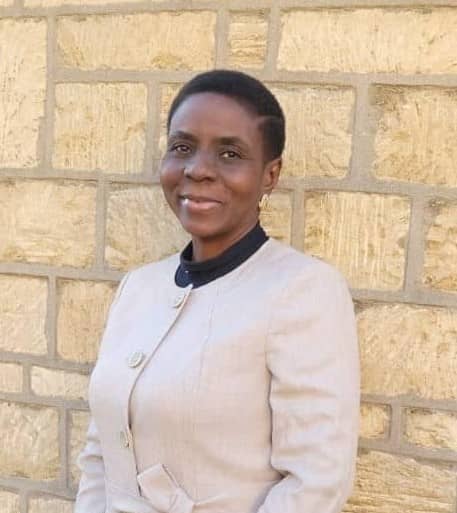
    The University of Ibadan’s Research Management Office, in collaboration with the University Media Center, is set to hold the 9th UI-Research and Innovation Discourse (UI-RID) on Wednesday, October 16, 2024. This  month discourse, titled “Engendering Ethical Use of E-learning Platforms: Refocusing Nigerian Undergraduates,” will be led by Professor Airen E. Adetimirin from the Department of Library, Archival, and Information Studies at the University of Ibadan.

    The session, taking place from 11:00 am to 12:00 noon (Nigeria time), will explore critical issues such as plagiarism, academic dishonesty, and responsible online behavior among Nigerian undergraduates. Professor Adetimirin will share insights from her recent research, funded by the Tertiary Education Trust Fund (Tetfund), Nigeria, highlighting the connection between e-learning platform usage and ethical behavior. Her research team includes Dr. A. Hamzat from Adeleke University, Nigeria; Dr. A. J. Alonge from the University of Ibadan, Nigeria; Dr. P. Jacob from the University of Ilorin, Nigeria; and Dr. O. T. Oyewole from the University of Ibadan, Nigeria.

    Participants can expect to:

    • Gain insights into ethical challenges faced by undergraduates in digital learning.
    • Learn about ethical literacy and how it fosters responsible digital citizenship.
    • Understand practical implications of ethical practices on academic integrity.
    • Engage with Professor Adetimirin’s research  on e-learning and ethics among Nigerian Library and Information Science students.

    To join this important conversation, register at this link

    Event Details:

    • Date: Wednesday, October 16, 2024
    • Time: 11:00 am – 12:00 noon (Nigeria time)
    • Presenter: Professor Airen E. Adetimirin
    • Zoom ID and Link   Register to get  the discourse

      Don’t miss this opportunity to explore ways of enhancing ethical practices in Nigeria’s e-learning landscape, supported by vital research funded by Tetfund, Nigeria.

  • Building a Greener Future: Join the Afrelib/AFLIA Webinar on Sustainable Libraries in Africa

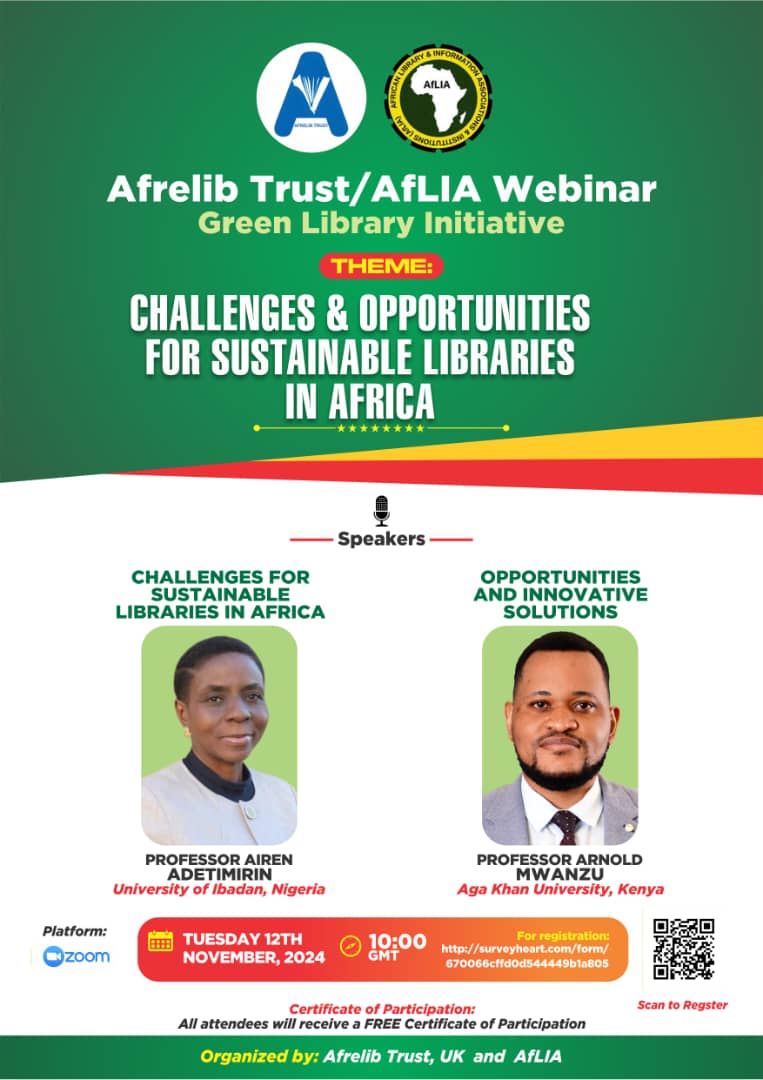
    Building a Greener Future: Join the Afrelib/AFLIA Webinar on Sustainable Libraries in Africa

    Afrelib/AFLIA Webinar on Green Library Initiative
    Theme: Challenges and Opportunities for Sustainable Libraries in Africa

    In an age where environmental sustainability is no longer optional, libraries across Africa are stepping up to become beacons of green practices and education. Green libraries play a crucial role in minimizing environmental impact and empowering communities by promoting sustainable living. They adopt energy-efficient systems, green building materials, and waste-reduction strategies, all while serving as knowledge hubs for sustainability.

    To further this vital mission,  Afrelib Trust (UK), in collaboration with the **African Library and Information Associations & Institutions (AfLIA), is organizing a  Green Library Initiative Webinar. This event will explore the challenges and opportunities involved in developing sustainable libraries throughout Africa.

    • Event Details:
      📅 Date: Tuesday, November 12th, 2024
      🕒 Time: 10:00 AM GMT
      📍 Platform: Zoom
      🎓 Certificate of Participation: All attendees will receive a FREE Certificate of Participation
    • Click to Register Now

    Featured Speakers:

    • Professor Airen E. Adetimirin – University of Ibadan, Nigeria:  A professor in the Department of Library, Archival and Information Studies, Prof. Adetimirin combines her expertise in Agriculture, Data Processing, and Library and Information Studies. Her teaching and research efforts are focused on developing library practices that resonate with the needs of African communities and align with sustainable goals.
    • Professor Arnold Mwanzu – Aga Khan University, Kenya : As the Chairman of the Kenya Library & Information Science Consortium (KLISC), Prof. Mwanzu manages Aga Khan University libraries across East Africa. With a Ph.D. in Information Science, he has earned numerous qualifications in organizational development and leadership, making him a leading advocate for innovative library solutions in the region.About the Organizers:
    • Afrelib Trust, UK:  Dedicated to advancing library and information services, Afrelib Trust focuses on fostering sustainable practices within African libraries. Learn more about Afrelib Trust here
    • African Library and Information Associations & Institutions (AfLIA):  AfLIA is a prominent organization advocating for the development of library services across Africa, serving as the voice of the African library and information community. Learn more about AfLIA here

    Don’t miss this opportunity to engage with leading experts and explore the future of sustainable libraries in Africa. Join us as we work together to make a lasting impact on our communities and the environment!

    Register Now

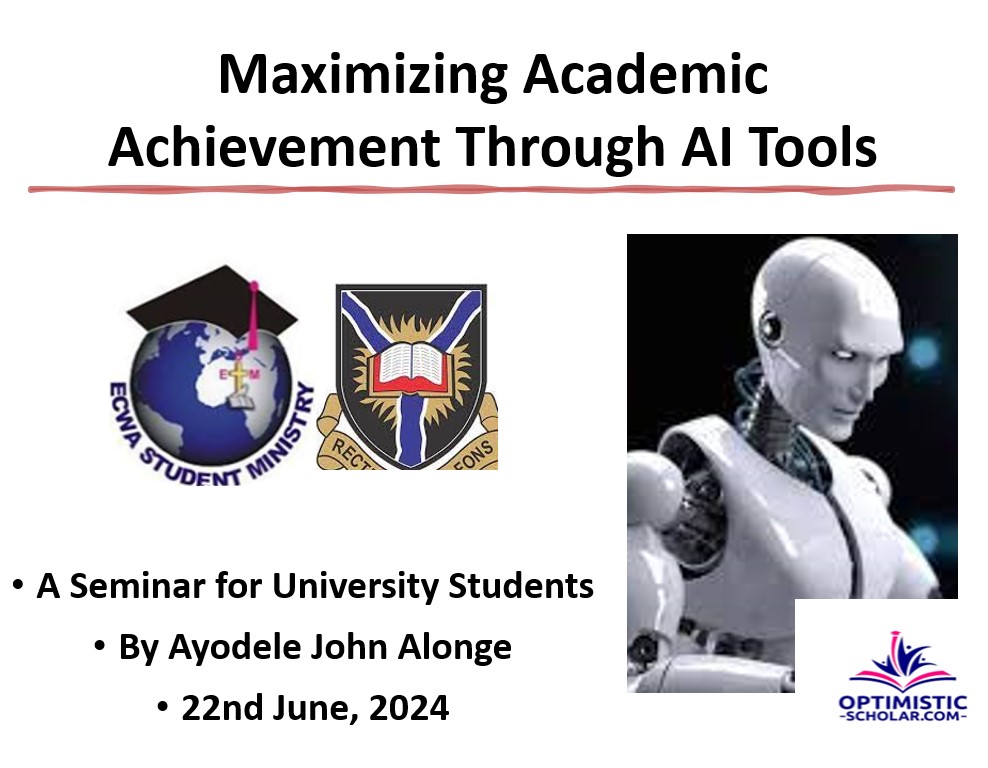
  • Maximising Academic Achievement using AI Tools: Insights from Dr. Ayodele John Alonge

    Maximising Academic Achievement using AI Tools: Insights from Dr. Ayodele John Alonge

    Maximising Academic Achievement Using AI Tools: Insights from Dr. Ayodele John Alonge

    In today’s fast-changing educational scene, artificial intelligence (AI) transforms how we approach learning and teaching. Dr. Ayodele John Alonge, a lecturer and researcher at the University of Ibadan and the principal content developer of the OptimisticScholar blog, discusses how AI tools could enhance academic performance in an upcoming talk. This lecture, delivered online at the ECWA Student Ministry Academic Summit on June 22, 2024, at the University of Ibadan in Nigeria, provides critical insights and practical uses of artificial intelligence in education. The article explores Dr. Alonge’s thorough guidance on using AI to improve educational outcomes.

    An Overview of AI in Education

    Artificial intelligence has become an essential component of modern education, providing creative solutions that go beyond traditional teaching approaches. Artificial intelligence tools are designed to:

    -Personalise Learning Experiences: AI personalises instructional content to fit each student’s specific needs, ensuring the appropriate amount of challenge and support.
    – **Streamline Administrative processes:** Automating processes like grading and scheduling allows educators to focus on teaching and student interaction.
    – **Offer Intelligent Tutoring Systems:** AI-powered tutors provide real-time feedback and support to help students learn complicated ideas and develop their skills.

    Key Artificial Intelligence Tools for Students

    Dr. Alonge presents various AI tools that have a substantial impact on teaching.

    • Intelligent Tutoring Systems (ITS): These systems use artificial intelligence (AI) to give personalised teaching that adapts to the student’s learning style and speed. Examples include Carnegie Learning and DreamBox.
    • AI-Enhanced Learning Management Systems (LMS): Platforms such as Canvas and Blackboard use AI to provide personalised learning paths and predictive analytics that help identify students who are at danger of falling behind.
    • Natural Language Processing (NLP) Tools: AI-powered tools like Grammarly and WriteLab improve writing skills by delivering real-time grammar and style suggestions.

    AI for administrative tasks

    Integrating AI in administrative work has various advantages:

    • Automated Grading: AI can evaluate multiple-choice tests and even essays, delivering immediate feedback and relieving educators of the time-consuming chore of manual grading.
    • Student Performance Analytics: AI systems analyse student data to provide insights into their performance and learning habits, allowing instructors to identify areas where students may want further assistance.

      Personalised learning with AI

    Personalised learning is one of the most revolutionary effects of AI in education. AI can analyse data from students’ interactions with instructional content.

    • Customise Learning Material: Tailor classes to students’ specific needs, making learning more effective and enjoyable.
    • Predict Learning Outcomes: Use predictive analytics to forecast students’ future performance and provide interventions that will help them achieve.

    Challenges and Ethical Consideration

    While AI provides various benefits, there are some problems and ethical considerations to address:

    • Data Privacy: Ensuring that student information is protected and utilised appropriately.
    • Bias in AI Algorithms: AI systems must be fair and unbiased to prevent reinforcing current educational inequities.
    • Edcuacators  Training: Educators require training to effectively integrate AI tools into their teaching practices.

    Future Trends in AI & Education

    Looking ahead, artificial intelligence is projected to continue affecting the future of education in various ways:

    • Advanced Adaptive Learning Systems: These systems will grow even more complex, offering highly tailored learning experiences.
    • AI in Collaborative Learning: AI will improve student collaboration, both in person and online, by linking learners with complementary talents and knowledge.
    • Virtual and Augmented Reality: AI-powered VR and AR will offer immersive learning environments, improving comprehension and recall of complex subjects.

    Question and Answer Session Highlights

    During the Q&A session, Dr. Alonge answered several crucial questions from the audience.

    • Installation in Low-Resource Settings:  Dr. Alonge emphasised AI’s ability to bridge educational gaps in low-resource settings through scalable and cost-effective solutions.
    • The Teacher’s Role in an AI-Powered Classroom: AI is viewed as a tool to support, not replace, instructors. Educators will continue to play an important role in advising and mentoring students.

    Conclusion

    Artificial intelligence has the potential to alter education, making it more personalised, efficient, and successful. Dr. Ayodele John Alonge’s views serve as a vital road map for educators, students, and policymakers seeking to harness the power of artificial intelligence in education. By adopting these innovative tools, we can pave the road for a more inclusive educational future.

    To learn more about the topic, view the whole video of Dr. Alonge’s address here

  • Harnessing AI for Academic Innovation: CARTA’s Webinar Series on Transforming African Research

    Harnessing AI for Academic Innovation: CARTA’s Webinar Series on Transforming African Research

    Unveiling AI’s Potential in African Academia: Join CARTA’s Upcoming Webinar

    As we progress into a future deeply influenced by technological advances, the conversation about the transformative role of artificial intelligence (AI) in academia and research is crucial. The Consortium for Advanced Research Training in Africa (CARTA), known for building a vibrant, multidisciplinary African academy that leads world-class research, is at the forefront of enhancing research capacity across the continent. CARTA is ready to lead this critical dialogue through a dynamic and timely series of webinars.

    Registration Procedure  Register Here  
    Join to engage in a transformative discussion that aims to redefine the landscape of research and academia in Africa through artificial intelligence.

    Why This Webinar Is Crucial

    The urgency of integrating AI into academic research and development strategies cannot be overstated—CARTA’s upcoming webinar arrives at a critical moment. As academic demands grow more complex, utilizing AI is shifting from an innovative option to an essential strategy. CARTA’s initiative underscores its dedication to pioneering advancements and boosting efficiency within Africa’s research and development sectors.

    Webinar Highlights

    Set for July 3 & 17, 2024, the webinar series promises an in-depth exploration of how AI can revolutionize the effectiveness, efficiency, and impact of research initiatives. Academics, researchers, and enthusiasts alike will find immense value in discovering the opportunities AI presents and the challenges it poses, as noted in CARTA’s recent  X (Twitter) post

    Engage and Explore

    The enthusiasm for these discussions is evident, and like many, the OptimisticScholar and its followers are eagerly awaiting the chance to engage. This webinar serves as a vital platform to debate how AI can meet the unique needs of the African continent and beyond, boosting our research capabilities and global impact.

    Stay tuned for the registration link from CARTA. Be sure to mark your calendars and get ready to participate in a transformative discussion aimed at reshaping the landscape of research and academia in Africa through artificial intelligence. We will update you as soon as the registration link becomes available.*

    Join us to leverage the power of AI and discover how it can foster a more innovative and impactful research environment in Africa. Don’t miss this opportunity to be part of a pivotal conversation that could define the future of academia on the continent of Africa and beyond.

    – Contributed by
    John Alonge 

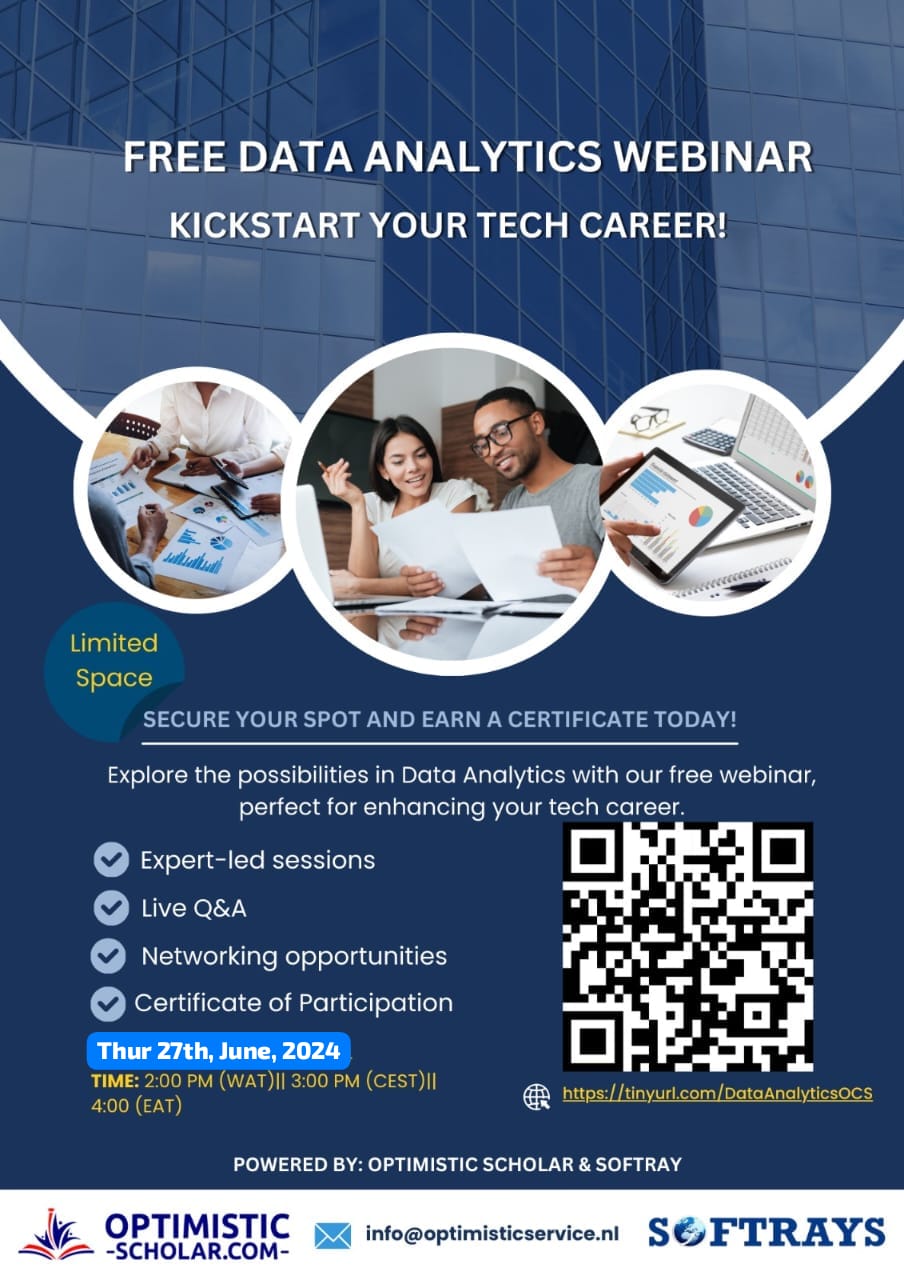
  • Free Webinar: Empower Your Career with Data Analytics Skills!

    Free Webinar: Empower Your Career with Data Analytics Skills!

    Announcing Our Exclusive Free Webinar: Launch Your Career in Data Analytics!

    As the tech industry continues to evolve, the demand for skilled data analysts is skyrocketing. To meet this growing need, we are excited to host a comprehensive webinar that will serve as an ideal platform for both newcomers and seasoned professionals looking to deepen their expertise in Data Analytics. This event is not just a learning opportunity—it’s a doorway to future career advancements.

    Webinar Details

    • Date: Thursday, June 27
    • Time: 2 PM (WAT)/ || 3 PM CEST || 4pm (EAT)
    • Secure your spot now by signing up here

    Why You Should Attend:

    • Expert-Led Sessions: Gain insights from seasoned data analytics professionals who are pioneers in the field. Our speakers bring a wealth of knowledge and experience, covering foundational concepts to advanced techniques in data analysis, machine learning, and predictive modeling.
    • Interactive Q&A:  Have specific questions? Get them answered directly by our experts during the live Q&A session. This is a great chance to delve deeper into topics of particular interest or challenges you’ve faced in the field.
    • Networking Opportunities: Connect with like-minded individuals who are equally passionate about data analytics. Expand your professional network, exchange ideas, and explore potential collaborations or job opportunities.
    • Certificate of Participation: Enhance your resume and demonstrate your commitment to continuing education with a Certificate of Participation issued to all attendees post-webinar.

    Hosted by Optimistic Scholar & Softray:
    This event is powered by Optimistic Scholar and Softray, leaders in research, dedication and technology solutions, committed to fostering a community of innovative thinkers and problem-solvers.

    Prepare to Explore:
    Whether you’re looking to make a career switch, hone your existing skills, or simply curious about what data analytics can offer, this webinar is tailored to help you succeed. With dedicated sessions on data handling, statistical analysis, and real-world applications of machine learning, you’ll come away with a clearer path to advancing your career in tech.

    Join us for an inspiring session and take a giant leap forward in your professional journey in Data Analytics.
    We can’t wait to see you there!

  • Advancing Inclusive and Sustainable Information Management through Recordkeeping Informatics

    Advancing Inclusive and Sustainable Information Management through Recordkeeping Informatics

    The 2024 Research Symposium: Inclusive & Sustainable Information Management through Recordkeeping Informatics
    *May 29-30, 2024*  
    Amsterdam, The Netherlands
    The 2024 Research Symposium, “Inclusive & Sustainable Information Management through Recordkeeping Informatics,” will take place in Amsterdam on May 29-30. Financially supported by I-Partnerschap of the Dutch Ministry of the Interior and Kingdom Relations, this event will feature leading experts such as Professor Charles Jeurgens (University of Amsterdam), Professor Gilian Oliver (Monash University), Associate Professor Fiorella Foscarini (University of Toronto), and Associate Professor Ragna Kemp Haraldsdottir (University of Iceland).
    The symposium will explore the challenges of distinguishing authoritative information from misinformation in a rapidly evolving digital world, where traditional information and records management practices struggle to keep pace. Recordkeeping informatics, a framework developed at Monash University, offers organizations strategies for managing data efficiently while ensuring accountability and transparency.
    Key topics include:
    – Transforming information management into an inclusive, sustainable practice
    – Establishing a shared set of values for data management
    – Applying the recordkeeping informatics framework in practice
    Experts Barbara Reed, Laura Millar, Martin Berendse, and Periklis Andritsos will provide their insights to enrich discussions and expand knowledge in this field.
    The symposium is designed for professionals in information management, including archivists, records managers, data scientists, and students captivated by the rapidly changing information landscape. While in-person participation is highly encouraged for the best experience, online participation is also available.
    To participate or learn more, visit: https://www2.asist.org/ap/Events/Register/zLEjay0r
  • Practical Applications of AI in Academic Research and Library Services

    Practical Applications of AI in Academic Research and Library Services

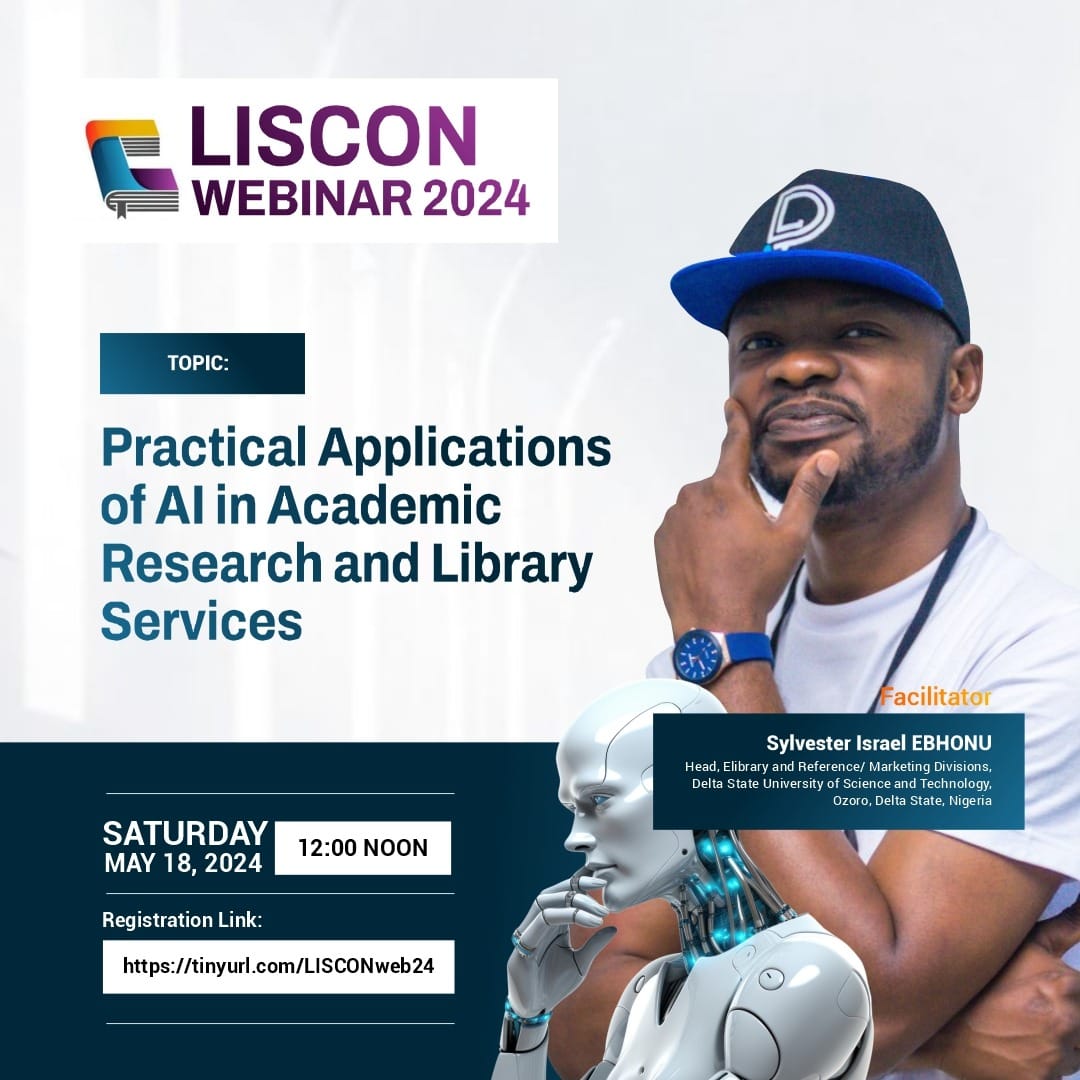
    The LISCON webinar, set for Saturday, May 18, 2024, at 12:00 p.m. (WAT), will explore the practical applications of artificial intelligence in academic research and library services. The agenda includes, but isn’t limited to, the following areas:

    • AI Tools in Academic Research: An investigation of specific AI tools and platforms that can streamline various aspects of research, including outlining, literature reviews, and information retrieval.
    • AI Tools in Library Services: Insights into how librarians can harness AI tools to enhance library services and management.
    • Guidelines for Ethics and Productivity: Tips and best practices for boosting efficiency and productivity while upholding ethical standards and research integrity.

    Speaker:

    • Sylvester Israel Ebhonu, Head of E-Library and Reference/Marketing Divisions, Delta State University of Science and Technology, Ozoro, Delta State, Nigeria.

    Who should attend: 

    • Academic Researchers and Scholars
    • Librarians and Library Management Staff
    • Information Technology Professionals in Academia
    • Students in Higher Education
    • Educational Administrators
    • AI Developers and Enthusiasts

    Participants are encouraged to register for the webinar https://surveyheart.com/form/618aebd279e4247cadc95aba