Welcome to WordPress. This is your first post. Edit or delete it, then start writing!
Category: Uncategorized
-

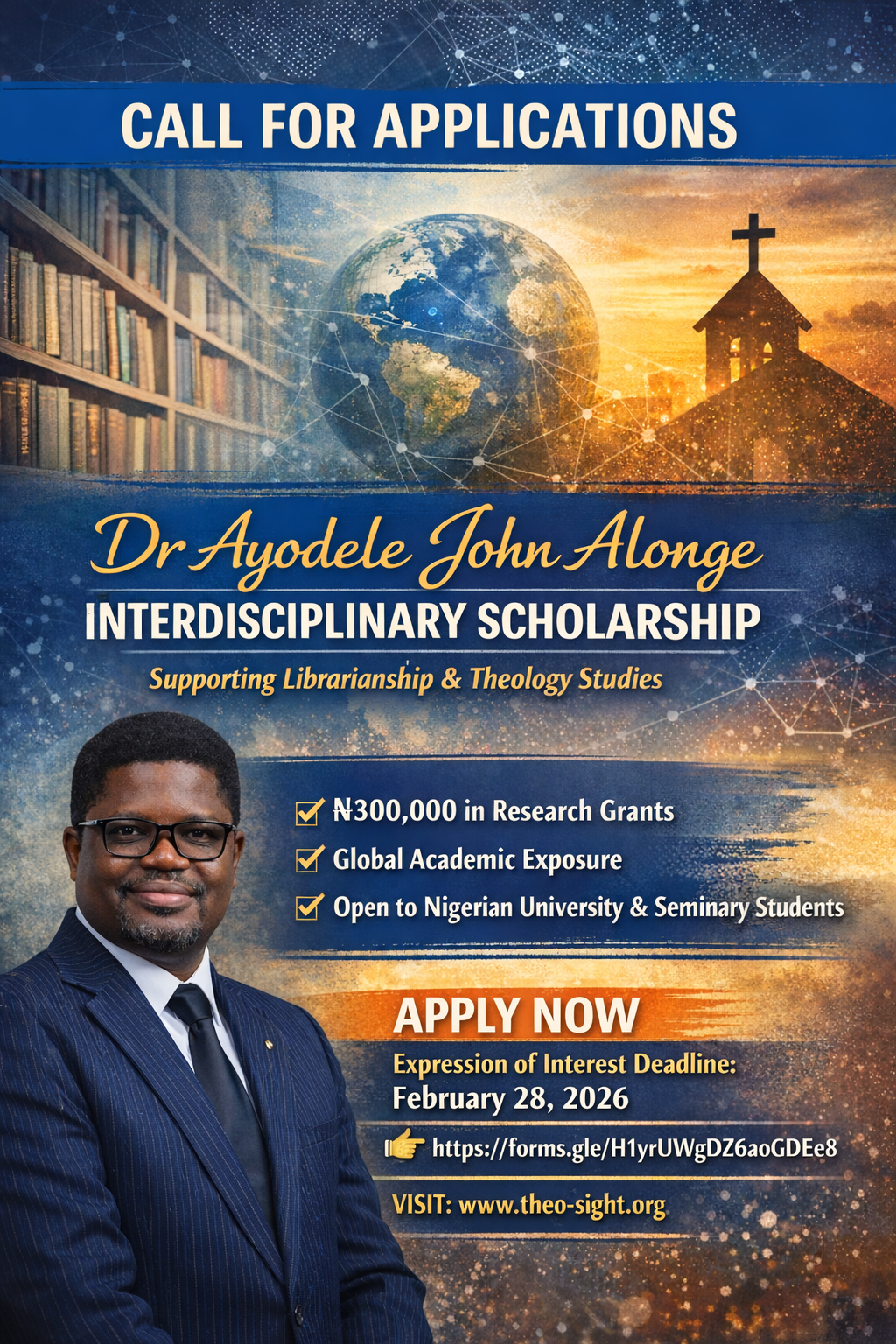
Call for Applications: Interdisciplinary Scholarship Advances Librarianship and Theology Studies
₦300,000 Interdisciplinary Scholarship Launched in Honour of Dr Ayodele John Alonge
A ₦300,000 interdisciplinary academic scholarship has been launched to empower emerging scholars in Library and Information Science and Theology, marking a bold step toward strengthening interdisciplinary research and academic excellence in Nigeria. The initiative, introduced by Theo-Sight Research and Advocacy, establishes the Dr Ayodele John Alonge Interdisciplinary Fellowship, awarding ₦100,000 each to three outstanding wi
nners selected through a competitive essay and research process.Organisers say the fellowship promotes innovation, cross-disciplinary scholarship, and academic distinction among students enrolled in accredited Nigerian universities and theological institutions. The award is instituted in honour of Dr Ayodele John Alonge, a respected library and information professional in Nigeria who is also exploring scholarship in theological education, with research interests spanning education, media, library, and archival science.
Celebrating a Scholar Bridging Knowledge, Media, and Faith
According to organisers, the fellowship reflects Dr Alonge’s distinctive academic path—one that integrates digital transformation in librarianship with theological studies and faith-informed research. By establishing the fellowship in his name, Theo-Sight seeks to inspire young scholars to move beyond traditional academic silos and contribute meaningfully to evolving knowledge systems in Africa and globally.
“This is more than financial support,” said Rev. Dr Godwins Adeboye, Chairman, Board of Trustees, Theo-Sight Research and Advocacy, Abuja, Nigeria. “It is a call to interdisciplinary excellence and intellectual leadership.”
What the Scholarship Offers
The programme features three award tracks, with ₦100,000 granted to each selected recipient.
Digital Transformation in Librarianship Award
(Open to Undergraduate and Postgraduate Students)
Applicants must submit an analytical essay exploring how digital technologies—including artificial intelligence, digital archives, automation, and data-driven systems—are reshaping librarianship and redefining information services.
Fellowship for Library Science and Theology
(Open to Postgraduate and Theological Seminary Students)
This category requires a research paper or scholarly essay examining the intersection of librarianship and theological studies. Suggested themes include information ethics, faith-based knowledge stewardship, theological libraries in the digital era, and librarianship as ministry.
Structured Academic Review Process
The scholarship will be administered through a transparent, multi-stage evaluation process:
-
Expression of Interest Deadline: February 28, 2026
👉 https://forms.gle/H1yrUWgDZ6aoGDEe8 -
Submission Guidelines Released: March 16, 2026
-
Final Submission Deadline: April 17, 2026
-
Review Period: April 17 – May 1, 2026
-
Winners Announced: May 4, 2026
Organisers emphasise that all submissions will undergo rigorous academic review to ensure merit, fairness, and excellence.
International Recognition
Winners will present their research during a hybrid public lecture on May 24, 2026, in Atlanta, Georgia, USA, where awards will be formally conferred. The event is expected to bring together academics, faith leaders, researchers, and professionals across the information science and theological communities.
Eligibility
Applications are open to:
-
Undergraduate and postgraduate students in Library and Information Science or related disciplines
-
Theological seminary students (undergraduate and postgraduate)
-
Students enrolled in accredited Nigerian institutions
Advancing Nigeria’s Academic Future
As digital transformation reshapes information ecosystems and theological institutions navigate technological change, the fellowship aims to position Nigerian students at the forefront of interdisciplinary innovation and scholarly leadership.
Applications close February 28, 2026.
-
-

Look for Problems, Look for Gaps: The Path from Training to Transformation
Building Careers in a Changing World
By Dr. Ayodele John Alonge | October 1, 2025
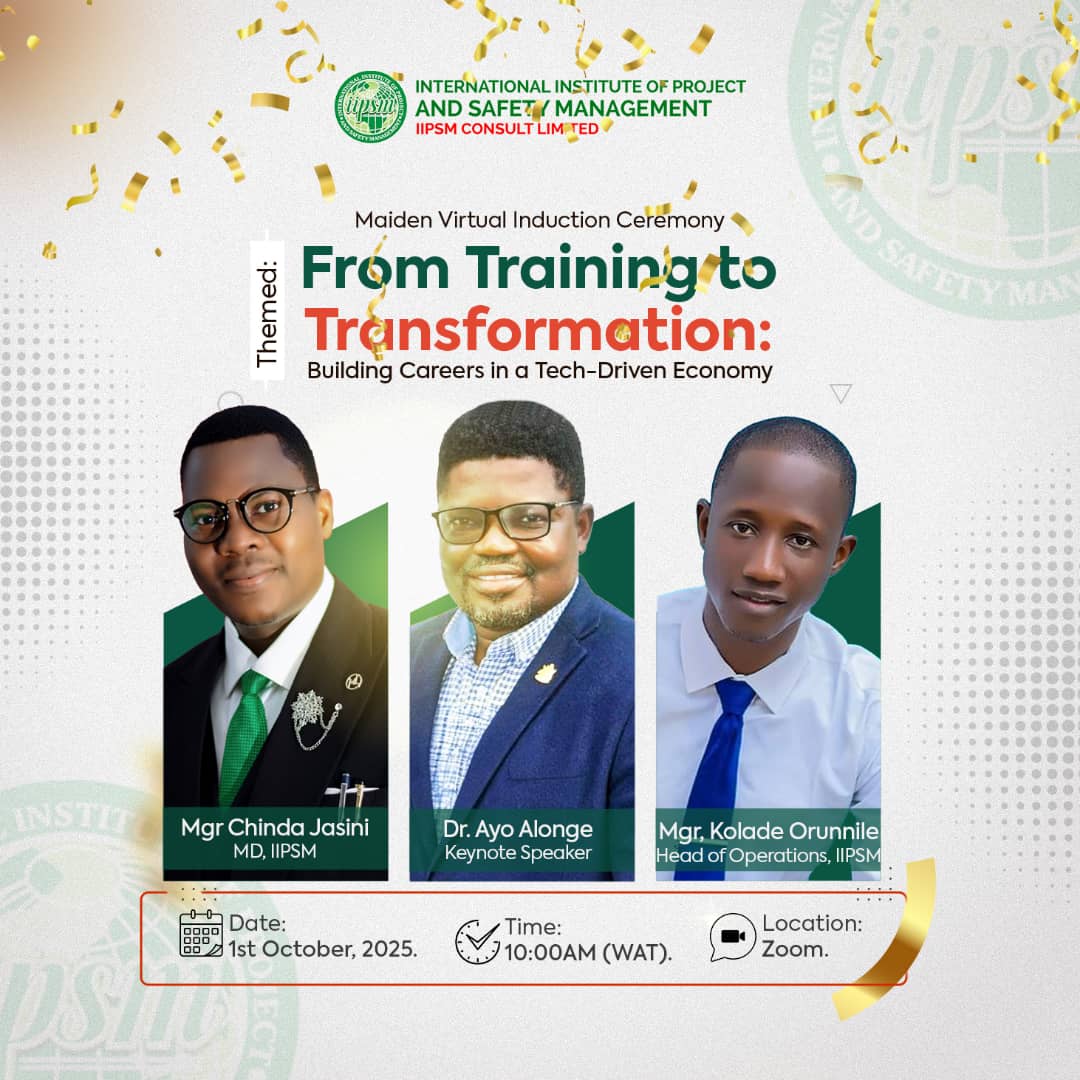
On October 1st, 2025, a day that also marked Nigeria’s 65th Independence Anniversary, I had the privilege of serving as the Keynote Speaker at the Induction Ceremony of the International Institute of Project and Safety Management (IIPSM).

The event was a celebration of growth, resilience, and purpose. It was also the first virtual induction ceremony of the Institute, and the Zoom platform was filled to capacity with young professionals, faculty members, and guests from across Nigeria. I joined the session from the United States, where I am currently pursuing another learning experience. It was a moment of reflection, pride, and gratitude as I shared insights on the theme, “From Training to Transformation: Building Careers in a Tech-Driven Economy.”
Training Is Only the Beginning
Every phase of life is a project — from education to career, marriage, and personal development. That was the central message of my keynote. I explained that project management is not just a discipline but a life philosophy — a structured, intentional way of setting goals, making plans, and achieving meaningful results. Reflecting on my journey from a classroom teacher to l being a librarian to becoming university lecturer to a researcher and facilitator beyond africa I emphasized that professional growth truly begins where training ends. As I said during the ceremony, “Training is the beginning; transformation is the destination.”
The Power of Lifelong Learning
When I completed my PhD, I thought since I had reached the peak of my academic pursuit, I wont need to enroll for formal study any longer. But life soon reminded me that learning never truly ends. Years later, I enrolled in a project management program that completely reshaped my mindset, expanded my network, and opened new doors of opportunity. That experience taught me that lifelong learning is not about collecting certificates — it’s about expanding your capacity to think, staying curious, and building the resilience to adapt in a fast-changing world. Those who continue to learn and evolve will always find relevance and opportunity. Growth requires curiosity, flexibility, and a willingness to keep improving.
The Role of Technology in Growth
I reminded the audience that technology has become the foundation of nearly every profession. When I once taught Application of ICT to Library Science at the University of Ibadan, many of the tools we now take for granted were still emerging. Today, technology shapes how we work, communicate, and learn. The world changes faster than any syllabus, and those who fail to adapt risk being left behind. Whether one is a librarian, engineer, or entrepreneur, digital competence has become essential for progress. Yet, technology alone cannot create excellence. The most successful professionals will always be those who blend their knowledge with human-centered qualities — empathy, collaboration, integrity, and creativity.
Volunteering, Service, and Transformation
Transformation is not measured by the volume of what we learn, but by how we use that knowledge to serve others and humanity. I shared how some of my most meaningful opportunities began through volunteering. From supporting projects with, Afrelib, UK, the Gideons International to leading youth and community initiatives in my church in the Netherlands and the United States, These volunteers services have opens doors that money alone cannot. Sometimes, offering your time, energy, and creativity freely becomes the bridge to a larger purpose. Volunteering helps you see the world differently. It helps you look for problems and look for gaps that others might overlook. These are the starting points for meaningful innovation and transformation.
From Training To Transformation: Building a Career with Purpose
In my message to the new inductees, I encouraged them to think globally but act locally. It is within our local communities that opportunities for real impact often emerge. I reminded them: there may not be jobs everywhere, but there are problems everywhere — and problems are opportunities in disguise. The real professional is not the one who waits for employment but the one who identifies gaps, solves problems, and creates value. One of my guiding principles has always been: Look for problems, look for gaps, and see how you can fill them. Every solution you design, every innovation you introduce, and every life you touch becomes a testament to transformation through learning.
Practical Advice for New Inductees
During the keynote lecture, I shared some practical advice that can guide the new inductees in their journey of professional and personal growth:
-
Master Your Tools: Learn tools like Scrum, Jira, Miro, and Microsoft Teams.
-
Develop a Digital Mindset: Keep learning — sign up for webinars, workshops, and online courses.
-
Tell Your Story: Build your personal brand on news media like LinkedIn. Share your achievements and reflections — the world needs to hear your story.
-
Think Globally, Act Locally: Seek global best practices, but apply them to solve local problems.
-
Stay Ethical: Integrity and honesty are key to sustained success.
-
See Life as a Project: Set goals, plan milestones, manage risks, and celebrate small wins.
These principles are not just professional habits — they are life skills. They keep us relevant, grounded, and impactful in every season of life.
A Call to Lifelong Impact
As I concluded my keynote, I reminded the inductees that while training equips us with knowledge, transformation gives that knowledge meaning and direction. “The future belongs not to those who are merely trained,” I said, “but to those who transform through what they have learned.”
Every certificate we earn should lead to positive action. Every skill should find expression in service. And every opportunity should become a platform for impact.

True transformation goes beyond the workplace. It is about what we make work wherever we find ourselves — at home, in the community, in our profession, or in service to others. When we make it a habit to look for problems, identify gaps, and courageously create solutions, we move from success to significance. In doing so, we don’t just build careers — we build communities, strengthen institutions, uplift nations, and leave a lasting legacy.
Keep learning. Keep serving. Keep transforming.
— Dr. Ayodele John Alonge
-
-

AI, Libraries, and the Future of Knowledge in Africa: Key Insights from ICSKS 2025
By Musa Ntasikoi
Introduction: A Continental Dialogue on AI and Sustainable Knowledge
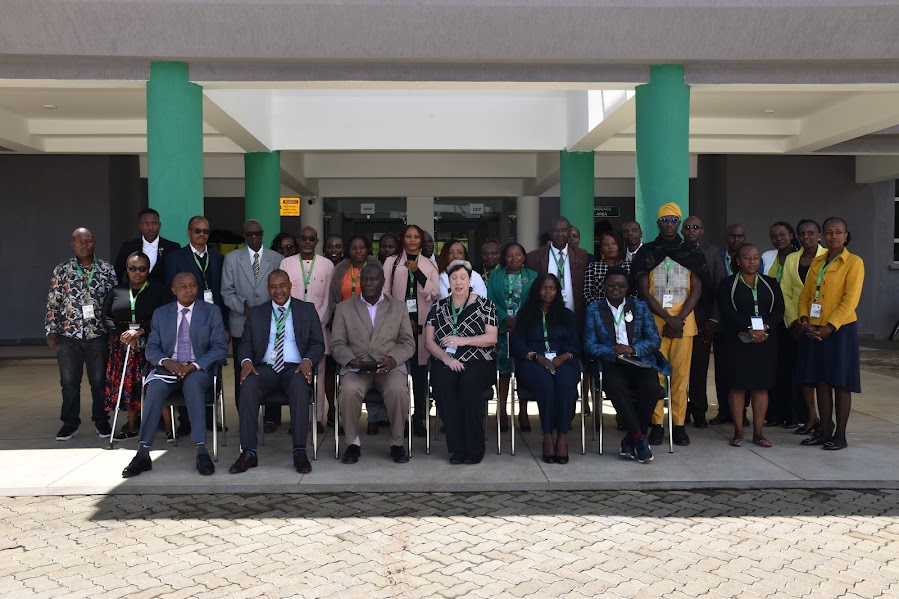
From April 14–16, 2025, Karatina University in Kenya hosted the International Conference on Sustainable Knowledge Systems (ICSKS 2025), a landmark gathering of researchers, librarians, policymakers, and technologists. Under the theme “Artificial Intelligence, Libraries, and the Future of Sustainable Knowledge in Africa,” the event sparked critical conversations on ethical AI integration, cultural preservation, and Africa’s digital transformation. Supported by Karatina University, Optimsists Concept Services (Netherlands), and partner institutions, the conference underscored the urgency of balancing innovation with equity in shaping the continent’s knowledge ecosystems.
Day 1: Laying the Foundation for Ethical AI
Theme: AI for Inclusive, Ethical, and Sustainable Knowledge Systems
The conference opened with a powerful keynote by Prof. Marlene Holmner, who challenged attendees:
“AI must enhance access while upholding ethical frameworks. In a data-driven world, knowledge should serve humanity—not the other way around.”
Key discussions included:
-
Transparency in AI: Prof. Peter Gatiti stressed embedding ethics at the core of AI systems, warning against treating fairness as an afterthought.
-
Inclusive Tools: Brenda Betty Kiema demonstrated AI-powered text-to-speech and adaptive interfaces revolutionizing library accessibility.
-
Green Libraries: Dr. Diana Atuase highlighted AI’s role in optimizing energy use and sustainable workflows.
Research Spotlights:
-
AI-driven disease detection (University of Nairobi).
-
Smart agriculture solutions for food insecurity.
-
Preserving Isukha indigenous knowledge using AI.
A recurring theme emerged: Africa’s youth need hands-on AI training. Dr. Charles Wahogo and Dr. Stephen Njoroge argued, “Students require practical AI tools to innovate and thrive in tomorrow’s workforce.”
Day 2: Innovations and African Perspectives
Theme: AI in Libraries, Archives, and Indigenous Knowledge
Day 2 centered on balancing innovation with cultural integrity:
-
Indigenous Knowledge: Elphas Muruli cautioned against AI distorting heritage without community-led context.
-
Archival Transformation: Nigeria’s National Archives, as shared by Ese Eunice Anenene, showcased AI reducing retrieval times by 40%.
-
Policy Gaps: Isaiah Mang’eni and Dr. Ayodele John Alonge emphasized aligning AI with Africa’s social priorities to prevent digital divides.
Provocative Questions:
Naomy Mwaurah and Salome Kivuva asked, “Is AI a threat or ally? The answer hinges on capacity-building and trust.” Meanwhile, Ruth Kiilu championed AI-driven chatbots and semantic search to personalize library services while protecting user rights.
Day 3: Envisioning the Future
Theme: AI vs. the Library? Synergies and Tensions
The final day explored AI’s dynamic role in redefining libraries:
-
Youth and Digital Activism: Dr. Victor Ntabo reframed Kenya’s Gen Z as “bottled energies using digital tools to challenge inequality.”
-
Sustainable AI: Ms. Lydia Chegem noted, “AI’s success depends on skilled professionals and policies, not just technology.”
-
Open Knowledge Sovereignty: Oyemike Victor Benson urged African libraries to lead the open knowledge movement, calling it “a fight for informational self-determination.”
Key Resolutions and Calls to Action
ICSKS 2025 concluded with seven urgent resolutions:
-
Embed Ethics: Integrate equity and transparency in AI design.
-
Curriculum Reform: Update LIS programs to include AI, data ethics, and governance.
-
Indigenous Leadership: Let communities guide AI documentation of heritage.
-
Green Libraries: Use AI for energy-efficient, eco-friendly practices.
-
Inclusive Access: Adapt AI tools to African languages and rural contexts.
-
Policy Frameworks: Governments must regulate AI to align with development goals.
-
Invest in Infrastructure: Prioritize connectivity and human capital.
A Final Word from the Conference Chair
“Let this mark the start of a pan-African movement to humanize AI and empower libraries as digital age catalysts.”
— Dr. Ayodele John Alonge
Next Steps
-
Proceedings: Open-access publication of ICSKS 2025 papers.
-
Regional Hubs: Universities invited to collaborate on AI innovation hubs.
-
ICSKS 2026: Host applications open—contact icsksafrica@gmail.com.
Stay Connected
🌐 Website: www.icsksafrica.org | 📧 Email: icsksafrica@gmail.com | 🐦 Twitter: @ICSKS_Africa | 📌 Hashtag: #ICSKS2025
Conclusion
ICSKS 2025 wasn’t just a conference—it was a rallying cry for Africa to shape its AI future. As libraries evolve from analog repositories to digital hubs, the continent’s challenge remains clear: harness technology without erasing humanity. The question now is, How will your institution contribute to this vision?
ICSKS2025 Photo Albums
Relive some of the most memorable moments from the conference! Browse through the official photo albums below:📷 Day 1 Photo Album https://photos.app.goo.gl/tnqrdpxJkRVbphFm9
📷 Day 2 Photo Album https://photos.app.goo.gl/reYSMjETFdCAH4oH9
📷 Day 3 Photo Album https://photos.app.goo.gl/bnNsZxACuGzNXoCp8
New chat -
-

Frontiers of AI: Insights from the Latest Trends in Artificial Intelligence Research Webinar
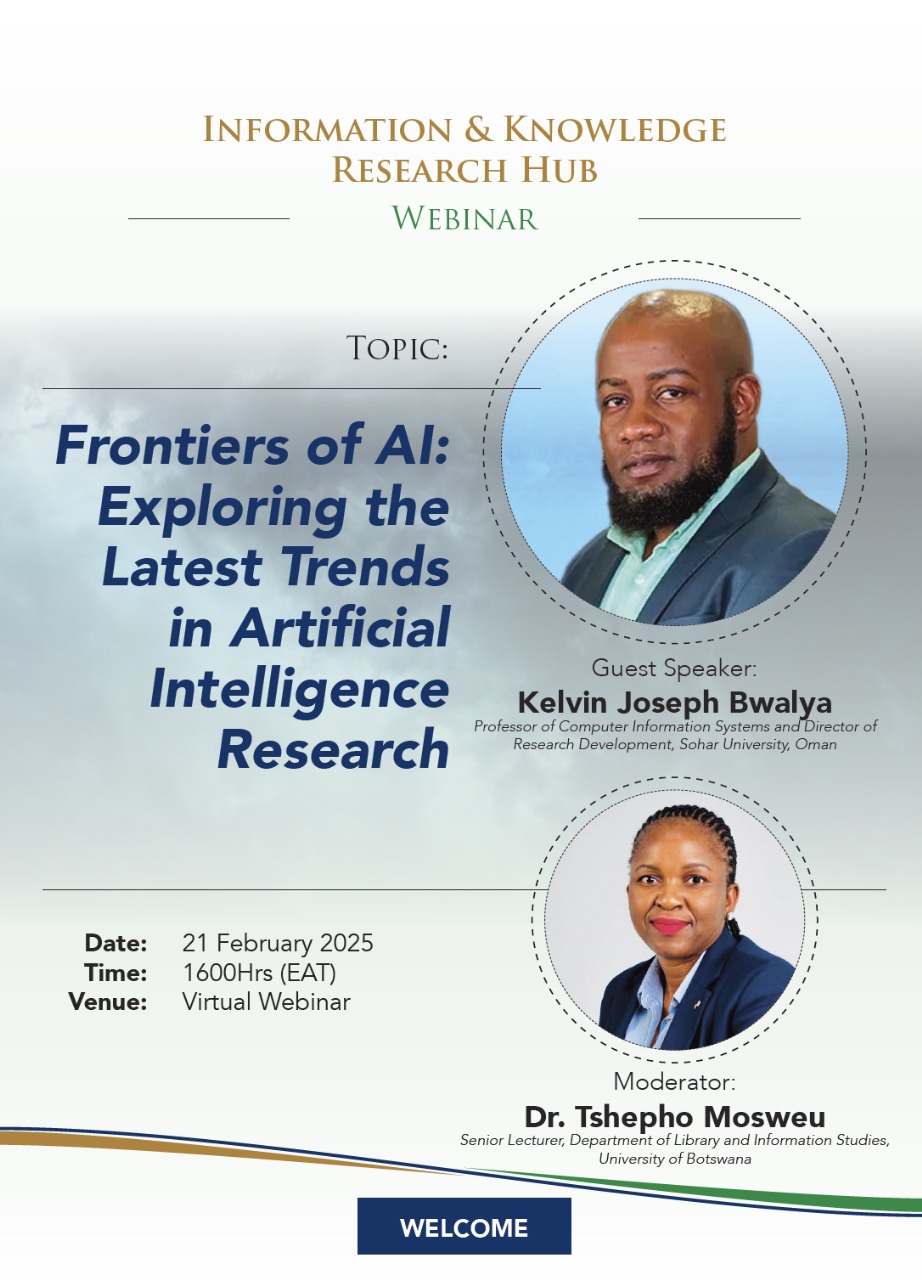
Artificial Intelligence (AI) is here to stay, whether we like it or not. The recent webinar titled “Frontiers of AI: Exploring the Latest Trends in Artificial Intelligence Research” brought together leading AI experts to discuss the latest advancements, challenges, and opportunities in the field.
AI for Research: SciSpace-Research for Students, Academics, and Librarians with All-in-One AI Tools
Webinar Recap
The webinar, held on 21 February 2025, was organized by the Information & Knowledge Research Hub, a group dedicated to fostering discussions and exploration in diverse aspects of information and knowledge management. The hub serves as a space for curious minds and lifelong learners, and is coordinated by Prof. Tom Kwanya.

The event featured distinguished guest speaker Professor Kelvin Joseph Bwalya, Professor of Computer Information Systems and Executive Director of Research Development at Sohar University, Oman. The session was moderated by Dr. Tshepho Mosweu, Senior Lecturer, Department of Library and Information Studies, University of Botswana.
Key Takeaways from the Webinar
1. Human-Machine Collaboration is the Future
One of the critical discussions in the webinar highlighted the need for human-machine collaboration in AI development. Professor Bwalya emphasized that AI and humans must work together, with machines learning from data while humans push innovations further. Encouraging continuous man-machine interaction will be key to improving AI capabilities and ensuring AI works equitably across different applications.
2. Africa Must Invest in Groundbreaking AI Innovations
Despite Africa’s growing AI landscape, there is still a lack of groundbreaking innovations. While Kenya has attracted major AI investments, including Microsoft, many African nations are not yet leveraging their full potential in AI research and development. The webinar stressed the importance of Africa moving beyond being consumers of AI and instead becoming creators of homegrown AI solutions that can shape global AI advancements.
3. The Role of AI Governance and Policy Frameworks
The conversation around AI governance and policy remained central. Discussions covered the European AI Act (July 2024) and the African Union’s Continental AI Strategy (July 2024), both of which aim to regulate AI responsibly. Participants highlighted the need for African governments to create AI policies that not only regulate but also promote innovation while safeguarding ethical AI practices.
4. AI’s Impact on Information Science and Knowledge Management
AI is reshaping library and information science by automating metadata management, semantic analysis, and knowledge organization. Professor Bwalya emphasized that AI thrives on structured, linked data, necessitating a shift in skill sets and curricula for African information professionals.
He stressed that traditional information management approaches are evolving, and professionals must embrace AI-driven data analysis, knowledge representation, and machine learning applications to stay relevant in the digital age.
5. The Need for Africa-Based AI Development
A major concern raised was the fact that most AI systems are designed in Western countries, often overlooking African data and perspectives. This lack of representation in AI development results in bias and misinformation when applied to African contexts.
Participants called for African-centered AI development, focusing on local languages, cultures, and socio-economic realities. There was also a discussion on data sovereignty, ensuring that African data remains under African control rather than being monetized by external entities.
6. AI and the Global Innovation Race
The global AI competition is accelerating, with China, the US, and Europe leading the way. Elon Musk’s Grok AI, along with China’s latest AI advancements, have heightened the competition in superintelligent AI systems. The discussion raised concerns about Africa’s position in this AI race, with a call for governments and institutions to prioritize AI investment and participate more actively in international AI development.
Looking Ahead: Africa’s AI Future
The webinar concluded with a call to action: Will Africa lead in AI, or will it continue playing catch-up? Policymakers, researchers, and industry leaders must take bold steps to ensure Africa is not merely a consumer of AI technology but an innovator and contributor.

With initiatives like Agenda 2063 and emerging AI governance frameworks, Africa has a strong foundation to build upon. However, the continent must move beyond discussions and take concrete actions toward AI research, policy development, and cross-sector collaborations.
Final Thoughts
The webinar reinforced the urgency for African researchers and policymakers to actively participate in shaping AI regulations, developing AI-driven solutions, and integrating AI into various industries.
Participants emphasized that collaboration is key, advocating for interdisciplinary partnerships between AI researchers, legal experts, policymakers, and business leaders. Only by working together can Africa bridge the gap and establish itself as a force in AI development.
Appreciation goes to Professor Kelvin Joseph Bwalya and Dr. Tshepho Mosweu for leading this engaging and thought-provoking discussion, as well as Prof. Tom Kwanya and the Information & Knowledge Research Hub for organizing the event.

Register for a similar webinar, –Practical AI Applications in Research & Professional Fields
-

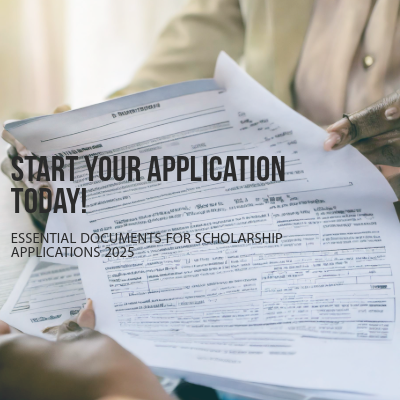
Must-Have Documents for Scholarship Applications in 2025
Securing a scholarship can be a game-changer for students looking to finance their education while minimizing student loan debt. However, the competition for scholarships remains fierce, making it crucial for applicants to gather and submit all the necessary documents on time.
To streamline the scholarship application process, students should prepare the essential documents in advance. While not every scholarship will require all of these documents, having them readily available will maximize opportunities and ensure seamless submissions.
8 Essential Documents for Scholarship Applications in 2025
1. Scholarship Application Form
The scholarship application form is the most fundamental document. It serves as the primary medium for applicants to provide their personal information, academic background, and extracurricular achievements. Each scholarship program will have its unique form, so applicants must carefully complete and review it before submission.
2. Academic Transcript
An academic transcript is an official record of a student’s academic performance, listing grades, courses taken, and overall achievements. Scholarship committees rely on transcripts to evaluate eligibility and qualifications. To obtain an official transcript, students must request it from their current or most recent educational institution.
3. Statement of Purpose (SOP)
A Statement of Purpose is a personal essay that highlights an applicant’s academic background, career aspirations, and reasons for applying to a particular scholarship. A well-crafted SOP should be engaging, compelling, and typically range between 400 and 500 words. This document plays a pivotal role in persuading the selection committee of the applicant’s dedication and potential.
4. Curriculum Vitae (CV) or Resume
A Curriculum Vitae (CV) or resume provides a summary of an applicant’s educational qualifications, work experience, skills, and notable achievements. It should be concise yet comprehensive, ensuring that the scholarship committee gains a clear understanding of the applicant’s professional and academic journey.
5. Letter of Recommendation
A Letter of Recommendation is a testimonial written by a teacher, professor, employer, or mentor who can vouch for the applicant’s character, academic capabilities, and potential. Scholarship applicants should seek recommendations from individuals who are reputable in their fields and can provide strong endorsements.
6. International Passport
For students applying for international scholarships, an international passport is a mandatory document. It serves as proof of identity and nationality, enabling applicants to travel abroad for their studies. Students should ensure that their passports are valid for the intended duration of their academic programs.
7. Test of English Proficiency
Many scholarships, especially those offered by institutions in English-speaking countries, require applicants to demonstrate English proficiency. Standardized tests such as the IELTS, TOEFL, or other recognized exams assess an applicant’s ability to read, write, and communicate in English effectively. Candidates should verify the specific language requirements for each scholarship.
8. Study Plan
A study plan is a detailed outline of an applicant’s educational and career goals. It specifies what they intend to study, how they plan to achieve their academic objectives, and how the scholarship will contribute to their success. A well-structured study plan enhances the applicant’s credibility and demonstrates their commitment to education.
Additional Requirements
Some scholarships may have additional requirements, such as a portfolio of work, writing samples, or proof of extracurricular involvement. It is essential for applicants to review each scholarship’s specific criteria carefully to avoid missing any crucial documents.
Final Thoughts
By preparing and organizing these essential documents in advance, applicants can significantly improve their chances of securing a scholarship. Ensuring that all required materials are submitted in the correct format and before the deadline will help create a strong, compelling application.
For more scholarship tips and updates, stay connected and explore opportunities that align with your academic and career goals.
-

Key Steps to Establishing and Managing Enterprises in Nigeria as an Infopreneur
Building Success: Key Steps to Establishing and Managing Enterprises in Nigeria as an Infopreneur
In today’s information-driven world, infopreneurship is rapidly gaining traction as a viable and rewarding business model. Combining the power of information with entrepreneurial spirit, infopreneurs create and deliver knowledge-based products and services to meet the specific needs of their target audience. Whether you’re crafting an e-learning platform, providing consulting services, or curating a digital library, establishing and managing an infopreneurial enterprise requires strategic planning and innovative thinking.

Find out how to apply the key steps for establishing and managing enterprises to succeed as an infopreneur in Nigeria’s dynamic market.
Establishing an Infopreneurial Enterprise
Infopreneurship starts with recognizing the value of information and leveraging it to solve real-world problems.
1. Identify a Niche Market
Infopreneurs thrive by addressing specific, underserved needs. Examples of niche markets include:
- Curated reading lists for bibliotherapy.
- Online courses on niche topics like digital archiving or metadata management.
- Research services for academic and corporate clients.
Conduct market research to identify gaps where your expertise can provide solutions.
2. Develop a Business Plan
Your business plan should clearly articulate:
- The value proposition of your information-based services.
- Target audience and marketing strategies.
- Revenue streams (e.g., subscriptions, consulting fees, or one-time product sales).
3. Secure Funding
As an infopreneur, startup costs can be relatively low, but you still need initial funding for:
- Building a website or digital platform.
- Purchasing necessary tools (e.g., e-learning software or content management systems).
- Marketing and branding efforts.
Explore options like grants, personal savings, or crowdfunding platforms.
4. Register Your Business
Register with the Corporate Affairs Commission (CAC) and ensure compliance with intellectual property laws to protect your content.
5. Build Your Team
For solo infopreneurs, outsourcing tasks like graphic design, content writing, or website management can help you scale. For larger ventures, hire skilled professionals who align with your vision.
6. Set Up Your Digital Workspace
Most infopreneurial businesses are digital-first. Invest in:
- A professional website.
- Tools for content creation, delivery, and analytics (e.g., LMS platforms, email marketing tools).
7. Market Your Infopreneurial Services
Use social media, blogs, and email campaigns to reach your target audience. Highlight your expertise through free resources like webinars, eBooks, or tutorials to attract clients.
Managing an Infopreneurial Enterprise
Once established, effective management ensures your business thrives.
1. Focus on Content Quality
High-quality, accurate, and relevant information is the foundation of your business. Continuously update and improve your offerings.
2. Build Strong Customer Relationships
Engage with your audience through personalized communication, responsive customer support, and regular updates.
3. Leverage Technology
Adopt tools like:
- Learning Management Systems (LMS) for course delivery.
- Customer Relationship Management (CRM) software to track client interactions.
- Analytics tools to measure engagement and refine strategies.
4. Financial Management
Track income and expenses diligently. Infopreneurs often benefit from diversifying income streams, such as combining digital products (eBooks) with live services (webinars or consulting).
5. Embrace Innovation
Stay ahead by exploring emerging trends, such as AI-powered content creation, augmented reality for immersive learning, or blockchain for secure data transactions.
6. Collaborate and Network
Form partnerships with libraries, educational institutions, or other infopreneurs to expand your reach and credibility.
Budgeting for Infopreneurs
Budgeting is critical for infopreneurship success.
- Initial Costs: Website development, content creation tools, marketing, and professional services.
- Ongoing Costs: Platform subscriptions, software updates, and advertising.
Always allocate funds for research and innovation to keep your offerings competitive and relevant.
Final Thoughts
Infopreneurship represents a unique opportunity to turn your knowledge and expertise into a sustainable enterprise. By combining the principles of traditional entrepreneurship with the power of information, you can create value for your audience while achieving personal and professional growth.
💬 Are you an aspiring infopreneur, or do you already run an information-based business? What challenges have you faced, and what strategies have worked for you? Share your thoughts in the comments below!
- Dr. Ayodele John Alonge, Lecturer
-

Call for Participation: Free WIPO Distance Learning Course on Intellectual Property
Call for Participation: WIPO Distance Learning Course for Librarians, Information Professionals, and Publishers
The Department of Library, Archival, and Information Science invites librarians, information professionals, publishers, and other interested individuals to register for the FREE World Intellectual Property Organization (WIPO) DL-101 course.
Key Details:
Course Content

- Introduction to IP: Core concepts of intellectual property.
- Copyright & Related Rights: Protecting creative works and managing rights.
- Trademarks & Geographical Indications: Safeguarding brand names and origins.
- Patents & Industrial Design: Protecting innovations and designs.
- Unfair Competition & WIPO Treaties: Addressing market practices and global IP frameworks.
- Plant Varieties, Traditional Knowledge, & IP Development: Role of IP in agriculture, culture, and development.
Mode & Duration: Online and Self-paced, from October to November with the final evaluation in November.
- Schedule: Complete the modules at your own pace.
Registration Deadline: Open until Friday, 13th September, for the September intake.
The WIPO DL-101 course, offered free of charge, provides librarians, information professionals, and publishers with essential knowledge on intellectual property, including copyrights, trademarks, and patents, through a flexible, self-paced online program.
For registration
To register, please complete the form at this link .
- You will receive an invitation from WIPO after this initial step.
For more information, please contact Dr. A.J. Alonge of the Department of Library, Archival, and Information Studies, University of Ibadan, via WhatsApp
-

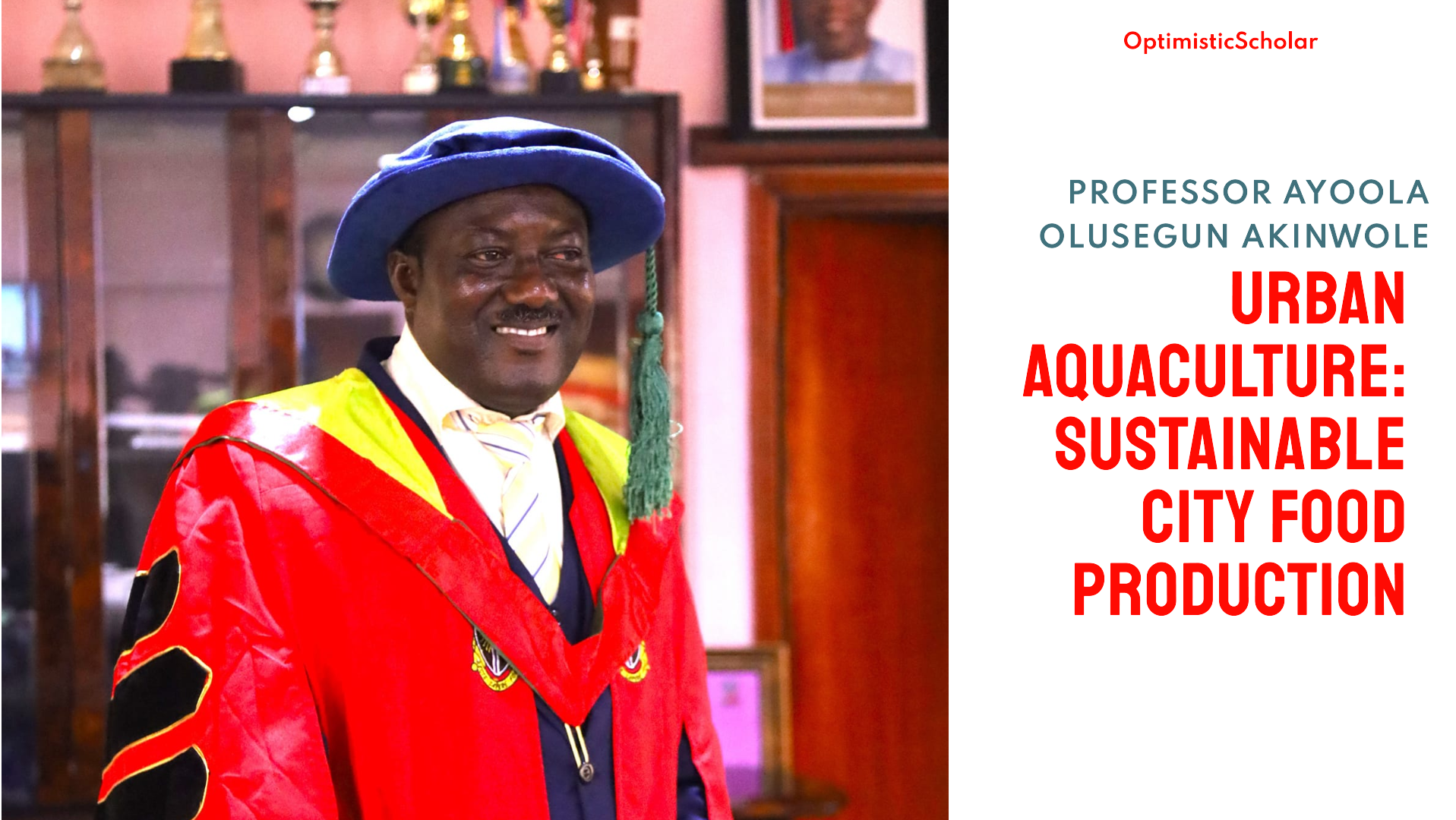
Urban Aquaculture: A Game-Changer for Sustainable City Food Production and Resource Management
University of Ibadan Expert Champions Cutting-Edge Aquaculture Strategies to Tackle Urban Food Security Issues
In a groundbreaking presentation at the University of Ibadan, Professor Ayoola Olusegun Akinwole, a distinguished expert in Aquaculture Engineering and Water Resources Management, proposed urban aquaculture as a transformative approach to addressing the pressing concerns of city-wide food production and resource utilization. This proposal was delivered during the 556th Inaugural Lecture of the University, representing the Faculty of Renewable Natural Resources.Professor Akinwole’s lecture, titled “Aquaculture Engineering: Reconciling the Balance in the Triad of Fish, Plants, and Man,” emphasized the critical need for innovative solutions in the face of rapidly increasing global food demands and shrinking arable land. He highlighted that with the global population surge, the current rate of food production is unsustainable, especially as the planet loses arable land at an alarming rate—a trend further exacerbated by climate change.
He proposed that the future of food production lies not on land but beneath the water. According to Professor Akinwole, aquaculture, or the farming of aquatic organisms such as fish, molluscs, crustaceans, and aquatic plants, presents a highly efficient method to meet the world’s food needs. He explained that aquaculture engineering, which involves applying engineering principles to design and construct systems for aquatic farming, is crucial to this effort.
In his address, Professor Akinwole urged government authorities at all levels to actively promote urban aquaculture as a strategy for ensuring food security, creating jobs, and generating income for Nigeria’s growing population. He also emphasized the importance of implementing Best Management Practices (BMPs) across agriculture, aquaculture, and food production facilities to minimize environmental impact while optimizing farming operations and safeguarding the health of humans, animals, and plants.

Furthermore, the professor advised investors in recirculating aquaculture systems to seek scientific and technical guidance tailored to their specific needs. This, he noted, would prevent overcapitalization and avoid premature expansion of facilities, which could jeopardize profitability. He stressed that successful operation of such systems requires personnel with substantial experience, ideally averaging eight years in the field.
As the current Chairman of the Academic Staff Union of Universities (ASUU) at the University of Ibadan, Professor Akinwole’s insights carry significant weight in the academic and policy-making communities. His advocacy for urban aquaculture represents a forward-thinking approach to tackling the dual challenges of feeding a growing population and managing the Earth’s dwindling natural resources.
Celebrating Innovation: Professor Ayoola Akinwole’s Advocacy for Urban Aquaculture as a Solution to Food Security Challenges
OptimisticScholar extends heartfelt congratulations to Professor Ayoola Olusegun Akinwole on this remarkable achievement. He advocates for the adoption of urban aquaculture as a crucial strategy to bolster food security and maximize resource utilization in urban areas. Professor Akinwole underscores the significance of this innovative approach in meeting the rising food demands, addressing the decreasing availability of arable land, and creating economic opportunities through job creation and income generation. Additionally, he urges the government to implement Best Management Practices (BMPs) in agriculture and aquaculture to ensure sustainable operations with minimal environmental impact, highlighting the necessity of experienced professionals to oversee these systems for their successful implementation.____
Credit: Content and images sourced from the University of Ibadan Directorate of Public Communication.

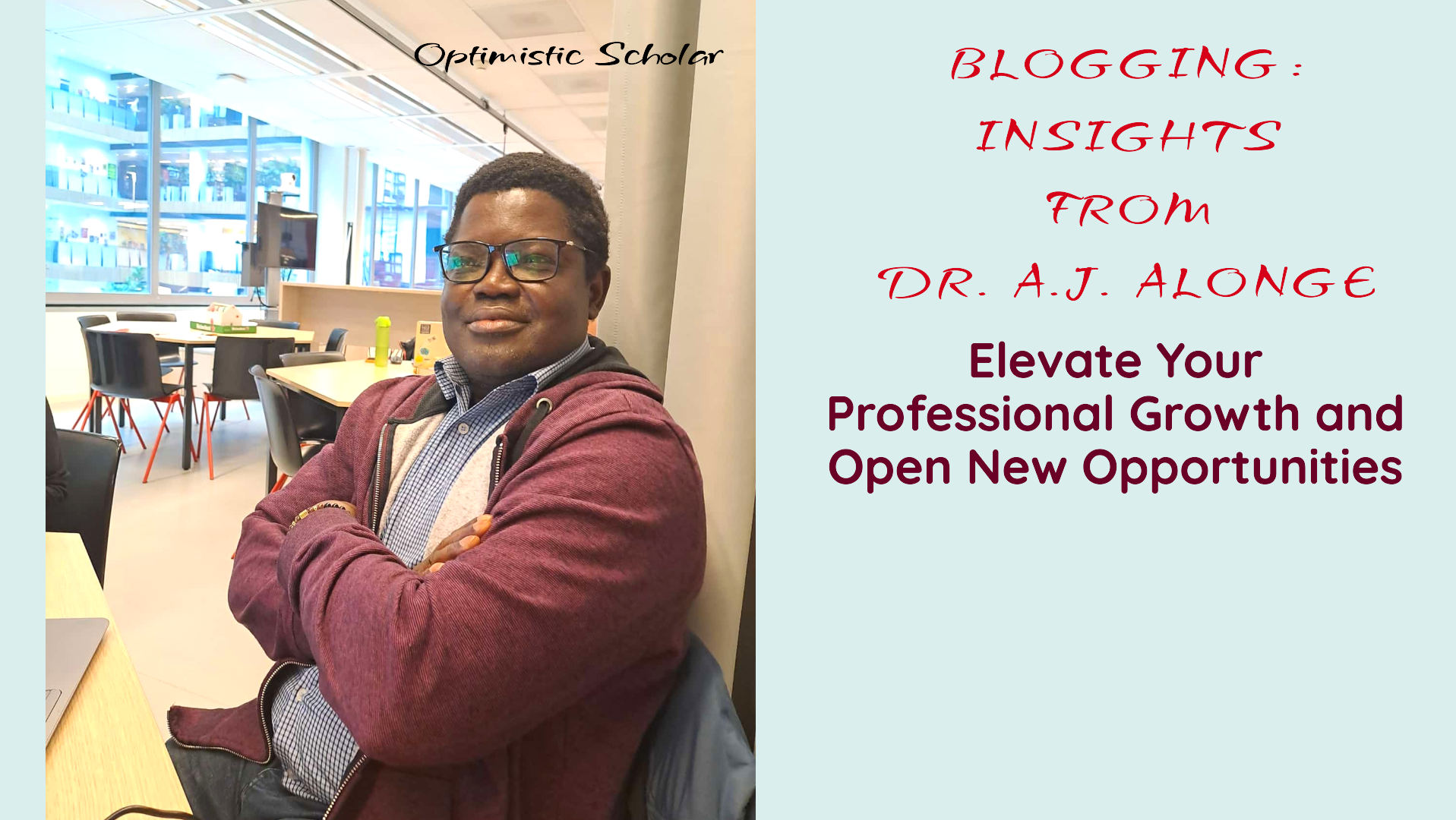
On October 2, 2024, the Toronto Public Library’’s Career Coaches in Residence program (CCIR) program hosted a session titled *“Shaping Your Career: How Blogging Can Fuel Your Professional Growth,” featuring Dr. John Alonge, an expert in education, digital technology, and library science. Anchored by