Category: Public Lecture

  • Look for Problems, Look for Gaps: The Path from Training to Transformation

    Look for Problems, Look for Gaps: The Path from Training to Transformation

    Building Careers in a Changing World

    By Dr. Ayodele John Alonge | October 1, 2025

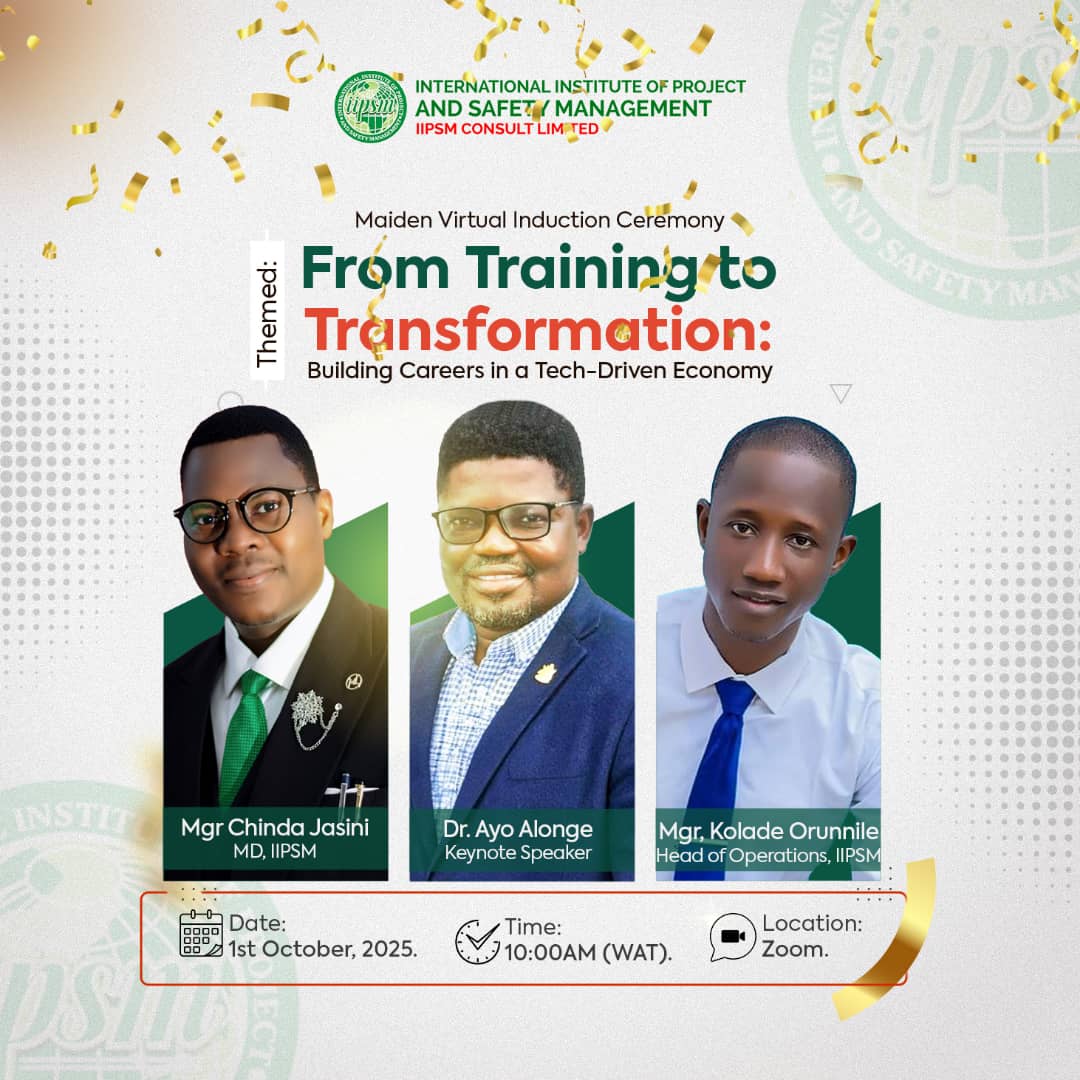
    On October 1st, 2025, a day that also marked Nigeria’s 65th Independence Anniversary, I had the privilege of serving as the Keynote Speaker at the Induction Ceremony of the International Institute of Project and Safety Management (IIPSM).

    The event was a celebration of growth, resilience, and purpose. It was also the first virtual induction ceremony of the Institute, and the Zoom platform was filled to capacity with young professionals, faculty members, and guests from across Nigeria. I joined the session from the United States, where I am currently pursuing another learning experience. It was a moment of reflection, pride, and gratitude as I shared insights on the theme, “From Training to Transformation: Building Careers in a Tech-Driven Economy.”


    Training Is Only the Beginning

    Every phase of life is a project — from education to career, marriage, and personal development. That was the central message of my keynote. I explained that project management is not just a discipline but a life philosophy — a structured, intentional way of setting goals, making plans, and achieving meaningful results.  Reflecting on my journey from a classroom teacher to l being a librarian to becoming university lecturer to a researcher and facilitator beyond africa  I emphasized that professional growth truly begins where training ends. As I said during the ceremony, “Training is the beginning; transformation is the destination.”


    The Power of Lifelong Learning

    When I completed my PhD, I thought since  I had reached the peak of my academic pursuit, I wont need to enroll for formal study any longer. But life soon reminded me that learning never truly ends. Years later, I enrolled in a project management program that completely reshaped my mindset, expanded my network, and opened new doors of opportunity. That experience taught me that lifelong learning is not about collecting certificates — it’s about expanding your capacity to think, staying curious, and building the resilience to adapt in a fast-changing world.  Those who continue to learn and evolve will always find relevance and opportunity. Growth requires curiosity, flexibility, and a willingness to keep improving.


    The Role of Technology in Growth

    I reminded the audience that technology has become the foundation of nearly every profession. When I once taught Application of ICT to Library Science at the University of Ibadan, many of the tools we now take for granted were still emerging. Today, technology shapes how we work, communicate, and learn. The world changes faster than any syllabus, and those who fail to adapt risk being left behind. Whether one is a librarian, engineer, or entrepreneur, digital competence has become essential for progress. Yet, technology alone cannot create excellence. The most successful professionals will always be those who blend their knowledge with human-centered qualities — empathy, collaboration, integrity, and creativity.


    Volunteering, Service, and Transformation

    Transformation is not measured by  the volume of what we learn, but by how we use that knowledge to serve others and humanity. I shared how some of my most meaningful opportunities began through volunteering.  From supporting projects with, Afrelib, UK, the Gideons International to leading youth and community initiatives in my church in the Netherlands and the United States, These volunteers services  have opens doors that money alone cannot. Sometimes, offering your time, energy, and creativity freely becomes the bridge to a larger purpose. Volunteering helps you see the world differently. It helps you look for problems and look for gaps that others might overlook. These are the starting points for meaningful innovation and transformation.


    From Training To Transformation:  Building a Career with Purpose

    In my message to the new inductees, I encouraged them to think globally but act locally. It is within our local communities that opportunities for real impact often emerge. I reminded them: there may not be jobs everywhere, but there are problems everywhere — and problems are opportunities in disguise. The real professional is not the one who waits for employment but the one who identifies gaps, solves problems, and creates value.  One of my guiding principles has always been: Look for problems, look for gaps, and see how you can fill them. Every solution you design, every innovation you introduce, and every life you touch becomes a testament to transformation through learning.


    Practical Advice for New Inductees

    During the keynote lecture, I shared some practical advice that can guide the new inductees in their journey of professional and personal growth:

    • Master Your Tools: Learn tools like Scrum, Jira, Miro, and Microsoft Teams.

    • Develop a Digital Mindset: Keep learning — sign up for webinars, workshops, and online courses.

    • Tell Your Story: Build your personal brand on news media like  LinkedIn. Share your achievements and reflections — the world needs to hear your story.

    • Think Globally, Act Locally: Seek global best practices, but apply them to solve local problems.

    • Stay Ethical: Integrity and honesty are key to sustained success.

    • See Life as a Project: Set goals, plan milestones, manage risks, and celebrate small wins.

    These principles are not just professional habits — they are life skills. They keep us relevant, grounded, and impactful in every season of life.

    A Call to Lifelong Impact

    As I concluded my keynote, I reminded the inductees that while training equips us with knowledge, transformation gives that knowledge meaning and direction. “The future belongs not to those who are merely trained,” I said, “but to those who transform through what they have learned.”

    Every certificate we earn should lead to positive action. Every skill should find expression in service. And every opportunity should become a platform for impact.

    True transformation goes beyond the workplace. It is about what we make work wherever we find ourselves — at home, in the community, in our profession, or in service to others. When we make it a habit to look for problems, identify gaps, and courageously create solutions, we move from success to significance. In doing so, we don’t just build careers — we build communities, strengthen institutions, uplift nations, and leave a lasting legacy.

    Keep learning. Keep serving. Keep transforming.
    Dr. Ayodele John Alonge


  • Engendering Ethical Use of E-learning Platforms” – UI-RID at University of Ibadan

    Engendering Ethical Use of E-learning Platforms” – UI-RID at University of Ibadan

    University of Ibadan to Host UI-RID on Ethical Use of E-learning Platforms

    The University of Ibadan’s Research Management Office, in collaboration with the University Media Center, is set to hold the 9th UI-Research and Innovation Discourse (UI-RID) on Wednesday, October 16, 2024. This  month discourse, titled “Engendering Ethical Use of E-learning Platforms: Refocusing Nigerian Undergraduates,” will be led by Professor Airen E. Adetimirin from the Department of Library, Archival, and Information Studies at the University of Ibadan.

    The session, taking place from 11:00 am to 12:00 noon (Nigeria time), will explore critical issues such as plagiarism, academic dishonesty, and responsible online behavior among Nigerian undergraduates. Professor Adetimirin will share insights from her recent research, funded by the Tertiary Education Trust Fund (Tetfund), Nigeria, highlighting the connection between e-learning platform usage and ethical behavior. Her research team includes Dr. A. Hamzat from Adeleke University, Nigeria; Dr. A. J. Alonge from the University of Ibadan, Nigeria; Dr. P. Jacob from the University of Ilorin, Nigeria; and Dr. O. T. Oyewole from the University of Ibadan, Nigeria.

    Participants can expect to:

    • Gain insights into ethical challenges faced by undergraduates in digital learning.
    • Learn about ethical literacy and how it fosters responsible digital citizenship.
    • Understand practical implications of ethical practices on academic integrity.
    • Engage with Professor Adetimirin’s research  on e-learning and ethics among Nigerian Library and Information Science students.

    To join this important conversation, register at this link

    Event Details:

    • Date: Wednesday, October 16, 2024
    • Time: 11:00 am – 12:00 noon (Nigeria time)
    • Presenter: Professor Airen E. Adetimirin
    • Zoom ID and Link   Register to get  the discourse

      Don’t miss this opportunity to explore ways of enhancing ethical practices in Nigeria’s e-learning landscape, supported by vital research funded by Tetfund, Nigeria.

  • University of Ibadan Don Advocates for Harnessing Cultural Heritage for Sustainable Development

    University of Ibadan Don Advocates for Harnessing Cultural Heritage for Sustainable Development

    University of Ibadan Don Advocates for Learning from the Past to Shape Future Development

    In a compelling lecture delivered during the 558th Inaugural Lecture at the University of Ibadan, Professor Jonathan Oluyori Aleru, a distinguished scholar of Historical Archaeology, emphasized the crucial need to draw vital lessons from history to chart new pathways for development across all sectors. Professor Aleru’s lecture, titled “Sunset on Yoruba Northern Frontier?“, was presented on behalf of the Faculty of Science.

    Highlighting the untapped potential of cultural resources, Professor Aleru asserted that, if effectively harnessed and developed into tourism capital, these resources could generate a more sustainable and substantial revenue stream than the exploitation of crude oil and solid minerals. He pointed to successful examples from Eastern and Southern Africa, where cultural heritage centers have become significant revenue sources, surpassing income from petroleum and gas industries. Unlike finite natural resources, cultural assets, he noted, are inherently sustainable.

    Professor Aleru expressed concern over the widespread neglect and exploitation of cultural heritage in Nigeria and West Africa, where valuable cultural artifacts are often sold cheaply, leaving communities impoverished both materially and spiritually. He questioned why the destruction and looting of cultural and natural heritage do not receive the same attention as the theft of crude oil, urging authorities to refocus their efforts on preserving these irreplaceable resources.

    Focusing on the Yoruba Northern Frontier—comprising Oyo, Kwara, and Kogi States—Professor Aleru warned of the ongoing and systematic destruction of the region’s rich cultural landscapes. He cited daily human activities, such as farming, infrastructure development, and the exploration of natural resources, as major contributors to the degradation of cultural heritage. Furthermore, he highlighted the growing threat posed by antiquities traffickers, comparing their operations to those of drug traffickers in their sophistication and impact.

    In a call to action, Professor Aleru urged the University of Ibadan’s administration to ensure the survival and advancement of its Department of Archaeology. He stressed that archaeology plays a vital role in addressing the ethnic, political, and religious challenges that arise from Nigeria’s diverse cultural landscape. The discipline, he argued, is essential for fostering a deeper understanding of human differences and preserving the truths of the past.

    The lecture marked the eighth installment in the 2023/2024 inaugural lecture series at the University of Ibadan, underscoring the institution’s commitment to fostering academic discourse on critical national issues.

     TwKeyays for Stakeaakeholders: Emphasizing Cultural Heritage as a Pathway to Sustainable Development
    1. Cultural Heritage as Economic Resource: Cultural resources, when properly harnessed, can provide a more sustainable and profitable revenue stream than traditional natural resources like crude oil and solid minerals.
    2. Successful Global Examples:  Countries in Eastern and Southern Africa have effectively transformed their cultural heritage into significant economic benefits, suggesting a model for Nigeria and West African countries to follow.
    3. Urgent Need for Preservation:  There is a critical need to focus on preserving cultural heritage in Nigeria, as current practices of selling and looting cultural artifacts are unsustainable and impoverishing.\
    4. Infrastructure Investment: Stakeholders should invest in the development of resource centers and infrastructure to protect and showcase cultural heritage, turning it into an economic asset.
    5. Role in National Unity:  Cultural heritage and archaeology play a vital role in addressing ethnic, political, and religious complexities, contributing to national unity and cohesion.
    6. Call for Institutional Support:  The University of Ibadan, and particularly its Department of Archaeology, should receive support to continue its work in preserving cultural heritage and contributing to national development.OptimisticScholar Congratulates Professor Jonathan Oluyori Aleru on His Landmark Achievement
      Congratulations, Professor Aleru, on your remarkable achievement with the landmark presentation of your Inaugural Lecture at the University of Ibadan! Your dedication and expertise in archaeology and anthropology have truly shone through, marking this as a significant milestone in your academic career. This accomplishment reflects your hard work and serves as a source of inspiration to many of us. Well done, Sir!
      _________
      Reference/Credit: Content and images provided by the UI Directorate of Public Communications and obtained from the University of Ibadan’s Facebook page.
  • Integrate Sports into Social Orientation Programs, Urges UI Professor

    Integrate Sports into Social Orientation Programs, Urges UI Professor

    In a compelling call to action, Professor Andrew Olu Fadoju, an esteemed academic in Education, Sports Psychology, and Leisure Studies, urged the government to integrate sports into social orientation programs for greater effectiveness. This recommendation was made during his delivery of the 555th Inaugural Lecture on Thursday, July 25th, 2024, at the University of Ibadan, representing the Faculty of Education. The Deputy Vice-Chancellor Administration of the University of Ibadan, Professor Peter O. Olapegba, presented the Vice-Chancellor, Professor Kayode O. Adebowale, as the inaugural lecturer. The event was  attended by other principal officers, including the deputy vice-chancellors, the librarian, the registrar, and the bursar. The Dean of the Faculty of Education, Professor Femi Adegbesan, alongside other professors, eminent personalities, and family and friends of Professor Fadoju, also graced the occasion.

    The Role of Sports in Education and Social Change

    Professor Fadoju emphasized the multifaceted role sports play in society. He noted that sports are not only a platform for conveying educational, public health, safety, and environmental messages but also a powerful tool for fostering individual development and learning. According to him, sports have the unique ability to bring people together, build confidence, and promote teamwork.

     Bonding Through Sports

    Professor Fadoji with The Deputy Vice-Chancellor Administration, Professor Peter O. Olapegba,

    In his lecture titled “Bonding Through Sports: The Electrovalent and Covalent Nature of Gregarious Beings,” Professor Andrew Olu Fadoju emphasized the transformative power of sports in promoting social cohesion and policy change. He highlighted how sports, much like chemical bonds, create strong connections among individuals and communities, fostering unity and solidarity. By participating in sports, people from diverse backgrounds come together, enhancing personal development and empowering communities to advocate for themselves and drive social change. Professor Fadoju argued that the collaborative nature of sports encourages teamwork, mutual respect, and understanding, which are crucial for addressing local challenges and improving quality of life. He underscored the importance of integrating sports into social orientation programs to leverage these benefits, ultimately building a more connected and proactive society.

    Recommendations for Sports Development

    Professor Fadoju laid out several recommendations to prioritize sports development:

    • Integration into Social Programs:  Sports should be seamlessly integrated into social orientation programs to maximize their impact.
    • Priority in Infrastructure:  The provision and maintenance of sports facilities, equipment, and supplies should be prioritized to prevent youth restiveness and ensure continuous engagement.
    • Policy Enactment: There should be robust policies in place to support athletes and prevent them from being lured abroad by foreign scouts.

    Conclusion

    The call for integrating sports into social programs underscores the broader role of sports beyond phy

    sical activity. It highlights sports as a vehicle for education, social cohesion, and community development. The lecture by Professor Fadoju, the fifth in the series for the 2023/2024 academic session, serves as a pivotal reminder of the potential of sports to drive meaningful change.

    OptimisticScholar congratulates Professor Andrew Olu Fadoju on this landmark achievement. We hope that by heeding Professor Fadoju’s recommendations, governments and policymakers can harness the power of sports to build more cohesive, resilient, and proactive communities.
    __________
    Credit: Some content and images are provided by the UI Directorate of Public Communication.

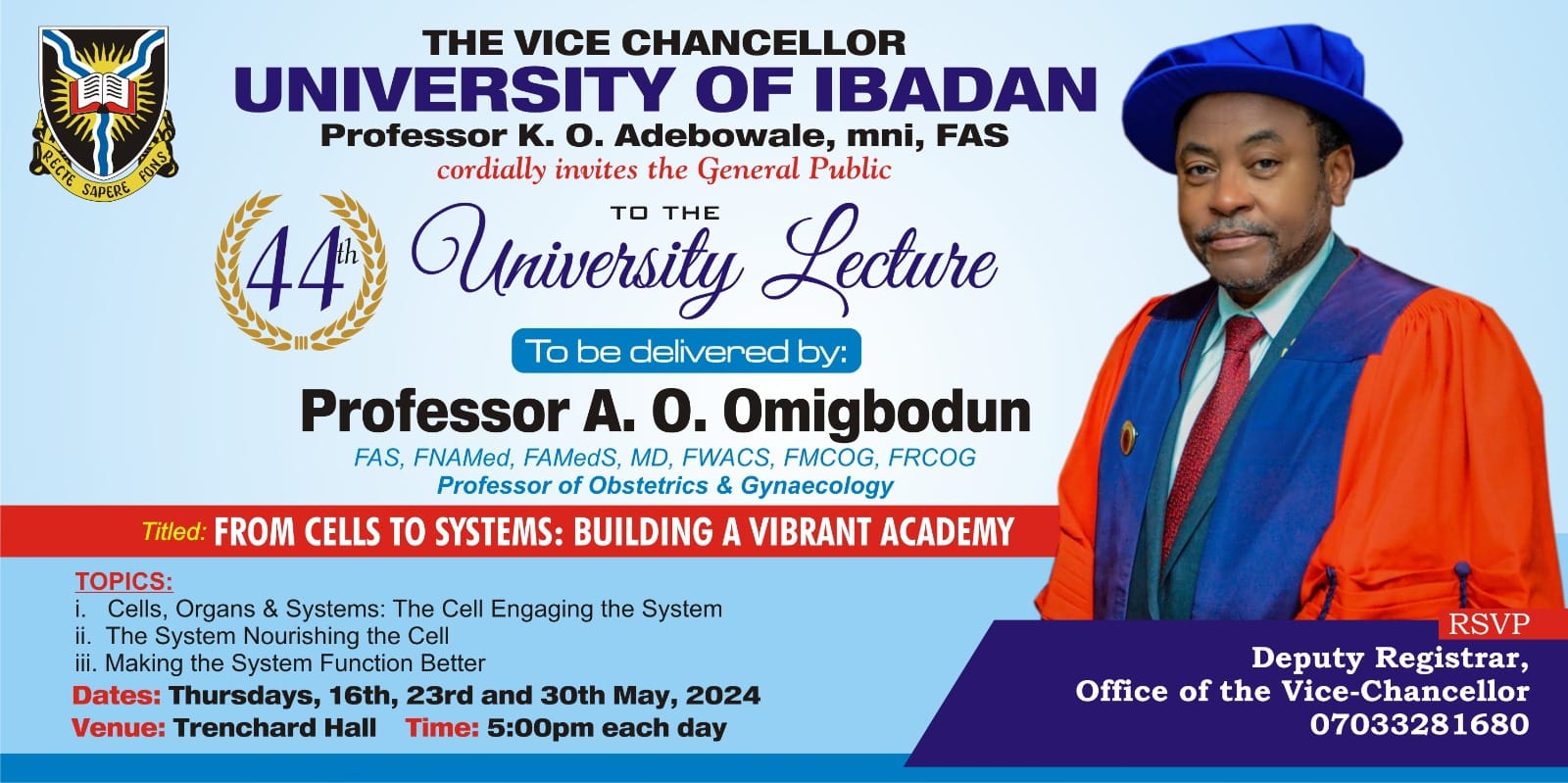
  • From Cells to Systems: Building a Vibrant Academy” Lecture Series at University of Ibadan

    From Cells to Systems: Building a Vibrant Academy” Lecture Series at University of Ibadan

    Exploring the Interplay Between Cellular Processes and Overall Health – with Professor A. O. Omigbodun

    The University of Ibadan is set to host an enlightening lecture series titled “From Cells to Systems: Building a Vibrant Academy,” featuring Professor A. O. Omigbodun, a distinguished Professor of Obstetrics & Gynaecology. This event, open to both the academic community and the general public, aims to bridge the understanding between cellular biology and systemic health.

    Professor Akinyinka O. Omigbodun, who also serves as a Consultant Obstetrician & Gynaecologist at the University College Hospital, Ibadan, and as a Professor of Reproductive Health Sciences at the Pan African University Life & Earth Sciences Institute (PAULESI), will lead the series. With nearly 35 years of experience, Professor Omigbodun has significantly contributed to medical education and research. His expertise has shaped the training of specialists in obstetrics and gynecology and advanced research across African universities.

    As the inaugural Chairman of the Consortium for Advanced Research Training in Africa (CARTA), Professor Omigbodun has been instrumental in enhancing research capabilities at African universities. His broad research interests include cervical cancer prevention, mechanisms of trophoblastic invasion in the uterus, medical education, surgical safety, and urban health, further enriching the lecture series with a wealth of knowledge.

    The lectures will focus on the interaction between cells, organs, and systems, aiming to enhance the participants’ understanding of how cellular processes impact overall system functions. The topics include:
    1. Cells, Organs & Systems: The Cell Engaging the System
    2. The System Nourishing the Cell
    3. Making the System Function Better

    Scheduled to take place on the 16th, 23rd, and 30th of May 2024 at Trenchard Hall, University of Ibadan, each session will start at 5:00 PM. Additionally, interested attendees can join via the University of Ibadan’s Zoom channel.

     This series promises to offer deep insights into the dynamic relationships that define human health from the microscopic to the macroscopic level.
    __________
    For media coverage publicity of scholarly activities and research dissemination send a message to   https://wa.me/message/DUIJNU7BUYYMP1 or contact Elijah at  Optimistic Concept Services at info@optimisticservice.nl
    www.optimisticservice.nl