Tag: Bibliotherapy

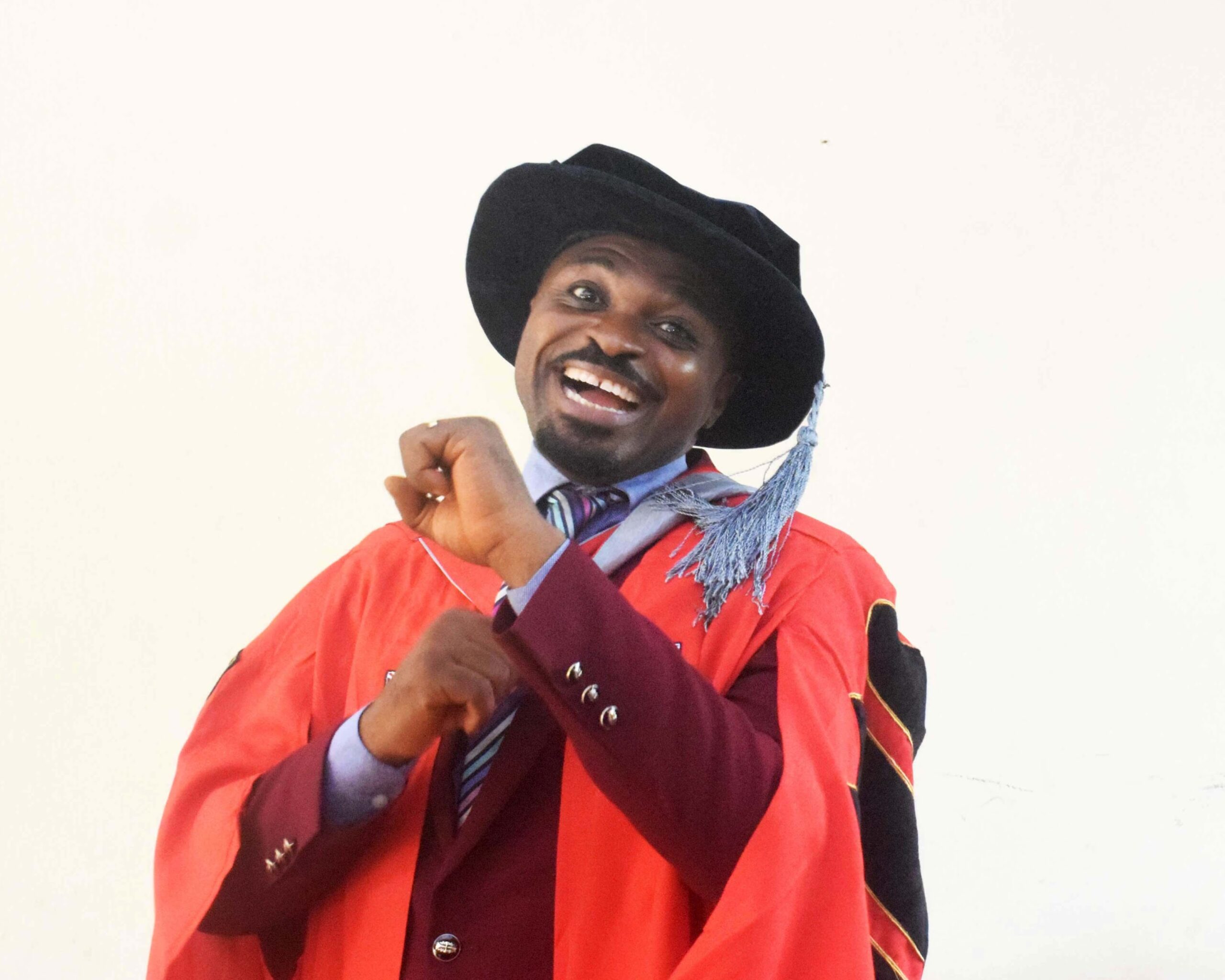
  • At 50, Dr. Sola Owolabi Uses Books and Faith to Inspire a Generation

    At 50, Dr. Sola Owolabi Uses Books and Faith to Inspire a Generation

    At 50, Dr. Sola Owolabi Uses Books and Faith to Inspire a Generation. From personal adversity to public impact, a scholar’s journey at midlife

    By Dr. Ayodele John Alonge, Atlanta, USA
    Chief Creative Officer

    As Dr. Sola Emmanuel Owolabi marks his 50th birthday on 15 December, his life and professional journey present a compelling narrative of faith-informed optimism, intellectual discipline, and sustained commitment to social transformation. A librarian, scholar, bibliotherapist, cinematherapy practitioner, author of The Library Boy, and mentor to many young people, Dr Owolabi’s journey reflects a dynamic interplay between personal life experiences and professional purpose.

    In a reflective interview on OptimisticPoint—a platform devoted to storytelling and the articulation of hope—hosted by Dr. Ayodele John Alonge, Dr. Owolabi, who is currently based in the Netherlands, shared insights into the formative influences, defining challenges, and enduring beliefs that continue to shape and guide his life and work.


    Formative Experiences and the Foundations of Optimism

    Reflecting on his childhood and early years, Dr. Owolabi identified his faith-based upbringing and early institutional environments as central to the development of the optimistic outlook that has guided his life.

    “I think there are two things. One is the Christian environment—the system I found myself in, especially the Anglican Church where I was part of the Boys’ Brigade.”

    Although he noted that he was not yet born again at that stage, the disciplined and competitive environment fostered aspiration, resilience, and a strong work ethic.

    “We were challenged. You must go to school. You see competition. Even if we were not perfect, the environment wanted us to be good, so we were striving.”

    This formative influence was significantly strengthened in 1992 when he made a personal commitment to the Christian faith.

    “When I gave my life to Christ in 1992, that was when I began to have a real positive outlook on life—through interaction with men of God, especially my mentor, Reverend John Kelly, who God used to help me grow spiritually.”

    These early experiences laid the ethical and intellectual foundations for his later academic and professional engagements.


    A Defining Challenge That Tested Optimism

    Like most meaningful life journeys, Dr. Owolabi’s path has been marked by moments of significant adversity. One of the most defining occurred during his time as a diploma student at the University of Ibadan, when his mother was arrested over a financial dispute.

    “That experience was something that wanted to break me—but instead, it brought something out of me.”

    He recalled the sense of helplessness he felt while attempting to speak on his mother’s behalf at the police station.

    “When the policeman asked me who I was and I said I was a student, he shouted at me to leave—or be locked up with my mother.”

    The emotional impact of that encounter became a turning point in his life.

    “As I was walking on the road crying, I made a resolution: I must be great.”

    For Dr. Owolabi, greatness has always been defined beyond material success.

    “To be great means to command respect—not just financially, but in wisdom, connection, and character.”

    This resolution has continued to shape his pursuit of education, professional excellence, and social relevance.


    Personal Experiences and a Passion for Healing Through Books and Film

    Dr. Owolabi’s lifelong commitment to bibliotherapy and cinematherapy is closely linked to early intellectual awakening and personal mentorship. He credits a secondary school teacher for introducing him to the transformative power of books at a critical stage of his life.

    “There was a teacher—I still wish I could meet her—who introduced books to me. She knew I was strong in literature and wanted to snatch me from bad company.”

    Sustained engagement with reading, he explained, profoundly reshaped his worldview.

    “As I read, I became more excited. I saw my perspective on life changing. That was when I realised that books can transform people.”

    This realisation, reinforced by Christian literature, informed his professional focus.

    “Because I believe in the power of books, I decided to focus on this—that through books, through right movies, and documentaries, people’s lives can be transformed.”

    This conviction underpins his work as an author, filmmaker, scholar, and mentor to young people.


    Redefining Success, Purpose, and Happiness at 50

    At midlife, Dr. Owolabi articulated a mature and reflective understanding of success—one grounded in purpose rather than material accumulation.

    “Life is a purpose-driven life. Without purpose, life is reduced.”

    While acknowledging the importance of financial stability, he emphasised that wealth does not determine his values or relationships.

    “Money is good, I make money—but it does not influence the way I relate with people.”

    Instead, fulfilment is derived from long-term human impact.

    “If we are involved with people and transform lives, we have rewards beyond this life.”

    This perspective has become even clearer with age.

    “At 50, I am much more committed to people and life—transforming lives instead of accumulating wealth.”


    The Optimistic Point: Hope Anchored in Transcendence

    Reflecting on five decades of learning, faith, service, and resilience, Dr. Owolabi defined his Optimistic Point as a belief anchored beyond the present life.

    “My optimistic point is the assurance of another life after this life.”

    This conviction shapes his ethical consciousness and sense of accountability.

    “Nothing done is ever forgotten. When I remember there is another life, I ask myself: if I am asked, ‘How did you live the first life?’ what will I say?”

    It is this reflective question, he noted, that sustains his optimism and commitment to excellence.

    “It prompts me to live a life worthy of emulation.”


    Conclusion

    At 50, Dr. Sola Emmanuel Owolabi exemplifies a model of scholarship and service in which faith-informed optimism, intellectual engagement, and social responsibility are meaningfully integrated. His life journey highlights the enduring power of books, reflective practice, and purposeful living in shaping individuals and contributing to societal transformation. Readers and viewers are invited to watch the full interview on the OptimisticPoint YouTube channel:

    On behalf of everyone at Optimistic Concept Services, we extend our warmest congratulations to Dr Sola Emmanuel Owolabi on his 50th birthday. We pray that God continues to bless and keep you, and that His face will shine upon you now and always. Thanks for all your contributions to humanity.

  • Redefining African Librarianship with Bibliotherapy and Cinema-Therapy

    Redefining African Librarianship with Bibliotherapy and Cinema-Therapy

    Dr. Sola Owolabi: Transforming African Librarianship through Bibliotherapy and Cinema Therapy

    In the September 2024 edition of the Librarian Spotlight Africa Programme, Dr. Sola Owolabi was recognized for his pioneering work in bibliotherapy and cinema therapy. A senior lecturer and public speaker, Dr. Owolabi uses storytelling through literature and media to address societal challenges such as juvenile delinquency, violence, and peer pressure—particularly among adolescents.

    In an interview anchored by Sylvester Ebhonu, Dr. Sola Owolabi stressed that librarianship extends far beyond managing books. “Librarianship is not just about books,” he explained. “Librarians are philosophers and creators of knowledge. We must use our platforms to tackle real-world issues and foster healing.” His video, *Soliloquizing on Violence in Nigeria*, reflects his mission to use cinema therapy to promote unity and healing in divided communities.

    Dr. Owolabi also shared his career transition from the corporate world—having worked with UBA and KPMG—to academia, where he now serves as a senior lecturer at Bells University of Technology. His work in bibliotherapy, including his book *The Library Boy*, demonstrates his belief in the transformative power of libraries to empower underserved communities.

    During the event, Dr. Owolabi’s close friend and fellow academic, Dr. Ayodele John Alonge, commended Dr Owolabi’s  extensive knowledge and insight, describing him as “a living encyclopedia of ideas, libraries, and information.” Building a connection with Dr. Owolabi, he noted, is a wise decision for anyone seeking to deepen their understanding and knowledge…

    Key Insights from Dr. Sola Owolabi’s Transformative Approach to Librarianship: Highlights from the Interview

    A key takeaway from the interview was his advice to librarians interested in creative therapies: “Start small. Focus on the message and the needs of your audience, and you will grow.”

    • Librarianship is More Than Books – Librarians play a vital role in addressing societal issues through storytelling, literature, and media.
    • Use Bibliotherapy and Cinema Therapy – Creative therapies like bibliotherapy and cinema therapy can tackle challenges like juvenile delinquency and social violence.
    • Start Small, Focus on Impact– Begin with simple resources, focusing on the message and audience needs. Your impact will grow over time.
    • Leverage the Power of Narrative – Use storytelling to inspire, connect with people, and address personal and societal challenges.
    • Embrace Technology – Integrate new technologies, such as AI, to ensure libraries remain relevant in the digital age.
    • Empower Communities Through Libraries – Libraries are key to education and empowerment, especially for underserved communities.
    • Prioritize Collaboration and Mentorship – Share knowledge, collaborate, and mentor others to advance the profession.
    • Commit to Lifelong Learning – Continuously learn and adapt to stay at the forefront of technological and therapeutic innovations in the field.


    The Librarian Spotlight Africa Programme, hosted by Sylvester Ebhonu (The Digital Librarian), with Mrs. Folashade Adepoju serving as the Evaluation Committee lead, recognized Dr. Sola Owolabi as the *Librarian of the Month* for September 2024. The certificate, signed by Mrs. Adepoju, honors his innovative work, which continues to inspire librarians and educators across Africa, showcasing how creativity can shape the future of libraries. Watch the full interview here.

    Optimistic Scholar, congratulations, Dr. Sola Owolabi! This well-deserved award reflects your hard work and excellence. Your journey is truly inspiring, and we are proud of all you’ve achieved. Wishing you continued success and even greater accomplishments—keep shining and breaking new ground!

  • An Intellectual Exploration of Impostor Syndrome at the Digital Society School

    An Intellectual Exploration of Impostor Syndrome at the Digital Society School

    Unveiling Shadows: An Intellectual Exploration of Impostor Syndrome at the Digital Society School

    The Digital Society School of the Amsterdam University of Applied Sciences recently hosted a revealing exploration into Impostor Syndrome, a psychological pattern where individuals doubt their accomplishments and fear being exposed as a fraud despite evidence of their competence. Often hidden behind a mask of success, those affected believe they are not as capable as others perceive, attributing their achievements to luck rather than skill. This phenomenon, although not classified as a psychiatric disorder, is rarely the subject of empirical studies, making it a compelling topic for academic inquiry.

    Originally identified by psychologists Clance and Imes in 1978, Impostor Syndrome has been acknowledged by many notable figures including Albert Einstein and Maya Angelou, who despite their substantial contributions, felt undeserving of their accolades. In 2017, psychologist Pauline Rose Clance developed an “impostor scale” to quantify these experiences, which highlights the ongoing relevance and complexity of this issue.

    During our sessions, participants discussed various root causes of Impostor Syndrome, tracing its origins to diverse factors such as background, race, previous experiences, and self-perception. This syndrome not only manifests in academic settings but also pervades professional environments, where achievements are often overshadowed by deep-seated self-doubt.

    In light of these discussions, we are motivated to explore interventions such as bibliotherapy and cinematherapy. These approaches utilize literature and cinema, respectively, to address and alleviate the psychological burdens associated with Impostor Syndrome. Such strategies could offer therapeutic insights and relief to those struggling with these hidden fears.

    Discussion Points:

    1. The Role of Background and Identity: How do personal histories and societal factors contribute to the prevalence of Impostor Syndrome?
    2. Mitigation through Media: Can bibliotherapy and cinematherapy offer effective tools for combating feelings of fraudulence? What other methods might be similarly beneficial?

    3. Recognition vs. Reality: How does recognizing one’s achievements impact one’s perception of impostorism? Can greater external affirmation resolve the internal conflict?

    This initiative seeks not only to understand the deeper implications of Impostor Syndrome but also to develop effective strategies for overcoming it. By fostering an open dialogue, we aim to deconstruct the barriers that prevent individuals from fully recognizing and embracing their success. Your insights and experiences are valuable to this discussion—please share your thoughts and join us in this intellectual exploration.

    Contributed by
    Dr. Sola Owolabi
    The Digital Society School of the Amsterdam University of Applied Sciences