Tag: Dr Ayodele John Alonge

  • Call for Applications: Interdisciplinary Scholarship Advances Librarianship and Theology Studies

    Call for Applications: Interdisciplinary Scholarship Advances Librarianship and Theology Studies

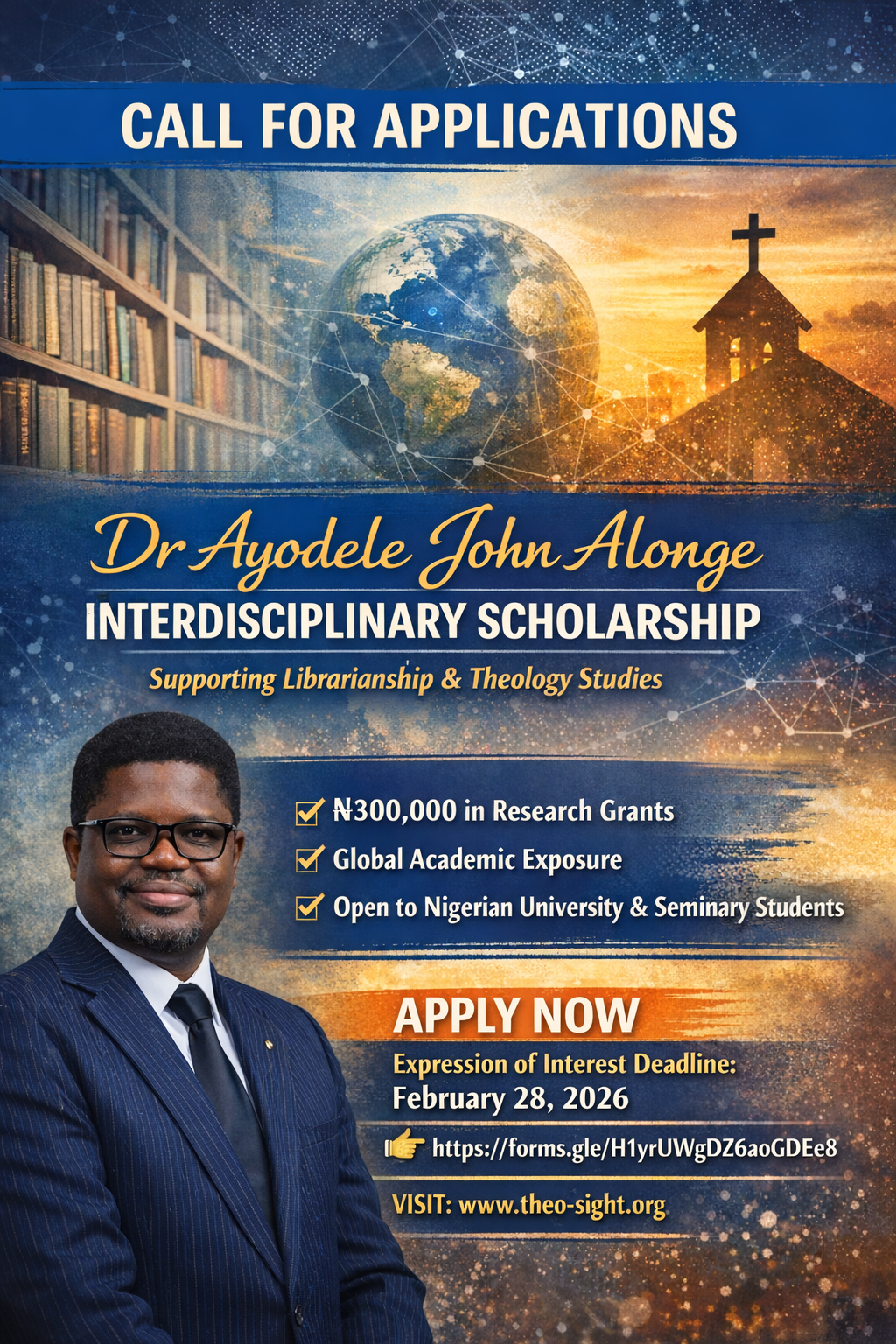
    ₦300,000 Interdisciplinary Scholarship Launched in Honour of Dr Ayodele John Alonge

    A ₦300,000 interdisciplinary academic scholarship has been launched to empower emerging scholars in Library and Information Science and Theology, marking a bold step toward strengthening interdisciplinary research and academic excellence in Nigeria. The initiative, introduced by Theo-Sight Research and Advocacy, establishes the Dr Ayodele John Alonge Interdisciplinary Fellowship, awarding ₦100,000 each to three outstanding winners selected through a competitive essay and research process.

    Organisers say the fellowship promotes innovation, cross-disciplinary scholarship, and academic distinction among students enrolled in accredited Nigerian universities and theological institutions. The award is instituted in honour of Dr Ayodele John Alonge, a respected library and information professional in Nigeria who is also exploring scholarship in theological education, with research interests spanning education, media, library, and archival science.


    Celebrating a Scholar Bridging Knowledge, Media, and Faith

    According to organisers, the fellowship reflects Dr Alonge’s distinctive academic path—one that integrates digital transformation in librarianship with theological studies and faith-informed research. By establishing the fellowship in his name, Theo-Sight seeks to inspire young scholars to move beyond traditional academic silos and contribute meaningfully to evolving knowledge systems in Africa and globally.

    “This is more than financial support,” said Rev. Dr Godwins Adeboye, Chairman, Board of Trustees, Theo-Sight Research and Advocacy, Abuja, Nigeria. “It is a call to interdisciplinary excellence and intellectual leadership.”


    What the Scholarship Offers

    The programme features three award tracks, with ₦100,000 granted to each selected recipient.

    Digital Transformation in Librarianship Award

    (Open to Undergraduate and Postgraduate Students)

    Applicants must submit an analytical essay exploring how digital technologies—including artificial intelligence, digital archives, automation, and data-driven systems—are reshaping librarianship and redefining information services.

    Fellowship for Library Science and Theology

    (Open to Postgraduate and Theological Seminary Students)

    This category requires a research paper or scholarly essay examining the intersection of librarianship and theological studies. Suggested themes include information ethics, faith-based knowledge stewardship, theological libraries in the digital era, and librarianship as ministry.


    Structured Academic Review Process

    The scholarship will be administered through a transparent, multi-stage evaluation process:

    • Expression of Interest Deadline: February 28, 2026
      👉 https://forms.gle/H1yrUWgDZ6aoGDEe8

    • Submission Guidelines Released: March 16, 2026

    • Final Submission Deadline: April 17, 2026

    • Review Period: April 17 – May 1, 2026

    • Winners Announced: May 4, 2026

    Organisers emphasise that all submissions will undergo rigorous academic review to ensure merit, fairness, and excellence.


    International Recognition

    Winners will present their research during a hybrid public lecture on May 24, 2026, in Atlanta, Georgia, USA, where awards will be formally conferred. The event is expected to bring together academics, faith leaders, researchers, and professionals across the information science and theological communities.


    Eligibility

    Applications are open to:

    • Undergraduate and postgraduate students in Library and Information Science or related disciplines

    • Theological seminary students (undergraduate and postgraduate)

    • Students enrolled in accredited Nigerian institutions


    Advancing Nigeria’s Academic Future

    As digital transformation reshapes information ecosystems and theological institutions navigate technological change, the fellowship aims to position Nigerian students at the forefront of interdisciplinary innovation and scholarly leadership.

    Applications close February 28, 2026.

  • Dr. Ayodele Alonge: Leading the Digital Transformation of Libraries

    Dr. Ayodele Alonge: Leading the Digital Transformation of Libraries

    Dr. Ayodele Alonge: The Digital Librarian Transforming Africa’s Information Landscape

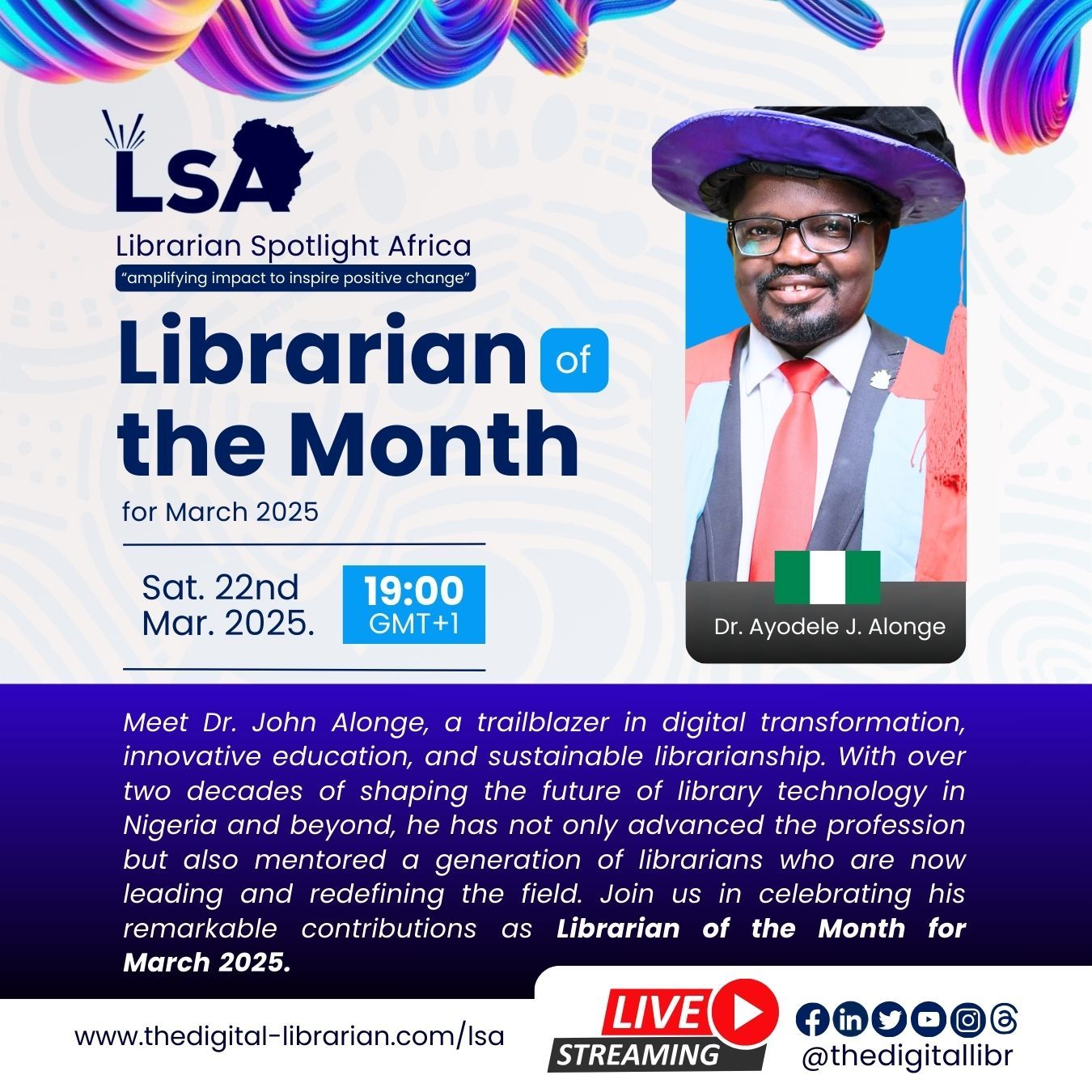
    When Ayodele Alonge first volunteered to organize books at his church as a teenager, few could have predicted that he would one day become one of Africa’s most influential voices in library science. Yet, decades later, his innovative works in digital transformation, publishing, archival management, and records management have earned him global recognition. His impact extends far beyond titles, but among his many accolades, he has been named Librarian of the Month by Librarian Spotlight Africa—an honor that only begins to capture the depth of his contributions.

    From Church Shelves to Global Stages

    “I never planned to be a librarian,” Dr. Alonge admitted during his acceptance interview. His journey into librarianship began with passion and a commitment to service. While still in secondary school, he volunteered as a youth librarian at ECWA church in Ibadan. “When good books were scarce, I volunteered to create and manage a youth library,” he recalled. “I set up a space on the church’s ground floor, gathered books and video resources, and built a collection for young readers like me. That’s what librarians do—we fill gaps.”

    His path has been anything but conventional

    • The Corporate Librarian: Dr. Alonge’s career began in the early 2000s as a library intern at ResearchersWorld, Lagos. With a master’s degree in publishing and copyright studies, he later secured a prestigious role at KPMG Nigeria as a librarian and social media coordinator. However, his passion for research led him to pursue a PhD at the University of Nairobi, Kenya, under the prestigious CARTA Fellowship, where he explored how young Africans engage in discussions about HIV/AIDS on social media.
    • The Innovative Educator
      Driven by a deep passion for teaching, Dr. Alonge is committed to transforming knowledge into practical, impactful learning experiences. His dynamic methods—ranging from hands-on workshops and role-playing exercises to interactive learning sessions—have profoundly influenced both his students and professional peers. Dr. Alonge describes education as:

    “The measured and systematic process of guiding the human mind and soul to the best information, enabling effective performance of essential tasks, and fostering lifelong skills, experience, and satisfaction.”
    (International Day of Education 2022) Read more

    From church shelves to global innovation, Dr. Alonge’s journey is a testament to the transformative power of librarianship.

    Libraries as Innovation Hubs

    Dr. Alonge challenges traditional perceptions of librarianship. Librarians aren’t just bookkeepers—we’re the original data scientists, he asserts. His work exemplifies this vision through impactful initiatives:

    • Optimistic Concept Services

    Founded on April 27, 2005, in Lagos while still a university student, Dr. Alonge established Optimistic Concept Services to provide expert library consultancy and information services. For nearly two decades, he has been actively engaged in library and information services, hands-on training, and publishing consultancy.

    • Optimistic Scholar

    An extension of his commitment to knowledge dissemination, Optimistic Scholar is an academic and professional development platform. It provides scholarship opportunities, career insights, and educational resources, supporting individuals in their academic and professional journeys. The website covers areas such as academic careers, fellowship programs, and grant opportunities, equipping users with the tools they need to succeed. Visit: www.optimisticscholar.com Dr. Alonge embodies a fusion of information dissemination and entrepreneurship, proving that libraries are more than repositories—they are engines of innovation.

    • Dancing Against Stigma

    What began as a PhD research project has blossomed into a viral dance phenomenon, harnessing the power of rhythm and storytelling to educate youth on HIV prevention. Dr. Alonge’s initiative exemplifies how libraries and knowledge hubs can adopt unconventional methods to foster social change and contribute to public health through effective health communication. Watch the video here.

    Africa’s Digital Library Revolution

    In an acceptance interview conducted by Sylvester Ebhonu on Saturday, March 25, 2025, Dr. Alonge highlighted the critical challenges confronting African libraries in the digital age.

    “Our Internet is too expensive and unreliable.”

    “During my recent visit to Nigeria, for a month I spent 200,000  naira on data that vanished quickly. How can we build digital libraries under such conditions?” The high cost and instability of internet access remain major obstacles to digital transformation.

    The Need for 21st-Century Skills in Library Schools
    We need to teach 21st-century skills. Librarians must master AI and data analytics and data science—now.” Without modern tech proficiency, librarians risk being left behind in an increasingly digital world.

    The Visibility Crisis
    Blog! Tweet! Facebooking! Make TikToks! If we don’t tell our stories, who will?” Dr. A.J. Alonge urges librarians to embrace digital storytelling and content creation, ensuring that African library innovations gain global recognition. With bold ideas and tireless advocacy, Dr. Alonge is at the forefront of creating a smarter, more connected future for African libraries.

    Watch the Full Interview:

    Dr. Ayodele John Alonge’s work is transforming librarianship, bridging digital innovation, storytelling, and social impact. His dedication to AI, digital literacy, and knowledge dissemination is shaping the future of African libraries. As he receives the Librarian of the Month award from Librarian Spotlight Africa, we celebrate his remarkable contributions. Well deserved!

    Written by

    Auburn University, Alabama, USA
  • Key Steps to Establishing and Managing Enterprises in Nigeria as an Infopreneur

    Key Steps to Establishing and Managing Enterprises in Nigeria as an Infopreneur

    Building Success: Key Steps to Establishing and Managing Enterprises in Nigeria as an Infopreneur

    In today’s information-driven world, infopreneurship is rapidly gaining traction as a viable and rewarding business model. Combining the power of information with entrepreneurial spirit, infopreneurs create and deliver knowledge-based products and services to meet the specific needs of their target audience. Whether you’re crafting an e-learning platform, providing consulting services, or curating a digital library, establishing and managing an infopreneurial enterprise requires strategic planning and innovative thinking.

    Find out how to apply the key steps for establishing and managing enterprises to succeed as an infopreneur in Nigeria’s dynamic market.


    Establishing an Infopreneurial Enterprise

    Infopreneurship starts with recognizing the value of information and leveraging it to solve real-world problems.

    1. Identify a Niche Market

    Infopreneurs thrive by addressing specific, underserved needs. Examples of niche markets include:

    • Curated reading lists for bibliotherapy.
    • Online courses on niche topics like digital archiving or metadata management.
    • Research services for academic and corporate clients.

    Conduct market research to identify gaps where your expertise can provide solutions.

    2. Develop a Business Plan

    Your business plan should clearly articulate:

    • The value proposition of your information-based services.
    • Target audience and marketing strategies.
    • Revenue streams (e.g., subscriptions, consulting fees, or one-time product sales).

    3. Secure Funding

    As an infopreneur, startup costs can be relatively low, but you still need initial funding for:

    • Building a website or digital platform.
    • Purchasing necessary tools (e.g., e-learning software or content management systems).
    • Marketing and branding efforts.

    Explore options like grants, personal savings, or crowdfunding platforms.

    4. Register Your Business

    Register with the Corporate Affairs Commission (CAC) and ensure compliance with intellectual property laws to protect your content.

    5. Build Your Team

    For solo infopreneurs, outsourcing tasks like graphic design, content writing, or website management can help you scale. For larger ventures, hire skilled professionals who align with your vision.

    6. Set Up Your Digital Workspace

    Most infopreneurial businesses are digital-first. Invest in:

    • A professional website.
    • Tools for content creation, delivery, and analytics (e.g., LMS platforms, email marketing tools).

    7. Market Your Infopreneurial Services

    Use social media, blogs, and email campaigns to reach your target audience. Highlight your expertise through free resources like webinars, eBooks, or tutorials to attract clients.


    Managing an Infopreneurial Enterprise

    Once established, effective management ensures your business thrives.

    1. Focus on Content Quality

    High-quality, accurate, and relevant information is the foundation of your business. Continuously update and improve your offerings.

    2. Build Strong Customer Relationships

    Engage with your audience through personalized communication, responsive customer support, and regular updates.

    3. Leverage Technology

    Adopt tools like:

    • Learning Management Systems (LMS) for course delivery.
    • Customer Relationship Management (CRM) software to track client interactions.
    • Analytics tools to measure engagement and refine strategies.

    4. Financial Management

    Track income and expenses diligently. Infopreneurs often benefit from diversifying income streams, such as combining digital products (eBooks) with live services (webinars or consulting).

    5. Embrace Innovation

    Stay ahead by exploring emerging trends, such as AI-powered content creation, augmented reality for immersive learning, or blockchain for secure data transactions.

    6. Collaborate and Network

    Form partnerships with libraries, educational institutions, or other infopreneurs to expand your reach and credibility.


    Budgeting for Infopreneurs

    Budgeting is critical for infopreneurship success.

    • Initial Costs: Website development, content creation tools, marketing, and professional services.
    • Ongoing Costs: Platform subscriptions, software updates, and advertising.

    Always allocate funds for research and innovation to keep your offerings competitive and relevant.


    Final Thoughts

    Infopreneurship represents a unique opportunity to turn your knowledge and expertise into a sustainable enterprise. By combining the principles of traditional entrepreneurship with the power of information, you can create value for your audience while achieving personal and professional growth.

    💬 Are you an aspiring infopreneur, or do you already run an information-based business? What challenges have you faced, and what strategies have worked for you? Share your thoughts in the comments below!


    • Dr. Ayodele John Alonge, Lecturer
  • Boost Your Career with Blogging: Insights from Dr. A.J. Alonge

    Boost Your Career with Blogging: Insights from Dr. A.J. Alonge

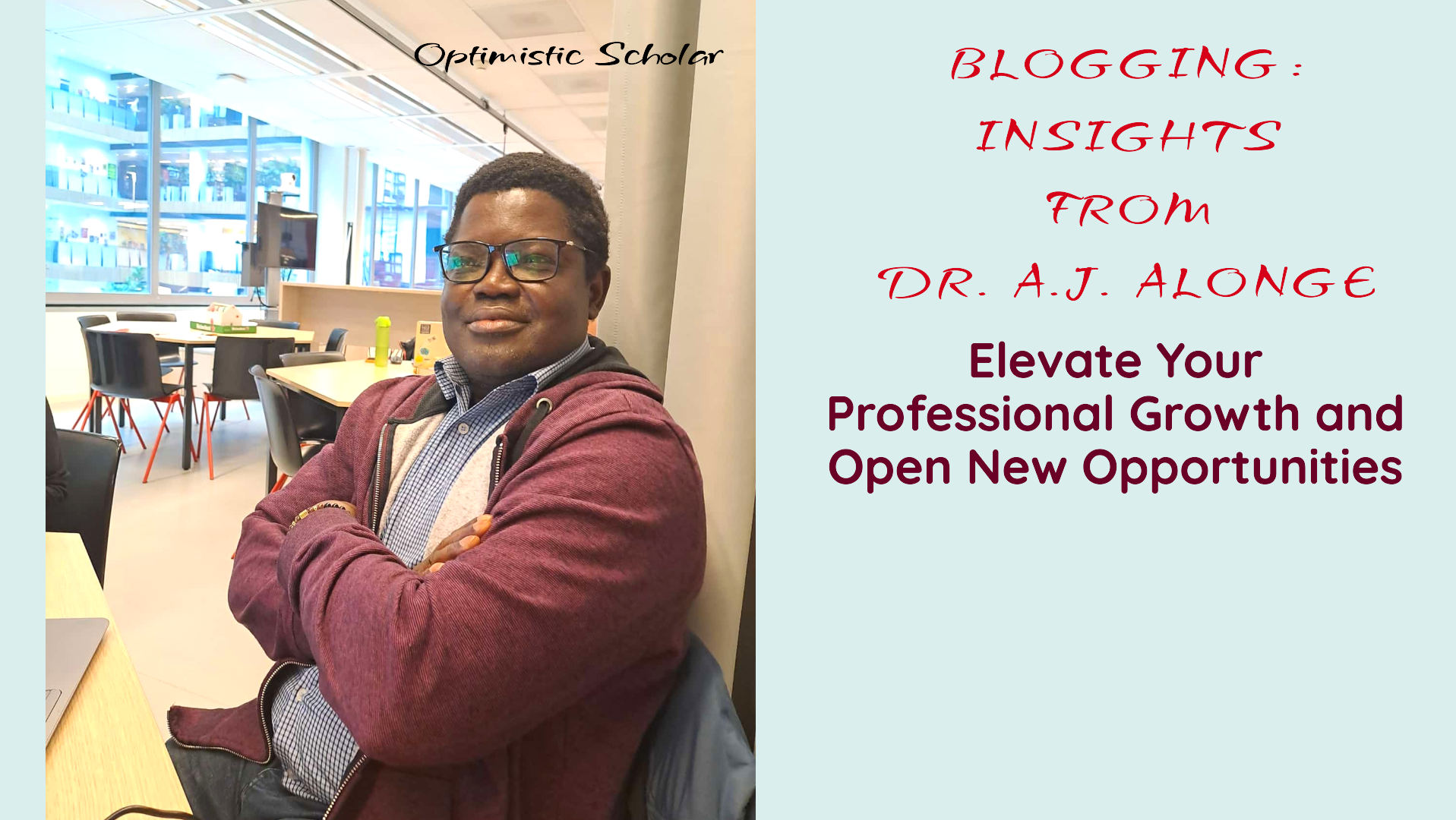
    Shaping Your Career: How Blogging Can Fuel Your Professional Growth

    Blogging can be a powerful tool for building your professional brand, expanding your network, and even landing career opportunities. Regularly writing about your field of expertise not only demonstrates your knowledge but also helps you stand out to potential employers. In a recent interview as part of the Toronto Public Library’s Career Coaches in Residence (CCIR) program, Dr.  Ayodele John Alonge emphasized how blogging, when done consistently and strategically, can help professionals boost their career growth, enhance their skills, and create valuable connections.

    On October 2, 2024, the Toronto Public Library’’s Career Coaches in Residence program (CCIR) program hosted a session titled *“Shaping Your Career: How Blogging Can Fuel Your Professional Growth,” featuring Dr. John Alonge, an expert in education, digital technology, and library science. Anchored by Sarah Atkinson with Tinu Olawuyi leading the interview, the event explored how blogging can serve as an essential tool for career development.

    Blogging as a Career Tool
    Dr. Alonge shared his journey into blogging, which began in 2009 as a hobby. He explained how it evolved into a valuable platform that showcased his expertise and contributed to his professional visibility. “I started blogging for fun, just like an online journal to express my thoughts. But over time, it became more than that—it helped me get recognized and build a reputation,” he said.

    The blog helped him establish a foothold in areas such as health communication and digital libraries, while opening doors to job offers and speaking engagements. According to Dr. Alonge, *“Blogging regularly shows potential employers that you’re knowledgeable and committed. It’s a great way to demonstrate your competence and what you’ve learned in your field.”

    Consistency and Audience Engagement

    One of the main points Dr. Alonge emphasized was the importance of consistency in blogging. He advised professionals to set realistic goals, such as posting once a week or every two weeks. “Consistency helps build your online presence and credibility,” Dr. Alonge noted.

    In addition, he stressed the need to actively engage with readers by encouraging comments and discussions on blog posts. “Don’t just write and leave it there. Ask questions, get feedback, and create discussions around your posts. That’s how you build a community and keep people coming back,” he explained.


    Building a Personal Brand

    Dr. Alonge also spoke about how blogging can help professionals shape their personal brand. By sharing well-written blog posts on social media platforms like LinkedIn, individuals can increase their visibility to potential employers. *“Your blog is part of your personal brand,” he said. “Be consistent with the name you use across all social media platforms, and make sure your online presence reflects professionalism.

    Measuring Success and Monetizing Blogs

    Dr. Alonge explained that the success of a blog can be measured both quantitatively and qualitatively. On the quantitative side, he suggested tracking metrics like readership, shares, and comments. However, he also highlighted the qualitative aspect—how blogging can lead to job offers or speaking opportunities. *“Success isn’t just about the number of views or likes. It’s about the opportunities that come from it,”* he said.

    While monetizing a blog is possible, Dr. Alonge advised not to prioritize it early on.  “Focus on building a strong blog first. Monetization will come later, through avenues like Google AdSense or event promotions,” he added.

    Skill Development Through Blogging

    Blogging isn’t just about career opportunities—it’s also a way to sharpen essential skills. “Blogging improves your writing skills, helps you stay alert to new developments in your field, and opens up opportunities for networking and collaboration,” said Dr. Alonge. He noted that blogging can also enhance time management and cognitive skills, as it encourages you to stay current with industry trends.

    Final Thoughts

    The session wrapped up with Sarah Atkinson thanking Dr. Alonge for his valuable insights. The CCIR program offer free career guidance to young professionals in Canada through one-on-one coaching and specialized programs like this.

    To watch the full video of the interview, check here:.Key Takeaways from Dr. Ayodele John Alonge’s Interview:

    1. Start Blogging: Write about topics you’re passionate and knowledgeable about.
    2. Leverage Social Media: Share your blog on platforms like LinkedIn to increase visibility
    3. Consistency is Key: Set realistic goals and maintain a regular posting schedule.
    4. Engage Readers: Encourage feedback and discussions to foster community.
    5. Measure Success: Track both quantitative and qualitative outcomes from your blog.
    6. Monetization: Focus on building a strong blog before monetizing.
    7. Develop Skills: Blogging can improve writing, time management, and networking skills.

    This session reinforced how blogging can be an essential tool for career development, providing professionals with a platform to demonstrate their expertise, grow their network, and advance their careers.

    Shaping Your Career: How Blogging Can Fuel Your Professional Growth TPL Programs TPL Programs