Tag: sustainable development

  • Building a Greener Future: Join the Afrelib/AFLIA Webinar on Sustainable Libraries in Africa

    Building a Greener Future: Join the Afrelib/AFLIA Webinar on Sustainable Libraries in Africa

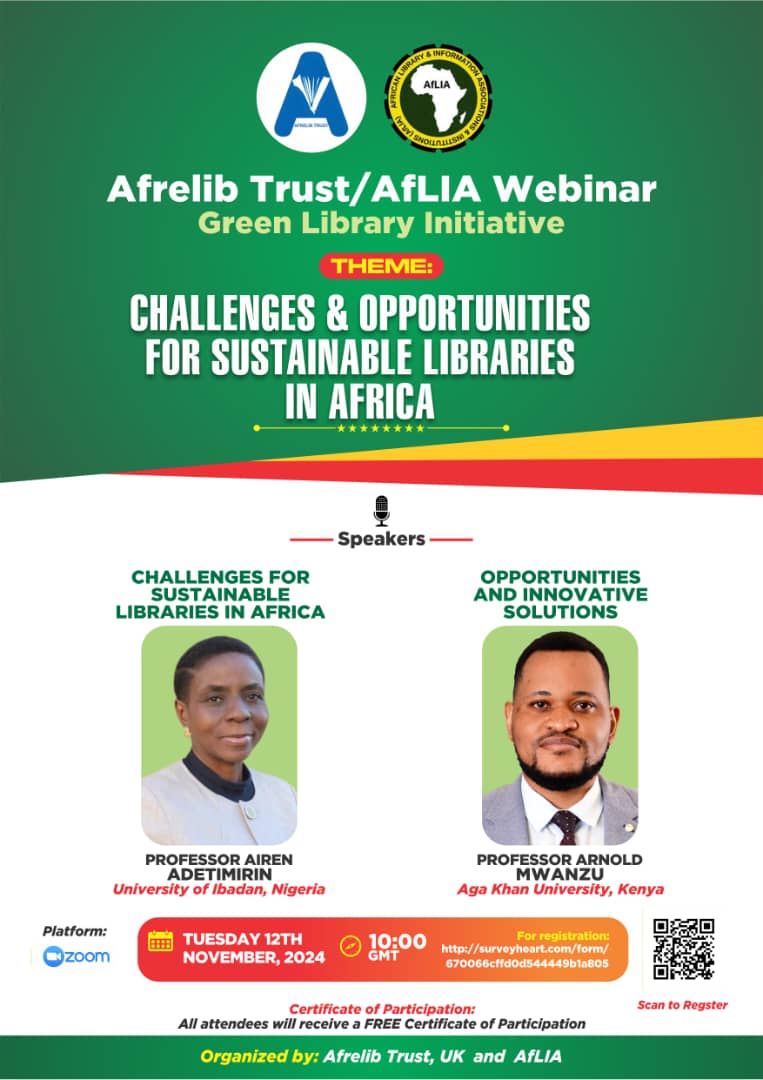
    Afrelib/AFLIA Webinar on Green Library Initiative
    Theme: Challenges and Opportunities for Sustainable Libraries in Africa

    In an age where environmental sustainability is no longer optional, libraries across Africa are stepping up to become beacons of green practices and education. Green libraries play a crucial role in minimizing environmental impact and empowering communities by promoting sustainable living. They adopt energy-efficient systems, green building materials, and waste-reduction strategies, all while serving as knowledge hubs for sustainability.

    To further this vital mission,  Afrelib Trust (UK), in collaboration with the **African Library and Information Associations & Institutions (AfLIA), is organizing a  Green Library Initiative Webinar. This event will explore the challenges and opportunities involved in developing sustainable libraries throughout Africa.

    • Event Details:
      📅 Date: Tuesday, November 12th, 2024
      🕒 Time: 10:00 AM GMT
      📍 Platform: Zoom
      🎓 Certificate of Participation: All attendees will receive a FREE Certificate of Participation
    • Click to Register Now

    Featured Speakers:

    • Professor Airen E. Adetimirin – University of Ibadan, Nigeria:  A professor in the Department of Library, Archival and Information Studies, Prof. Adetimirin combines her expertise in Agriculture, Data Processing, and Library and Information Studies. Her teaching and research efforts are focused on developing library practices that resonate with the needs of African communities and align with sustainable goals.
    • Professor Arnold Mwanzu – Aga Khan University, Kenya : As the Chairman of the Kenya Library & Information Science Consortium (KLISC), Prof. Mwanzu manages Aga Khan University libraries across East Africa. With a Ph.D. in Information Science, he has earned numerous qualifications in organizational development and leadership, making him a leading advocate for innovative library solutions in the region.About the Organizers:
    • Afrelib Trust, UK:  Dedicated to advancing library and information services, Afrelib Trust focuses on fostering sustainable practices within African libraries. Learn more about Afrelib Trust here
    • African Library and Information Associations & Institutions (AfLIA):  AfLIA is a prominent organization advocating for the development of library services across Africa, serving as the voice of the African library and information community. Learn more about AfLIA here

    Don’t miss this opportunity to engage with leading experts and explore the future of sustainable libraries in Africa. Join us as we work together to make a lasting impact on our communities and the environment!

    Register Now

  • University of Ibadan Don Advocates for Harnessing Cultural Heritage for Sustainable Development

    University of Ibadan Don Advocates for Harnessing Cultural Heritage for Sustainable Development

    University of Ibadan Don Advocates for Learning from the Past to Shape Future Development

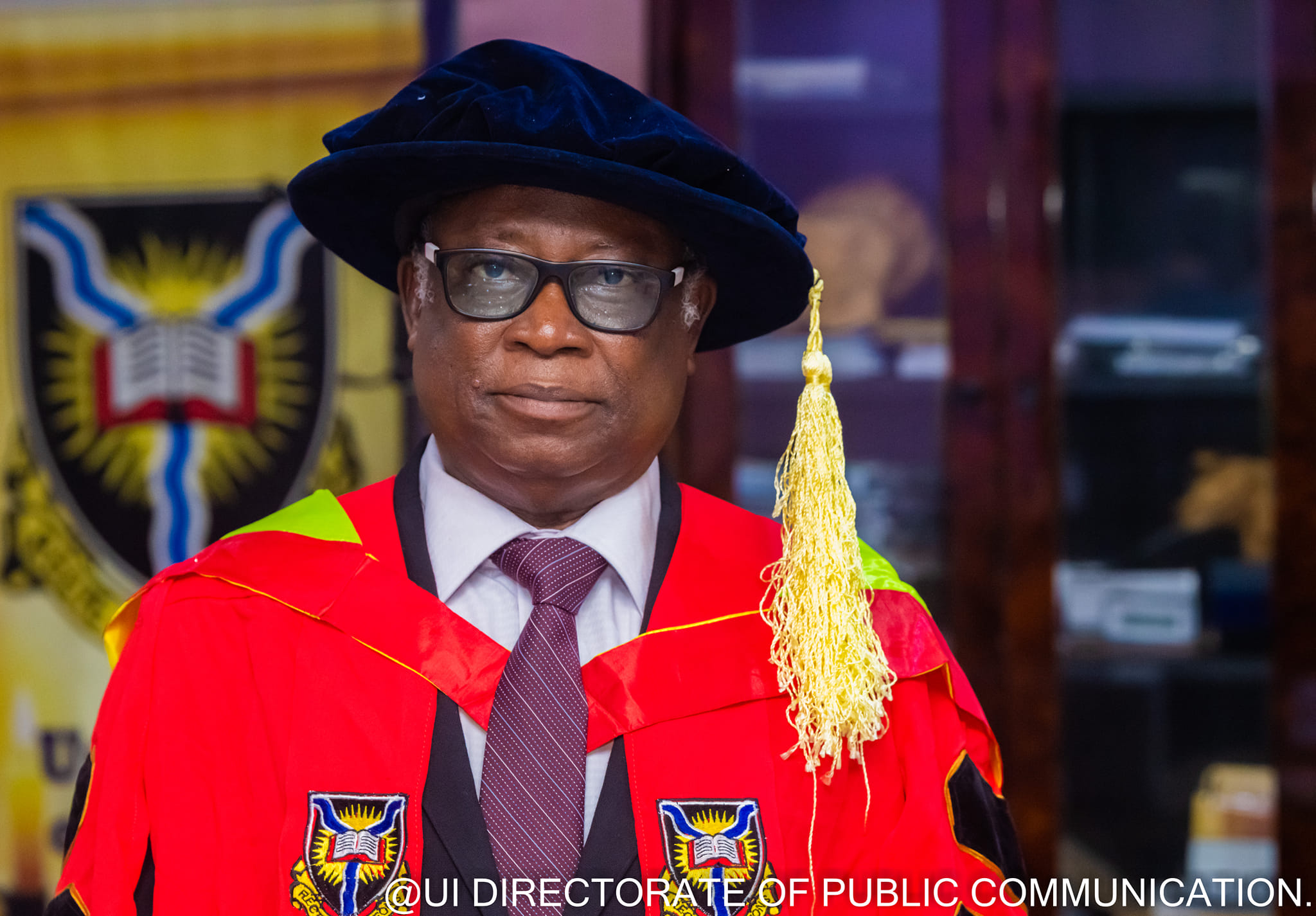
    In a compelling lecture delivered during the 558th Inaugural Lecture at the University of Ibadan, Professor Jonathan Oluyori Aleru, a distinguished scholar of Historical Archaeology, emphasized the crucial need to draw vital lessons from history to chart new pathways for development across all sectors. Professor Aleru’s lecture, titled “Sunset on Yoruba Northern Frontier?“, was presented on behalf of the Faculty of Science.

    Highlighting the untapped potential of cultural resources, Professor Aleru asserted that, if effectively harnessed and developed into tourism capital, these resources could generate a more sustainable and substantial revenue stream than the exploitation of crude oil and solid minerals. He pointed to successful examples from Eastern and Southern Africa, where cultural heritage centers have become significant revenue sources, surpassing income from petroleum and gas industries. Unlike finite natural resources, cultural assets, he noted, are inherently sustainable.

    Professor Aleru expressed concern over the widespread neglect and exploitation of cultural heritage in Nigeria and West Africa, where valuable cultural artifacts are often sold cheaply, leaving communities impoverished both materially and spiritually. He questioned why the destruction and looting of cultural and natural heritage do not receive the same attention as the theft of crude oil, urging authorities to refocus their efforts on preserving these irreplaceable resources.

    Focusing on the Yoruba Northern Frontier—comprising Oyo, Kwara, and Kogi States—Professor Aleru warned of the ongoing and systematic destruction of the region’s rich cultural landscapes. He cited daily human activities, such as farming, infrastructure development, and the exploration of natural resources, as major contributors to the degradation of cultural heritage. Furthermore, he highlighted the growing threat posed by antiquities traffickers, comparing their operations to those of drug traffickers in their sophistication and impact.

    In a call to action, Professor Aleru urged the University of Ibadan’s administration to ensure the survival and advancement of its Department of Archaeology. He stressed that archaeology plays a vital role in addressing the ethnic, political, and religious challenges that arise from Nigeria’s diverse cultural landscape. The discipline, he argued, is essential for fostering a deeper understanding of human differences and preserving the truths of the past.

    The lecture marked the eighth installment in the 2023/2024 inaugural lecture series at the University of Ibadan, underscoring the institution’s commitment to fostering academic discourse on critical national issues.

     TwKeyays for Stakeaakeholders: Emphasizing Cultural Heritage as a Pathway to Sustainable Development
    1. Cultural Heritage as Economic Resource: Cultural resources, when properly harnessed, can provide a more sustainable and profitable revenue stream than traditional natural resources like crude oil and solid minerals.
    2. Successful Global Examples:  Countries in Eastern and Southern Africa have effectively transformed their cultural heritage into significant economic benefits, suggesting a model for Nigeria and West African countries to follow.
    3. Urgent Need for Preservation:  There is a critical need to focus on preserving cultural heritage in Nigeria, as current practices of selling and looting cultural artifacts are unsustainable and impoverishing.\
    4. Infrastructure Investment: Stakeholders should invest in the development of resource centers and infrastructure to protect and showcase cultural heritage, turning it into an economic asset.
    5. Role in National Unity:  Cultural heritage and archaeology play a vital role in addressing ethnic, political, and religious complexities, contributing to national unity and cohesion.
    6. Call for Institutional Support:  The University of Ibadan, and particularly its Department of Archaeology, should receive support to continue its work in preserving cultural heritage and contributing to national development.OptimisticScholar Congratulates Professor Jonathan Oluyori Aleru on His Landmark Achievement
      Congratulations, Professor Aleru, on your remarkable achievement with the landmark presentation of your Inaugural Lecture at the University of Ibadan! Your dedication and expertise in archaeology and anthropology have truly shone through, marking this as a significant milestone in your academic career. This accomplishment reflects your hard work and serves as a source of inspiration to many of us. Well done, Sir!
      _________
      Reference/Credit: Content and images provided by the UI Directorate of Public Communications and obtained from the University of Ibadan’s Facebook page.
  • Afrelib-Trust Mobilizes experts for Eco-Friendly Library Initiatives in Africa

    Afrelib-Trust Mobilizes experts for Eco-Friendly Library Initiatives in Africa

    The Afrelib Trust has launched its inaugural volunteer cohort for the Green Library Development Project.

    The Afrelib Trust has launched its first group of volunteers for the Green Library Development Project. This organisation is comprised of motivated and talented individuals who want to make a good difference in African communities by campaigning for education, literacy, and sustainability.

    Afrelib Trust’s mission is to improve education, literacy, and creativity throughout Africa by creating sustainable libraries that foster a learning culture. The Green Library Development Project supports the Sustainable Development Goals (SDGs) by emphasising environmentally sustainable libraries.

    During their six-month tenure, the cohort will concentrate on communication, advocacy, and various research initiatives, such as case studies of sustainable library development in Africa, community needs assessments, and the creation of a comprehensive Green Library Resources Database. Additional volunteers will be added as the project progresses.

    Volunteers will learn from specialists, expand their networks, work with like-minded people, and receive personalised recognition and recommendations. Their efforts will immediately benefit sustainable library development while sharpening their talents and having a concrete influence on African communities.

    In addition to the volunteers who work on research and communication, a group of architects, quality surveyors, and construction experts are collaborating to establish the benchmark for sustainable library development in Nigeria and throughout Africa. All these volunteer groups are coordinated by Consultant Librarian and Project Director Dr. John Alonge, while the initiative itself is led by Afrelib Trust Founder and Chair Mr. Larry Ajuwon, who co-founded the organization to elevate literacy and education.