

Australia Awards Scholarships: Opening Doors for Developing Country Scholars
 Long-Term Development Initiative: Managed by Australia’s Department of Foreign Affairs and Trade, these scholarships are designed to foster international development.
- Developmental Focus: The scholarships align with Australia’s bilateral and regional agreements, aiming to support the development needs of partner countries.
- Indo-Pacific Region Priority: They are geared towards individuals from developing countries, especially those situated in the Indo-Pacific region, offering them the chance to pursue full-time undergraduate or postgraduate studies.
- Academic Institutions:** Studies can be undertaken at Australian universities and Technical and Further Education (TAFE) institutions.
- Building Future Leaders:** The program equips recipients with vital skills and knowledge to enact change and bolster development within their home countries.
Scholarship Benefits Include:
- Tuition and Training: Coverage of all tuition fees and any preparatory training.
- Travel Expenses: A round-trip economy airfare to Australia via the most direct route.
- Settlement Support: A one-time establishment allowance for accommodation, textbooks, and study materials.
- Living Expenses: A fortnightly contribution to living expenses at a rate set by the department
- Academic Preparation:** An Introductory Academic Program (IAP) before formal studies begin, detailing life and education in Australia.
- Health Coverage: Overseas Student Health Cover (OSHC) for the duration of the award.
- English Language Training: Pre-course English (PCE) fees, if necessary, for training both within the country and in Australia.
- Academic Support: Possible supplementary academic support to aid in scholar success.
- Fieldwork: For certain research programs, fieldwork expenses may be covered for one economy class airfare to the scholar’s home country or within Australia.
*Award Requirements:**
- Contract Agreement: Recipients must sign a contract with the Commonwealth of Australia, agreeing to the scholarship conditions.
- Post-Study Obligation:** Scholars are required to leave Australia for at least two years after completing their scholarship. Non-compliance will result in a debt for the total cost of the scholarship.
Application Guide: Application Process: For details on the application process for an Australia Awards Scholarship, please refer to the official guidelines.
This is a golden chance for eligible candidates to transform their vision into impact with the support of the Australia Awards Scholarships. Find out about more the application process and step into a world of possibilities! https://www.dfat.gov.au/people-to-people/australia-awards/australia-awards-scholarships

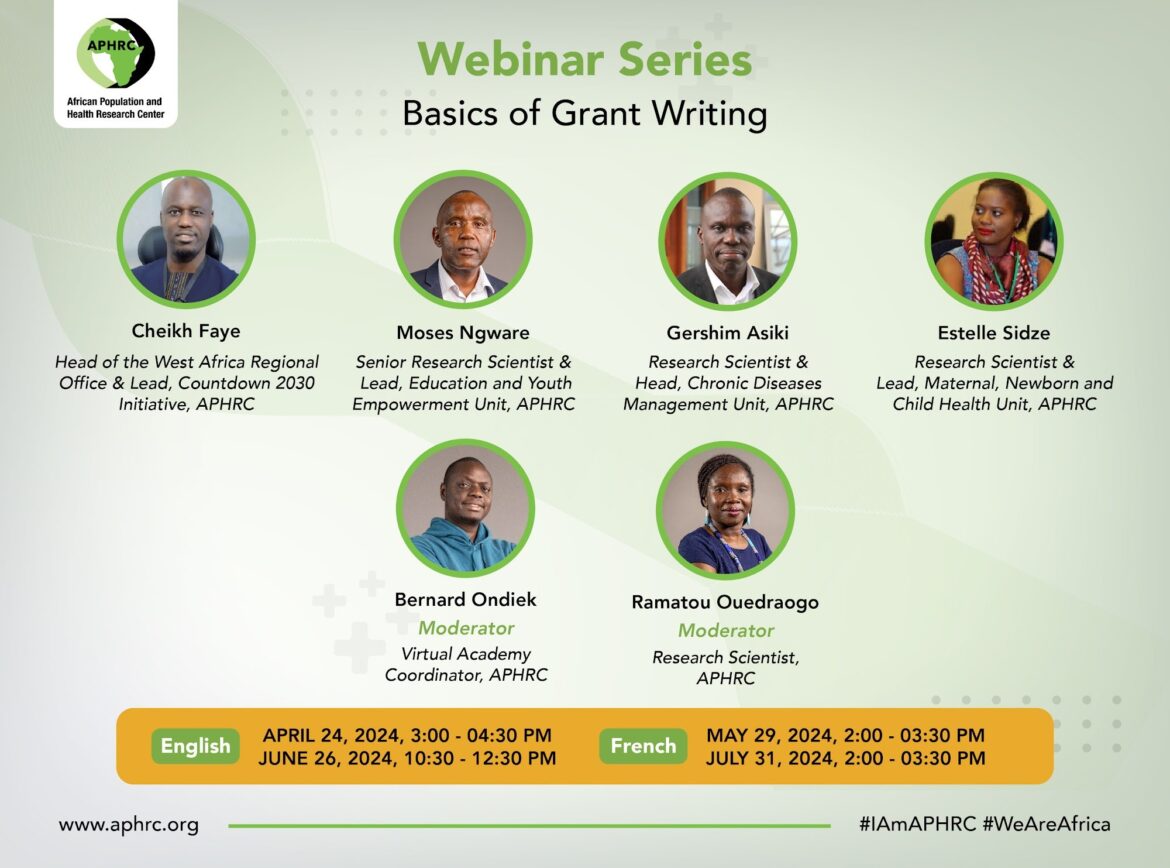
 The African Population and Health Research Center is launching the Research Support Hub initiative with a series of webinars.
 Don’t Miss This Webinar!* Register now for the ‘Global Impact Through Education: Demystifying the Application Process’, a prestigious event in collaboration with David’s Christian Centre (DCC) Career Connect group and featuring Ebubechukwu Uba.
 Dr. Ihejirika began his academic career in Nigeria, earning a degree in Library Science. His academic journey continued to New Zealand, where he studied social media and involvement in library systems. His research looked on how libraries could employ social media to increase user engagement and improve reading, giving Dr. Ihejirika a core skill set that he would later use in his business analysis career.
 Dr. Ihejirika emphasised the dynamic nature of the business analysis, emphasising the need for professionals to constantly learn and adapt to rapid changes and difficulties in the business world. He emphasised the importance of adaptability not only in keeping up with technical changes, but also in understanding the larger business environment in order to properly match tech solutions with business goals. Dr. Ihejirika pushed for a proactive learning mentality that includes formal training, self-study, and hands-on experience to gain a better grasp of both emerging technology and strategic business demands. His thoughts assist professionals in managing the complexity of a data-driven business environment while emphasising creativity and strategic thinking.

 Exciting Opportunity Awaits! Applications are now open for the Bilkent University International Scholarships for the 2024-25 academic year in Turkey.