The Swiss Government is proudly offering the 2025 Swiss Government Excellence Scholarship to outstanding international students. This prestigious program provides a full scholarship along with a generous monthly stipend to support Master’s and PhD studies at renowned Swiss institutions. Whether you’re an aspiring researcher or artist, this guide outlines everything you need to know to apply and increase your chances of being selected.
Eligibility and Scholarship Details The Swiss Government Excellence Scholarship is designed to foster international exchange and research cooperation between Switzerland and over 180 countries worldwide. It supports young researchers who have completed a Master’s or PhD and artists holding a Bachelor’s degree.
Types of Scholarships
- Research Scholarships: Offered for postgraduate research across Swiss cantonal universities, federal institutes of technology, universities of applied sciences, and four research institutes.
- Art Scholarships: Available for study at any Swiss conservatory or university of the arts. Note that this scholarship is limited to students from specific countries.
Requirements for Applicants
- Hold a university degree (Bachelor’s/Masters) by the commencement of the scholarship.
- Demonstrate strong academic capabilities and clear objectives for your research or artistic endeavors.
- Be under the age of 35 years (born on or after January 1, 1979).
- Proficient in French, German, Italian, or English, depending on the language of instruction.
Scholarship Benefits
- Full coverage of tuition fees.
- Monthly living stipend of CHF 3,500.
- Accommodation support.
Selection Process Applications undergo a preliminary selection by national authorities or Swiss diplomatic representations. The Federal Commission then assesses the most promising candidates for Scholarships for Foreign Students (FCS), which bases its decision on the candidate’s profile, the quality of the research project or artistic work, and potential for future research collaboration.
How to Apply: Step-by-Step Guide
- Identify Your Scholarship Type: Determine whether you should apply for a research or art scholarship.
- Select Your Country of Origin: Find specific details and application documents for your home country.
- Check Deadlines and Requirements: Each country has different deadlines and specific requirements.
- Prepare Your Application: Gather all necessary documents, focusing on showcasing your academic and/or artistic excellence.
- Submit Your Application: Follow the specific guidelines for your country, ensuring you meet all criteria and submit before the deadline.
Conclusion The Swiss Government Excellence Scholarship offers a remarkable opportunity for international scholars to advance their education and contribute to global research and artistic endeavors. By preparing a thorough application and aligning your academic goals with the scholarship’s objectives, you can enhance your chances of enjoying a fully funded educational experience in Switzerland.
Call to Action Are you ready to take the next step in your academic or artistic career? Click the link below to start your application for the 2025 Swiss Government Excellence Scholarship and join a world-class community of scholars and artists in Switzerland!
Click HERE to apply.
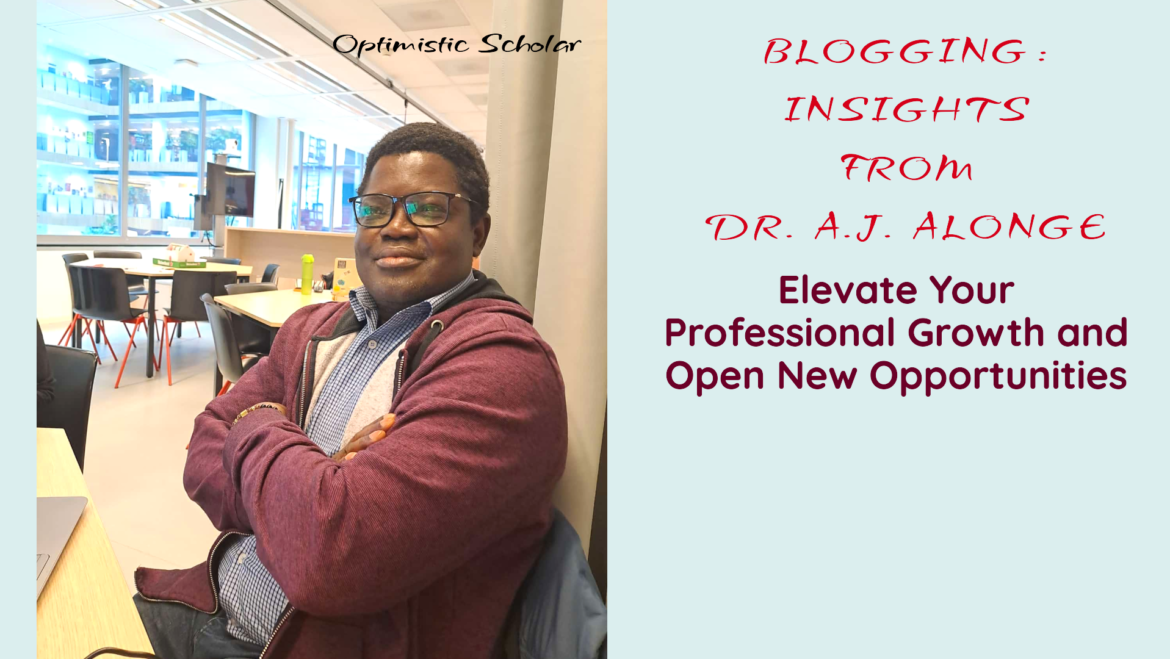
 On October 2, 2024, the Toronto Public Library’’s Career Coaches in Residence program (CCIR) program hosted a session titled *“Shaping Your Career: How Blogging Can Fuel Your Professional Growth,” featuring Dr. John Alonge, an expert in education, digital technology, and library science. Anchored by




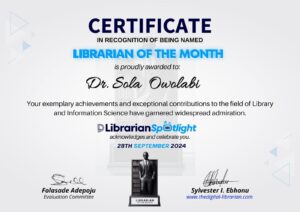
 In the September 2024 edition of the Librarian Spotlight Africa Programme, Dr. Sola Owolabi was recognized for his pioneering work in bibliotherapy and cinema therapy. A senior lecturer and public speaker, Dr. Owolabi uses storytelling through literature and media to address societal challenges such as juvenile delinquency, violence, and peer pressure—particularly among adolescents.