Tag: Career Development

  • Look for Problems, Look for Gaps: The Path from Training to Transformation

    Look for Problems, Look for Gaps: The Path from Training to Transformation

    Building Careers in a Changing World

    By Dr. Ayodele John Alonge | October 1, 2025

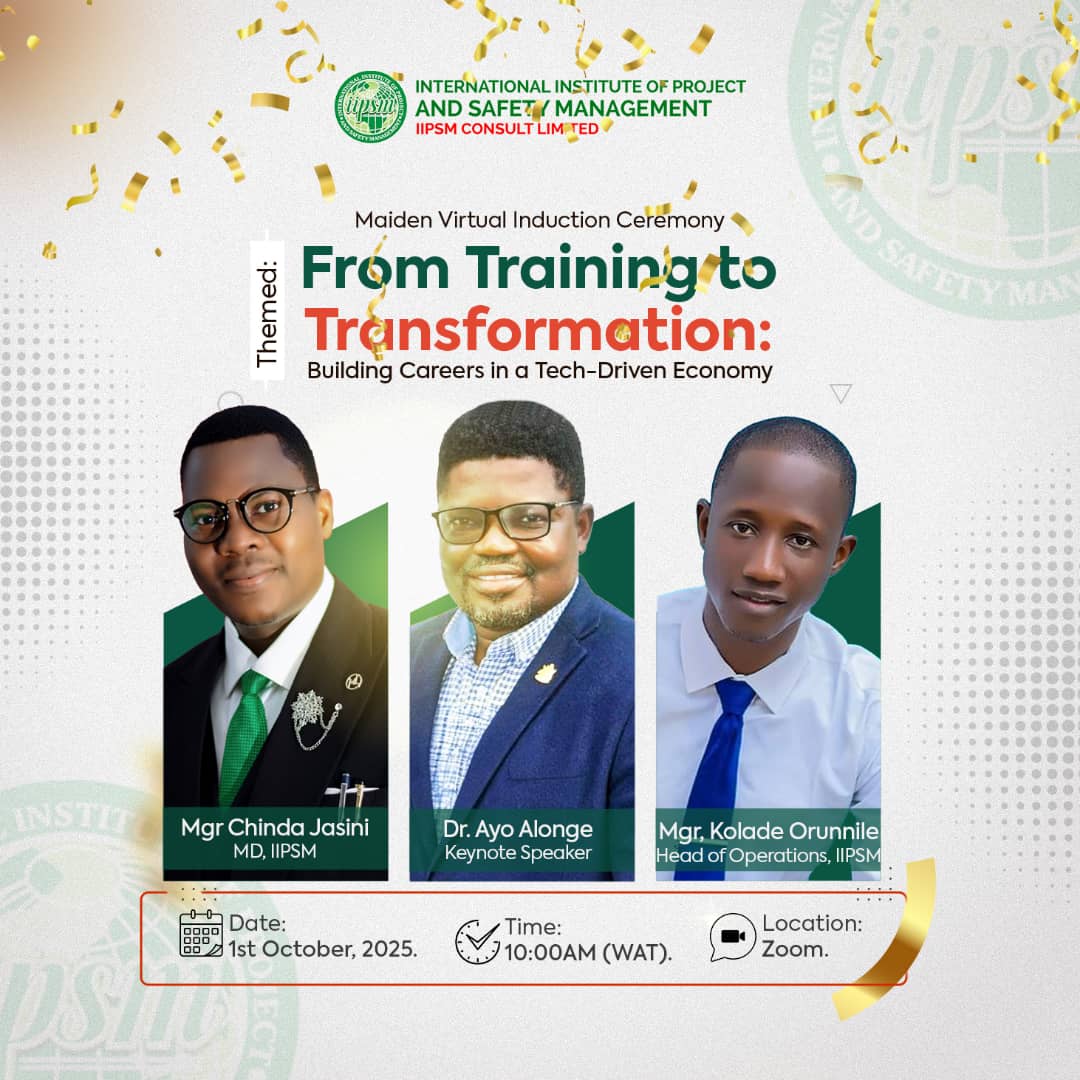
    On October 1st, 2025, a day that also marked Nigeria’s 65th Independence Anniversary, I had the privilege of serving as the Keynote Speaker at the Induction Ceremony of the International Institute of Project and Safety Management (IIPSM).

    The event was a celebration of growth, resilience, and purpose. It was also the first virtual induction ceremony of the Institute, and the Zoom platform was filled to capacity with young professionals, faculty members, and guests from across Nigeria. I joined the session from the United States, where I am currently pursuing another learning experience. It was a moment of reflection, pride, and gratitude as I shared insights on the theme, “From Training to Transformation: Building Careers in a Tech-Driven Economy.”


    Training Is Only the Beginning

    Every phase of life is a project — from education to career, marriage, and personal development. That was the central message of my keynote. I explained that project management is not just a discipline but a life philosophy — a structured, intentional way of setting goals, making plans, and achieving meaningful results.  Reflecting on my journey from a classroom teacher to l being a librarian to becoming university lecturer to a researcher and facilitator beyond africa  I emphasized that professional growth truly begins where training ends. As I said during the ceremony, “Training is the beginning; transformation is the destination.”


    The Power of Lifelong Learning

    When I completed my PhD, I thought since  I had reached the peak of my academic pursuit, I wont need to enroll for formal study any longer. But life soon reminded me that learning never truly ends. Years later, I enrolled in a project management program that completely reshaped my mindset, expanded my network, and opened new doors of opportunity. That experience taught me that lifelong learning is not about collecting certificates — it’s about expanding your capacity to think, staying curious, and building the resilience to adapt in a fast-changing world.  Those who continue to learn and evolve will always find relevance and opportunity. Growth requires curiosity, flexibility, and a willingness to keep improving.


    The Role of Technology in Growth

    I reminded the audience that technology has become the foundation of nearly every profession. When I once taught Application of ICT to Library Science at the University of Ibadan, many of the tools we now take for granted were still emerging. Today, technology shapes how we work, communicate, and learn. The world changes faster than any syllabus, and those who fail to adapt risk being left behind. Whether one is a librarian, engineer, or entrepreneur, digital competence has become essential for progress. Yet, technology alone cannot create excellence. The most successful professionals will always be those who blend their knowledge with human-centered qualities — empathy, collaboration, integrity, and creativity.


    Volunteering, Service, and Transformation

    Transformation is not measured by  the volume of what we learn, but by how we use that knowledge to serve others and humanity. I shared how some of my most meaningful opportunities began through volunteering.  From supporting projects with, Afrelib, UK, the Gideons International to leading youth and community initiatives in my church in the Netherlands and the United States, These volunteers services  have opens doors that money alone cannot. Sometimes, offering your time, energy, and creativity freely becomes the bridge to a larger purpose. Volunteering helps you see the world differently. It helps you look for problems and look for gaps that others might overlook. These are the starting points for meaningful innovation and transformation.


    From Training To Transformation:  Building a Career with Purpose

    In my message to the new inductees, I encouraged them to think globally but act locally. It is within our local communities that opportunities for real impact often emerge. I reminded them: there may not be jobs everywhere, but there are problems everywhere — and problems are opportunities in disguise. The real professional is not the one who waits for employment but the one who identifies gaps, solves problems, and creates value.  One of my guiding principles has always been: Look for problems, look for gaps, and see how you can fill them. Every solution you design, every innovation you introduce, and every life you touch becomes a testament to transformation through learning.


    Practical Advice for New Inductees

    During the keynote lecture, I shared some practical advice that can guide the new inductees in their journey of professional and personal growth:

    • Master Your Tools: Learn tools like Scrum, Jira, Miro, and Microsoft Teams.

    • Develop a Digital Mindset: Keep learning — sign up for webinars, workshops, and online courses.

    • Tell Your Story: Build your personal brand on news media like  LinkedIn. Share your achievements and reflections — the world needs to hear your story.

    • Think Globally, Act Locally: Seek global best practices, but apply them to solve local problems.

    • Stay Ethical: Integrity and honesty are key to sustained success.

    • See Life as a Project: Set goals, plan milestones, manage risks, and celebrate small wins.

    These principles are not just professional habits — they are life skills. They keep us relevant, grounded, and impactful in every season of life.

    A Call to Lifelong Impact

    As I concluded my keynote, I reminded the inductees that while training equips us with knowledge, transformation gives that knowledge meaning and direction. “The future belongs not to those who are merely trained,” I said, “but to those who transform through what they have learned.”

    Every certificate we earn should lead to positive action. Every skill should find expression in service. And every opportunity should become a platform for impact.

    True transformation goes beyond the workplace. It is about what we make work wherever we find ourselves — at home, in the community, in our profession, or in service to others. When we make it a habit to look for problems, identify gaps, and courageously create solutions, we move from success to significance. In doing so, we don’t just build careers — we build communities, strengthen institutions, uplift nations, and leave a lasting legacy.

    Keep learning. Keep serving. Keep transforming.
    Dr. Ayodele John Alonge


  • Boost Your Career with Blogging: Insights from Dr. A.J. Alonge

    Boost Your Career with Blogging: Insights from Dr. A.J. Alonge

    Shaping Your Career: How Blogging Can Fuel Your Professional Growth

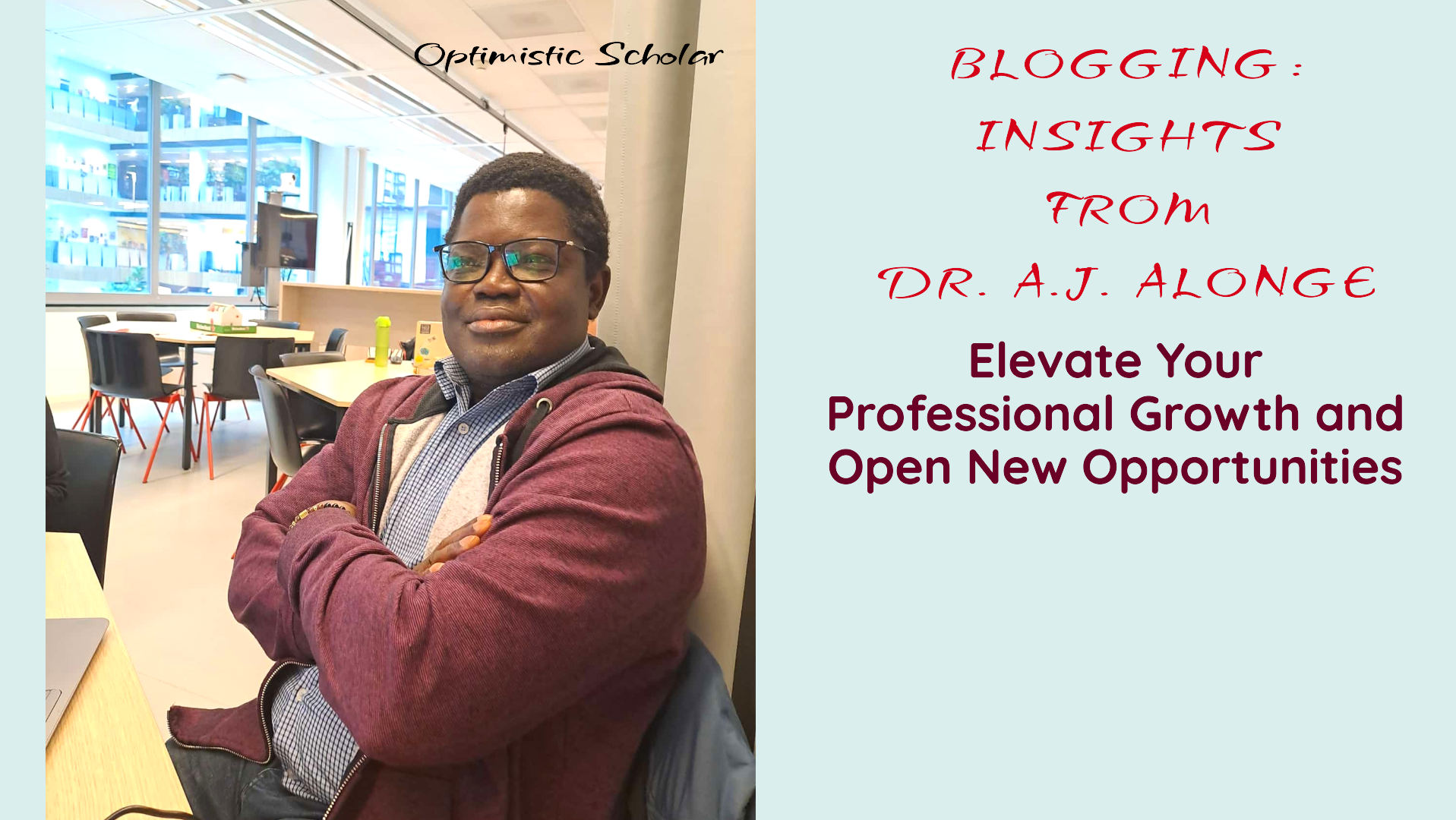
    Blogging can be a powerful tool for building your professional brand, expanding your network, and even landing career opportunities. Regularly writing about your field of expertise not only demonstrates your knowledge but also helps you stand out to potential employers. In a recent interview as part of the Toronto Public Library’s Career Coaches in Residence (CCIR) program, Dr.  Ayodele John Alonge emphasized how blogging, when done consistently and strategically, can help professionals boost their career growth, enhance their skills, and create valuable connections.

    On October 2, 2024, the Toronto Public Library’’s Career Coaches in Residence program (CCIR) program hosted a session titled *“Shaping Your Career: How Blogging Can Fuel Your Professional Growth,” featuring Dr. John Alonge, an expert in education, digital technology, and library science. Anchored by Sarah Atkinson with Tinu Olawuyi leading the interview, the event explored how blogging can serve as an essential tool for career development.

    Blogging as a Career Tool
    Dr. Alonge shared his journey into blogging, which began in 2009 as a hobby. He explained how it evolved into a valuable platform that showcased his expertise and contributed to his professional visibility. “I started blogging for fun, just like an online journal to express my thoughts. But over time, it became more than that—it helped me get recognized and build a reputation,” he said.

    The blog helped him establish a foothold in areas such as health communication and digital libraries, while opening doors to job offers and speaking engagements. According to Dr. Alonge, *“Blogging regularly shows potential employers that you’re knowledgeable and committed. It’s a great way to demonstrate your competence and what you’ve learned in your field.”

    Consistency and Audience Engagement

    One of the main points Dr. Alonge emphasized was the importance of consistency in blogging. He advised professionals to set realistic goals, such as posting once a week or every two weeks. “Consistency helps build your online presence and credibility,” Dr. Alonge noted.

    In addition, he stressed the need to actively engage with readers by encouraging comments and discussions on blog posts. “Don’t just write and leave it there. Ask questions, get feedback, and create discussions around your posts. That’s how you build a community and keep people coming back,” he explained.


    Building a Personal Brand

    Dr. Alonge also spoke about how blogging can help professionals shape their personal brand. By sharing well-written blog posts on social media platforms like LinkedIn, individuals can increase their visibility to potential employers. *“Your blog is part of your personal brand,” he said. “Be consistent with the name you use across all social media platforms, and make sure your online presence reflects professionalism.

    Measuring Success and Monetizing Blogs

    Dr. Alonge explained that the success of a blog can be measured both quantitatively and qualitatively. On the quantitative side, he suggested tracking metrics like readership, shares, and comments. However, he also highlighted the qualitative aspect—how blogging can lead to job offers or speaking opportunities. *“Success isn’t just about the number of views or likes. It’s about the opportunities that come from it,”* he said.

    While monetizing a blog is possible, Dr. Alonge advised not to prioritize it early on.  “Focus on building a strong blog first. Monetization will come later, through avenues like Google AdSense or event promotions,” he added.

    Skill Development Through Blogging

    Blogging isn’t just about career opportunities—it’s also a way to sharpen essential skills. “Blogging improves your writing skills, helps you stay alert to new developments in your field, and opens up opportunities for networking and collaboration,” said Dr. Alonge. He noted that blogging can also enhance time management and cognitive skills, as it encourages you to stay current with industry trends.

    Final Thoughts

    The session wrapped up with Sarah Atkinson thanking Dr. Alonge for his valuable insights. The CCIR program offer free career guidance to young professionals in Canada through one-on-one coaching and specialized programs like this.

    To watch the full video of the interview, check here:.Key Takeaways from Dr. Ayodele John Alonge’s Interview:

    1. Start Blogging: Write about topics you’re passionate and knowledgeable about.
    2. Leverage Social Media: Share your blog on platforms like LinkedIn to increase visibility
    3. Consistency is Key: Set realistic goals and maintain a regular posting schedule.
    4. Engage Readers: Encourage feedback and discussions to foster community.
    5. Measure Success: Track both quantitative and qualitative outcomes from your blog.
    6. Monetization: Focus on building a strong blog before monetizing.
    7. Develop Skills: Blogging can improve writing, time management, and networking skills.

    This session reinforced how blogging can be an essential tool for career development, providing professionals with a platform to demonstrate their expertise, grow their network, and advance their careers.

    Shaping Your Career: How Blogging Can Fuel Your Professional Growth TPL Programs TPL Programs