Author: Samotechnology

  • Hello world!

    Welcome to WordPress. This is your first post. Edit or delete it, then start writing!

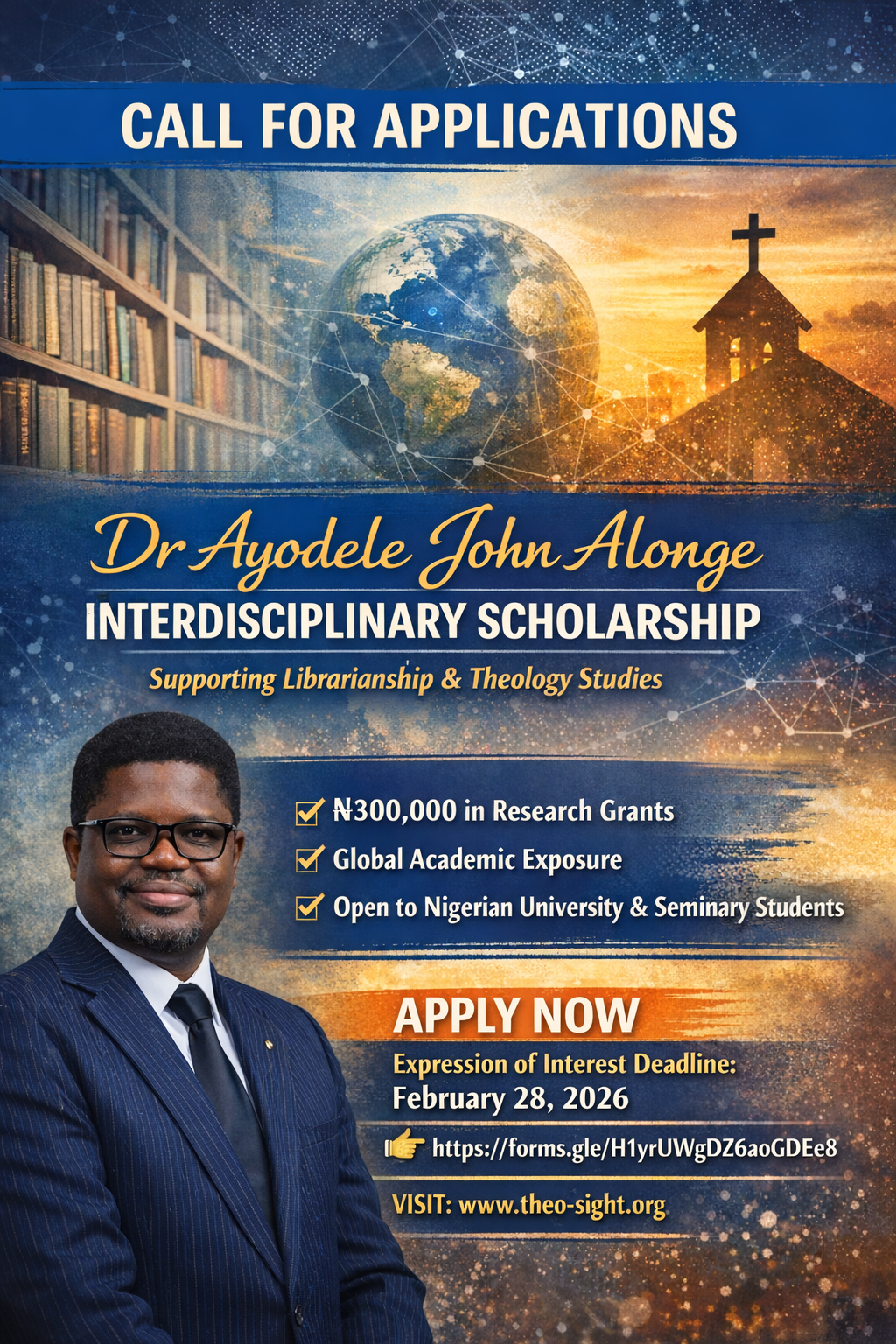
  • Call for Applications: Interdisciplinary Scholarship Advances Librarianship and Theology Studies

    Call for Applications: Interdisciplinary Scholarship Advances Librarianship and Theology Studies

    ₦300,000 Interdisciplinary Scholarship Launched in Honour of Dr Ayodele John Alonge

    A ₦300,000 interdisciplinary academic scholarship has been launched to empower emerging scholars in Library and Information Science and Theology, marking a bold step toward strengthening interdisciplinary research and academic excellence in Nigeria. The initiative, introduced by Theo-Sight Research and Advocacy, establishes the Dr Ayodele John Alonge Interdisciplinary Fellowship, awarding ₦100,000 each to three outstanding winners selected through a competitive essay and research process.

    Organisers say the fellowship promotes innovation, cross-disciplinary scholarship, and academic distinction among students enrolled in accredited Nigerian universities and theological institutions. The award is instituted in honour of Dr Ayodele John Alonge, a respected library and information professional in Nigeria who is also exploring scholarship in theological education, with research interests spanning education, media, library, and archival science.


    Celebrating a Scholar Bridging Knowledge, Media, and Faith

    According to organisers, the fellowship reflects Dr Alonge’s distinctive academic path—one that integrates digital transformation in librarianship with theological studies and faith-informed research. By establishing the fellowship in his name, Theo-Sight seeks to inspire young scholars to move beyond traditional academic silos and contribute meaningfully to evolving knowledge systems in Africa and globally.

    “This is more than financial support,” said Rev. Dr Godwins Adeboye, Chairman, Board of Trustees, Theo-Sight Research and Advocacy, Abuja, Nigeria. “It is a call to interdisciplinary excellence and intellectual leadership.”


    What the Scholarship Offers

    The programme features three award tracks, with ₦100,000 granted to each selected recipient.

    Digital Transformation in Librarianship Award

    (Open to Undergraduate and Postgraduate Students)

    Applicants must submit an analytical essay exploring how digital technologies—including artificial intelligence, digital archives, automation, and data-driven systems—are reshaping librarianship and redefining information services.

    Fellowship for Library Science and Theology

    (Open to Postgraduate and Theological Seminary Students)

    This category requires a research paper or scholarly essay examining the intersection of librarianship and theological studies. Suggested themes include information ethics, faith-based knowledge stewardship, theological libraries in the digital era, and librarianship as ministry.


    Structured Academic Review Process

    The scholarship will be administered through a transparent, multi-stage evaluation process:

    • Expression of Interest Deadline: February 28, 2026
      👉 https://forms.gle/H1yrUWgDZ6aoGDEe8

    • Submission Guidelines Released: March 16, 2026

    • Final Submission Deadline: April 17, 2026

    • Review Period: April 17 – May 1, 2026

    • Winners Announced: May 4, 2026

    Organisers emphasise that all submissions will undergo rigorous academic review to ensure merit, fairness, and excellence.


    International Recognition

    Winners will present their research during a hybrid public lecture on May 24, 2026, in Atlanta, Georgia, USA, where awards will be formally conferred. The event is expected to bring together academics, faith leaders, researchers, and professionals across the information science and theological communities.


    Eligibility

    Applications are open to:

    • Undergraduate and postgraduate students in Library and Information Science or related disciplines

    • Theological seminary students (undergraduate and postgraduate)

    • Students enrolled in accredited Nigerian institutions


    Advancing Nigeria’s Academic Future

    As digital transformation reshapes information ecosystems and theological institutions navigate technological change, the fellowship aims to position Nigerian students at the forefront of interdisciplinary innovation and scholarly leadership.

    Applications close February 28, 2026.

  • Last Call: 3 Fully Funded Scholarships Ending in February 2026

    Last Call: 3 Fully Funded Scholarships Ending in February 2026

    If you have been waiting for the right moment to submit your scholarship applications, that moment is now. We have identified three massive, fully-funded scholarship programs that are closing their portals before the end of this month.

    These are not partial tuition waivers; these are full scholarships that cover tuition, accommodation, and provide monthly stipends. Whether you are looking for a Master’s or a PhD, you have less than two weeks to finalize your documents.

    ⚠️ Urgent Warning: University portals often crash in the final hours due to heavy traffic. We strongly advise submitting your application at least 48 hours before the dates listed below.

    1. Türkiye Bursları (Turkish Government Scholarship)

    This is arguably the most comprehensive scholarship program in the world, accepting applications for Bachelor’s, Master’s, and PhD degrees across almost all fields of study. Unlike many other scholarships, this one includes university placement, meaning you do not need to apply to the university separately.

    • Scholarship Value: Full tuition, free accommodation, monthly stipend (approx. 6,500 TL for Master’s / 9,000 TL for PhD), health insurance, and a one-way flight ticket.

    • Deadline: February 20, 2026

    • Who Can Apply: International students from all countries.

    • Application Tip: This application requires a “Letter of Intent.” Ensure you clearly explain your academic goals and how they relate to Turkey.

    Apply at the Official Türkiye Bursları Website

    2. Chongqing University CSC Scholarship (China)

    For postgraduate students looking to study in China, the Chinese Government Scholarship (CSC) Type B program at Chongqing University (and several other major Chinese universities) is currently accepting applications for the 2026/2027 academic session. This is a prestigious “High Level Postgraduate Program.”

    • Scholarship Value: Full tuition waiver, free on-campus accommodation, comprehensive medical insurance, and a monthly stipend (3,000 RMB for Master’s / 3,500 RMB for PhD).

    • Deadline: February 25, 2026

    • Who Can Apply: Non-Chinese citizens in good health (Master’s applicants under 35; PhD applicants under 40).

    • Application Tip: You must apply on the CSC portal and the university’s own admissions portal. Make sure your “Agency Number” is correct for the specific university you are targeting.

    View Application Guide for CQU

    3. Master Mind Scholarships (Belgium)

    Hosted by the Government of Flanders, this program aims to bring top students to Belgium. While the general program is open until April, you cannot apply directly. You must be nominated by a host institution, and many of these institutions have internal deadlines that close in February.

    For example, KdG University of Applied Sciences and specific faculties at KU Leuven have deadlines closing this month.

    • Scholarship Value: A grant of €10,000+ per academic year and a tuition fee waiver.

    • Deadline: February 27, 2026 (Dates vary by host institution—check your specific school immediately).

    • Who Can Apply: Outstanding Master’s students with a high GPA (3.5/4.0 or equivalent).

    • Application Tip: Contact the “International Office” of your target Flemish university today and ask about their internal deadline for the Master Mind nomination.

    Check Eligible Institutions at Study in Flanders

    Summary Table: February 2026 Deadlines

    Scholarship Program Target Country Closing Date
    Türkiye Bursları Turkey Feb 20, 2026
    CSC (Type B) China Feb 25, 2026
    Master Mind Belgium Feb 27, 2026

    The next major intake for these countries won’t happen until late 2026 or early 2027. Don’t let this cycle pass you by!

  • At 50, Dr. Sola Owolabi Uses Books and Faith to Inspire a Generation

    At 50, Dr. Sola Owolabi Uses Books and Faith to Inspire a Generation

    At 50, Dr. Sola Owolabi Uses Books and Faith to Inspire a Generation. From personal adversity to public impact, a scholar’s journey at midlife

    By Dr. Ayodele John Alonge, Atlanta, USA
    Chief Creative Officer

    As Dr. Sola Emmanuel Owolabi marks his 50th birthday on 15 December, his life and professional journey present a compelling narrative of faith-informed optimism, intellectual discipline, and sustained commitment to social transformation. A librarian, scholar, bibliotherapist, cinematherapy practitioner, author of The Library Boy, and mentor to many young people, Dr Owolabi’s journey reflects a dynamic interplay between personal life experiences and professional purpose.

    In a reflective interview on OptimisticPoint—a platform devoted to storytelling and the articulation of hope—hosted by Dr. Ayodele John Alonge, Dr. Owolabi, who is currently based in the Netherlands, shared insights into the formative influences, defining challenges, and enduring beliefs that continue to shape and guide his life and work.


    Formative Experiences and the Foundations of Optimism

    Reflecting on his childhood and early years, Dr. Owolabi identified his faith-based upbringing and early institutional environments as central to the development of the optimistic outlook that has guided his life.

    “I think there are two things. One is the Christian environment—the system I found myself in, especially the Anglican Church where I was part of the Boys’ Brigade.”

    Although he noted that he was not yet born again at that stage, the disciplined and competitive environment fostered aspiration, resilience, and a strong work ethic.

    “We were challenged. You must go to school. You see competition. Even if we were not perfect, the environment wanted us to be good, so we were striving.”

    This formative influence was significantly strengthened in 1992 when he made a personal commitment to the Christian faith.

    “When I gave my life to Christ in 1992, that was when I began to have a real positive outlook on life—through interaction with men of God, especially my mentor, Reverend John Kelly, who God used to help me grow spiritually.”

    These early experiences laid the ethical and intellectual foundations for his later academic and professional engagements.


    A Defining Challenge That Tested Optimism

    Like most meaningful life journeys, Dr. Owolabi’s path has been marked by moments of significant adversity. One of the most defining occurred during his time as a diploma student at the University of Ibadan, when his mother was arrested over a financial dispute.

    “That experience was something that wanted to break me—but instead, it brought something out of me.”

    He recalled the sense of helplessness he felt while attempting to speak on his mother’s behalf at the police station.

    “When the policeman asked me who I was and I said I was a student, he shouted at me to leave—or be locked up with my mother.”

    The emotional impact of that encounter became a turning point in his life.

    “As I was walking on the road crying, I made a resolution: I must be great.”

    For Dr. Owolabi, greatness has always been defined beyond material success.

    “To be great means to command respect—not just financially, but in wisdom, connection, and character.”

    This resolution has continued to shape his pursuit of education, professional excellence, and social relevance.


    Personal Experiences and a Passion for Healing Through Books and Film

    Dr. Owolabi’s lifelong commitment to bibliotherapy and cinematherapy is closely linked to early intellectual awakening and personal mentorship. He credits a secondary school teacher for introducing him to the transformative power of books at a critical stage of his life.

    “There was a teacher—I still wish I could meet her—who introduced books to me. She knew I was strong in literature and wanted to snatch me from bad company.”

    Sustained engagement with reading, he explained, profoundly reshaped his worldview.

    “As I read, I became more excited. I saw my perspective on life changing. That was when I realised that books can transform people.”

    This realisation, reinforced by Christian literature, informed his professional focus.

    “Because I believe in the power of books, I decided to focus on this—that through books, through right movies, and documentaries, people’s lives can be transformed.”

    This conviction underpins his work as an author, filmmaker, scholar, and mentor to young people.


    Redefining Success, Purpose, and Happiness at 50

    At midlife, Dr. Owolabi articulated a mature and reflective understanding of success—one grounded in purpose rather than material accumulation.

    “Life is a purpose-driven life. Without purpose, life is reduced.”

    While acknowledging the importance of financial stability, he emphasised that wealth does not determine his values or relationships.

    “Money is good, I make money—but it does not influence the way I relate with people.”

    Instead, fulfilment is derived from long-term human impact.

    “If we are involved with people and transform lives, we have rewards beyond this life.”

    This perspective has become even clearer with age.

    “At 50, I am much more committed to people and life—transforming lives instead of accumulating wealth.”


    The Optimistic Point: Hope Anchored in Transcendence

    Reflecting on five decades of learning, faith, service, and resilience, Dr. Owolabi defined his Optimistic Point as a belief anchored beyond the present life.

    “My optimistic point is the assurance of another life after this life.”

    This conviction shapes his ethical consciousness and sense of accountability.

    “Nothing done is ever forgotten. When I remember there is another life, I ask myself: if I am asked, ‘How did you live the first life?’ what will I say?”

    It is this reflective question, he noted, that sustains his optimism and commitment to excellence.

    “It prompts me to live a life worthy of emulation.”


    Conclusion

    At 50, Dr. Sola Emmanuel Owolabi exemplifies a model of scholarship and service in which faith-informed optimism, intellectual engagement, and social responsibility are meaningfully integrated. His life journey highlights the enduring power of books, reflective practice, and purposeful living in shaping individuals and contributing to societal transformation. Readers and viewers are invited to watch the full interview on the OptimisticPoint YouTube channel:

    On behalf of everyone at Optimistic Concept Services, we extend our warmest congratulations to Dr Sola Emmanuel Owolabi on his 50th birthday. We pray that God continues to bless and keep you, and that His face will shine upon you now and always. Thanks for all your contributions to humanity.

  • Look for Problems, Look for Gaps: The Path from Training to Transformation

    Look for Problems, Look for Gaps: The Path from Training to Transformation

    Building Careers in a Changing World

    By Dr. Ayodele John Alonge | October 1, 2025

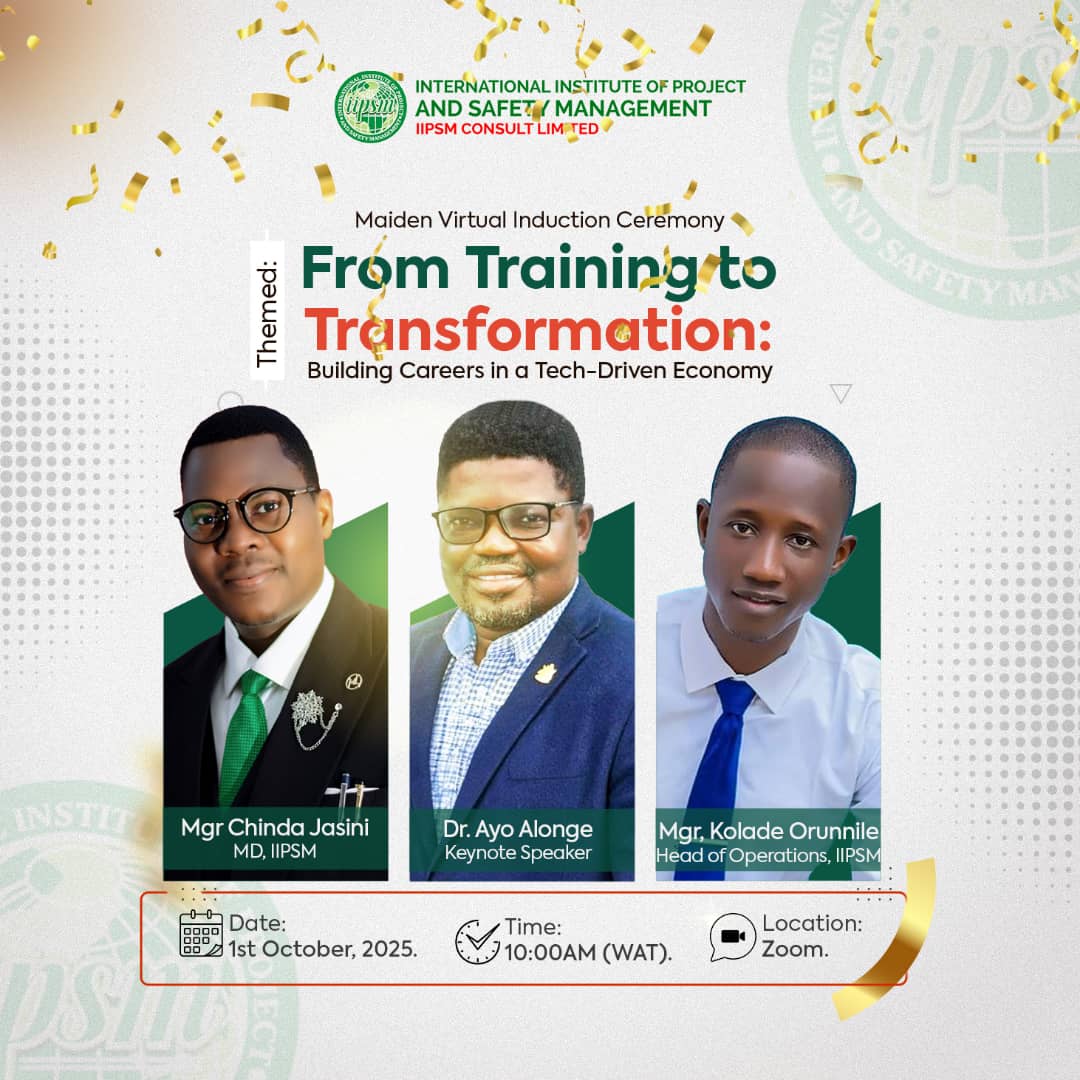
    On October 1st, 2025, a day that also marked Nigeria’s 65th Independence Anniversary, I had the privilege of serving as the Keynote Speaker at the Induction Ceremony of the International Institute of Project and Safety Management (IIPSM).

    The event was a celebration of growth, resilience, and purpose. It was also the first virtual induction ceremony of the Institute, and the Zoom platform was filled to capacity with young professionals, faculty members, and guests from across Nigeria. I joined the session from the United States, where I am currently pursuing another learning experience. It was a moment of reflection, pride, and gratitude as I shared insights on the theme, “From Training to Transformation: Building Careers in a Tech-Driven Economy.”


    Training Is Only the Beginning

    Every phase of life is a project — from education to career, marriage, and personal development. That was the central message of my keynote. I explained that project management is not just a discipline but a life philosophy — a structured, intentional way of setting goals, making plans, and achieving meaningful results.  Reflecting on my journey from a classroom teacher to l being a librarian to becoming university lecturer to a researcher and facilitator beyond africa  I emphasized that professional growth truly begins where training ends. As I said during the ceremony, “Training is the beginning; transformation is the destination.”


    The Power of Lifelong Learning

    When I completed my PhD, I thought since  I had reached the peak of my academic pursuit, I wont need to enroll for formal study any longer. But life soon reminded me that learning never truly ends. Years later, I enrolled in a project management program that completely reshaped my mindset, expanded my network, and opened new doors of opportunity. That experience taught me that lifelong learning is not about collecting certificates — it’s about expanding your capacity to think, staying curious, and building the resilience to adapt in a fast-changing world.  Those who continue to learn and evolve will always find relevance and opportunity. Growth requires curiosity, flexibility, and a willingness to keep improving.


    The Role of Technology in Growth

    I reminded the audience that technology has become the foundation of nearly every profession. When I once taught Application of ICT to Library Science at the University of Ibadan, many of the tools we now take for granted were still emerging. Today, technology shapes how we work, communicate, and learn. The world changes faster than any syllabus, and those who fail to adapt risk being left behind. Whether one is a librarian, engineer, or entrepreneur, digital competence has become essential for progress. Yet, technology alone cannot create excellence. The most successful professionals will always be those who blend their knowledge with human-centered qualities — empathy, collaboration, integrity, and creativity.


    Volunteering, Service, and Transformation

    Transformation is not measured by  the volume of what we learn, but by how we use that knowledge to serve others and humanity. I shared how some of my most meaningful opportunities began through volunteering.  From supporting projects with, Afrelib, UK, the Gideons International to leading youth and community initiatives in my church in the Netherlands and the United States, These volunteers services  have opens doors that money alone cannot. Sometimes, offering your time, energy, and creativity freely becomes the bridge to a larger purpose. Volunteering helps you see the world differently. It helps you look for problems and look for gaps that others might overlook. These are the starting points for meaningful innovation and transformation.


    From Training To Transformation:  Building a Career with Purpose

    In my message to the new inductees, I encouraged them to think globally but act locally. It is within our local communities that opportunities for real impact often emerge. I reminded them: there may not be jobs everywhere, but there are problems everywhere — and problems are opportunities in disguise. The real professional is not the one who waits for employment but the one who identifies gaps, solves problems, and creates value.  One of my guiding principles has always been: Look for problems, look for gaps, and see how you can fill them. Every solution you design, every innovation you introduce, and every life you touch becomes a testament to transformation through learning.


    Practical Advice for New Inductees

    During the keynote lecture, I shared some practical advice that can guide the new inductees in their journey of professional and personal growth:

    • Master Your Tools: Learn tools like Scrum, Jira, Miro, and Microsoft Teams.

    • Develop a Digital Mindset: Keep learning — sign up for webinars, workshops, and online courses.

    • Tell Your Story: Build your personal brand on news media like  LinkedIn. Share your achievements and reflections — the world needs to hear your story.

    • Think Globally, Act Locally: Seek global best practices, but apply them to solve local problems.

    • Stay Ethical: Integrity and honesty are key to sustained success.

    • See Life as a Project: Set goals, plan milestones, manage risks, and celebrate small wins.

    These principles are not just professional habits — they are life skills. They keep us relevant, grounded, and impactful in every season of life.

    A Call to Lifelong Impact

    As I concluded my keynote, I reminded the inductees that while training equips us with knowledge, transformation gives that knowledge meaning and direction. “The future belongs not to those who are merely trained,” I said, “but to those who transform through what they have learned.”

    Every certificate we earn should lead to positive action. Every skill should find expression in service. And every opportunity should become a platform for impact.

    True transformation goes beyond the workplace. It is about what we make work wherever we find ourselves — at home, in the community, in our profession, or in service to others. When we make it a habit to look for problems, identify gaps, and courageously create solutions, we move from success to significance. In doing so, we don’t just build careers — we build communities, strengthen institutions, uplift nations, and leave a lasting legacy.

    Keep learning. Keep serving. Keep transforming.
    Dr. Ayodele John Alonge


  • It’s a Seed: How One Book is Helping Readers Cultivate Purpose and Patience

    It’s a Seed: How One Book is Helping Readers Cultivate Purpose and Patience

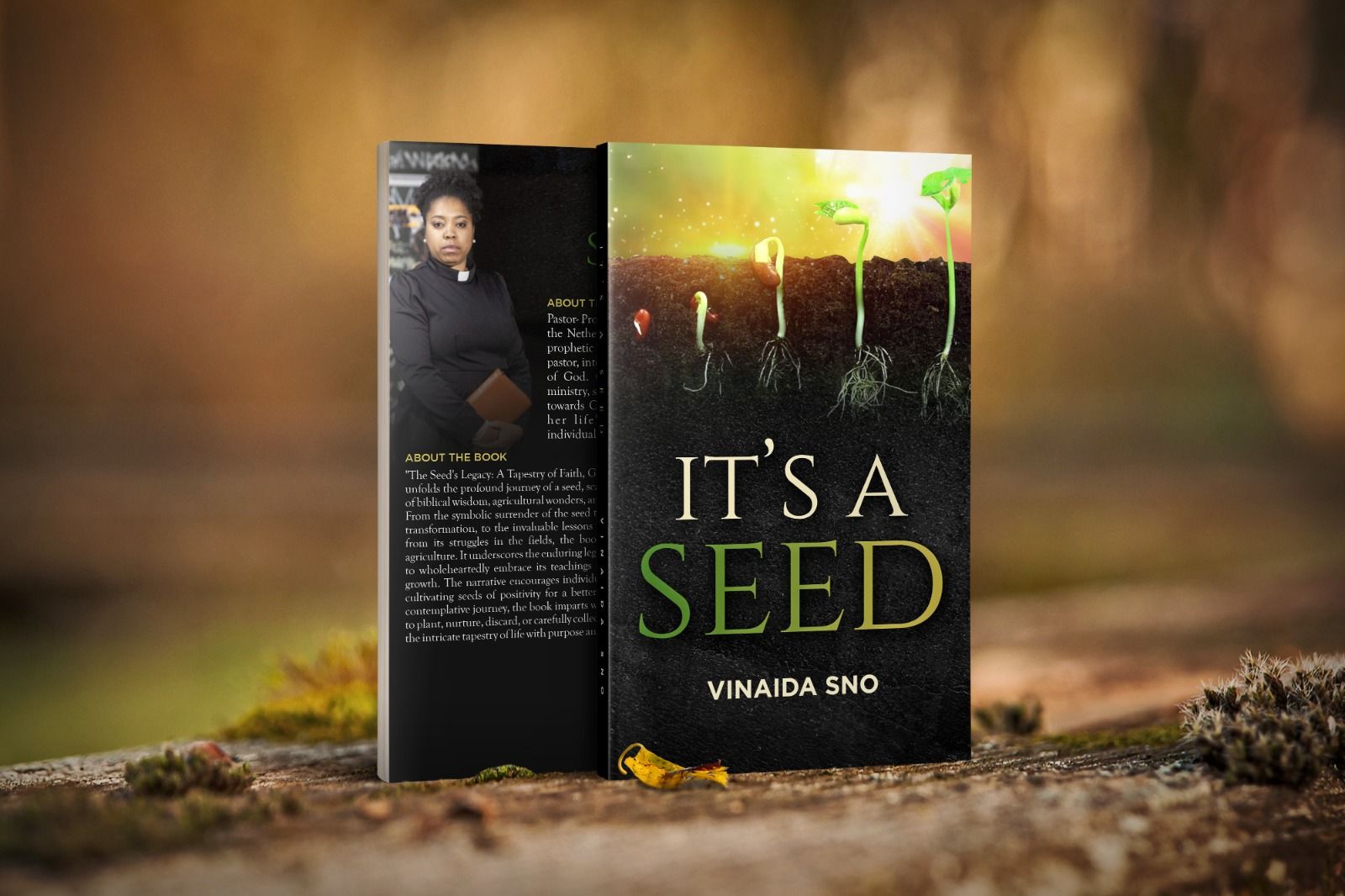
    A review of Vinaida Sno’s “It’s a Seed” by Dr. Ayodele John Alonge

    ___________

    Vinaida Sno’s new book uses the simple metaphor of a seed to explore faith, patience, and legacy, offering readers a reflective journey rooted in Scripture and everyday life.

    It was a true privilege to review It’s a Seed by Vinaida Sno. I have known Deaconess Vinaida through my wife, and as I’ve always believed, a friend of my wife is a friend of mine.  When I was first asked to write this review, I found myself questioning, “Why me?” After all, I’m not an ordained pastor, and this is a religious book.  But I realised that while I may not an ordained preacher from a pulpit, my work—teaching, researching, and supporting clegymen and leaders—has always been a form of ministry. As a scholar in Library and Information Science, I believe that our professions, when rooted in purpose, become platforms of service.

    Scripture reminds us, “Whatever you do, work at it with all your heart, as working for the Lord, not for human masters” (Colossians 3:23, NIV). That’s how I view my academic calling: an offering unto God.

    My training has taught me to assess books, ideas, and the systems that hold them. From that perspective, I found myself well-placed to engage with this book, not only as a Christian but also as a scholar.

    A Reader’s Reflection on It’s a Seed

    Vinaida Sno uses the metaphor of a seed to explore themes of faith, growth, and spiritual responsibility. From the start—“A seed represents the future, containing a destiny waiting to unfold” (Chapter 1)—she invites the reader to reflect on purpose and timing in a fresh way.

    The parables of the mustard seed and the Sower, often familiar to us, are presented with thoughtful commentary. Her style is pastoral without being preachy, reflective without being abstract. Sno’s ability to draw meaning from everyday life—from the mango tree of her childhood, to quiet seasons of waiting—grounds the book.

    As an educator, I appreciated the structure and flow of ideas. Though I would have welcomed more dialogue with contemporary theology or ecological insight, the book succeeds in staying accessible to a wide audience. It’s not written for the academic elite; it’s written for those who want to grow.

    Pastor Vinaida Sno with Dr Ayodele Alonge

    The Christian Reader’s Journey

    Reading this book prompted personal reflection. Each chapter felt like a nudge to check the condition of my own soil—what I’ve planted, what I’ve neglected, and what still needs care.

    In Chapter 2, Sno draws from Ecclesiastes 3:11—“He has made everything beautiful in its time.” Her reflection on dormancy as preparation rather than absence was particularly meaningful. She writes, “Dormancy mirrors times when preparation is taking place,” reminding us that unseen seasons still matter.

    She also challenges readers to examine their inner lives. “A seed of jealousy can grow into bitterness” (Chapter 4) is one such moment—a call to spiritual honesty and intentional living.

    Sowing for Eternity

    What stands out in It’s a Seed is its enduring relevance. It is not just a book to be read—it is a companion in prayer, a mirror to self, and a guide to godly living. When Sno declares, “Every act of faith, every prayer, and every moment of service is like planting a seed that advances God’s work on earth” (Chapter 7), she reminds us that our smallest obediences are not lost—they are eternal investments.

    The absence of academic footnotes may limit its utility for formal theological debate, but this is not a flaw—it is a choice. The book’s true strength lies in its devotional clarity and its call to live a life that honors the Gardener of our souls.

    Final Word

    “The seeds we plant today—through our faith, humility, and devotion—can grow into a legacy that reflects God’s love” (Chapter 5).

    I hope this book can also be translated into Dutch, knowing full well that the author is a Dutch speaker. The Dutch audience, too, can fully benefit from the profound insights and spiritual nourishment offered in this work.

    It’s a Seed is an ideal companion for individuals and small groups seeking a spiritual refresh, thoughtful guidance for personal growth, and gentle encouragement to cultivate a life of purpose. To begin your journey with this inspiring book, get your copy on Amazon: https://www.amazon.nl/dp/B0F7TGB99J


  • AI, Libraries, and the Future of Knowledge in Africa: Key Insights from ICSKS 2025

    AI, Libraries, and the Future of Knowledge in Africa: Key Insights from ICSKS 2025

    AI, Libraries, and the Future of Knowledge in Africa: Key Insights from ICSKS 2025
    By Musa Ntasikoi


    Introduction: A Continental Dialogue on AI and Sustainable Knowledge
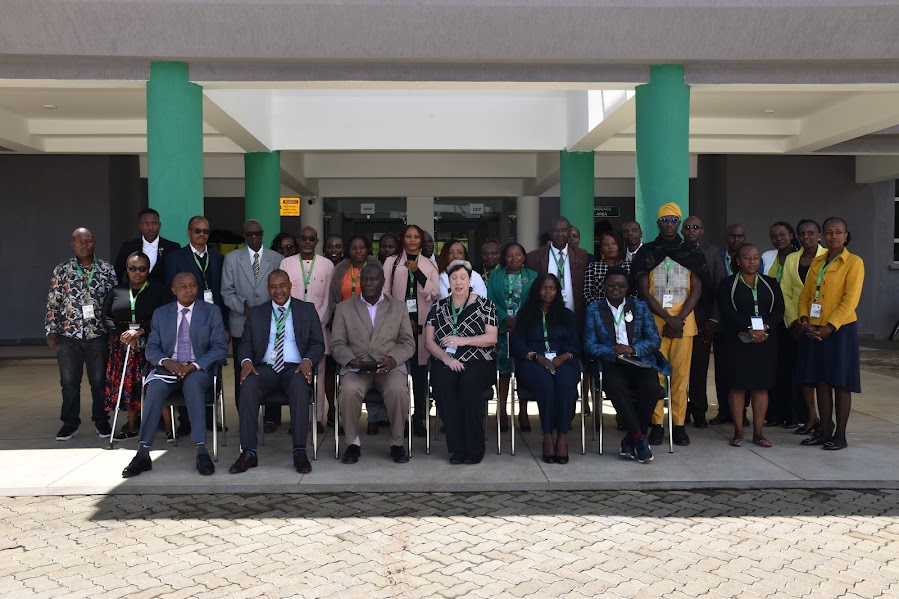
    From April 14–16, 2025, Karatina University in Kenya hosted the International Conference on Sustainable Knowledge Systems (ICSKS 2025), a landmark gathering of researchers, librarians, policymakers, and technologists. Under the theme “Artificial Intelligence, Libraries, and the Future of Sustainable Knowledge in Africa,” the event sparked critical conversations on ethical AI integration, cultural preservation, and Africa’s digital transformation. Supported by Karatina University, Optimsists Concept Services (Netherlands), and partner institutions, the conference underscored the urgency of balancing innovation with equity in shaping the continent’s knowledge ecosystems.


    Day 1: Laying the Foundation for Ethical AI

    Theme: AI for Inclusive, Ethical, and Sustainable Knowledge Systems

    The conference opened with a powerful keynote by Prof. Marlene Holmner, who challenged attendees:

    “AI must enhance access while upholding ethical frameworks. In a data-driven world, knowledge should serve humanity—not the other way around.”

    Key discussions included:

    • Transparency in AI: Prof. Peter Gatiti stressed embedding ethics at the core of AI systems, warning against treating fairness as an afterthought.

    • Inclusive Tools: Brenda Betty Kiema demonstrated AI-powered text-to-speech and adaptive interfaces revolutionizing library accessibility.

    • Green Libraries: Dr. Diana Atuase highlighted AI’s role in optimizing energy use and sustainable workflows.

    Research Spotlights:

    • AI-driven disease detection (University of Nairobi).

    • Smart agriculture solutions for food insecurity.

    • Preserving Isukha indigenous knowledge using AI.

    A recurring theme emerged: Africa’s youth need hands-on AI training. Dr. Charles Wahogo and Dr. Stephen Njoroge argued, “Students require practical AI tools to innovate and thrive in tomorrow’s workforce.”


    Day 2: Innovations and African Perspectives

    Theme: AI in Libraries, Archives, and Indigenous Knowledge

    Day 2 centered on balancing innovation with cultural integrity:

    • Indigenous Knowledge: Elphas Muruli cautioned against AI distorting heritage without community-led context.

    • Archival Transformation: Nigeria’s National Archives, as shared by Ese Eunice Anenene, showcased AI reducing retrieval times by 40%.

    • Policy Gaps: Isaiah Mang’eni and Dr. Ayodele John Alonge emphasized aligning AI with Africa’s social priorities to prevent digital divides.

    Provocative Questions:
    Naomy Mwaurah and Salome Kivuva asked, “Is AI a threat or ally? The answer hinges on capacity-building and trust.” Meanwhile, Ruth Kiilu championed AI-driven chatbots and semantic search to personalize library services while protecting user rights.


    Day 3: Envisioning the Future

    Theme: AI vs. the Library? Synergies and Tensions

    The final day explored AI’s dynamic role in redefining libraries:

    • Youth and Digital Activism: Dr. Victor Ntabo reframed Kenya’s Gen Z as “bottled energies using digital tools to challenge inequality.”

    • Sustainable AI: Ms. Lydia Chegem noted, “AI’s success depends on skilled professionals and policies, not just technology.”

    • Open Knowledge Sovereignty: Oyemike Victor Benson urged African libraries to lead the open knowledge movement, calling it “a fight for informational self-determination.”


    Key Resolutions and Calls to Action

    ICSKS 2025 concluded with seven urgent resolutions:

    1. Embed Ethics: Integrate equity and transparency in AI design.

    2. Curriculum Reform: Update LIS programs to include AI, data ethics, and governance.

    3. Indigenous Leadership: Let communities guide AI documentation of heritage.

    4. Green Libraries: Use AI for energy-efficient, eco-friendly practices.

    5. Inclusive Access: Adapt AI tools to African languages and rural contexts.

    6. Policy Frameworks: Governments must regulate AI to align with development goals.

    7. Invest in Infrastructure: Prioritize connectivity and human capital.


    A Final Word from the Conference Chair

    “Let this mark the start of a pan-African movement to humanize AI and empower libraries as digital age catalysts.”
    — Dr. Ayodele John Alonge


    Next Steps

    • Proceedings: Open-access publication of ICSKS 2025 papers.

    • Regional Hubs: Universities invited to collaborate on AI innovation hubs.

    • ICSKS 2026: Host applications open—contact icsksafrica@gmail.com.

    Stay Connected
    🌐 Website: www.icsksafrica.org | 📧 Email: icsksafrica@gmail.com | 🐦 Twitter: @ICSKS_Africa | 📌 Hashtag: #ICSKS2025


    Conclusion
    ICSKS 2025 wasn’t just a conference—it was a rallying cry for Africa to shape its AI future. As libraries evolve from analog repositories to digital hubs, the continent’s challenge remains clear: harness technology without erasing humanity. The question now is, How will your institution contribute to this vision?


    ICSKS2025 Photo Albums
    Relive some of the most memorable moments from the conference! Browse through the official photo albums below:

    📷 Day 1 Photo Album https://photos.app.goo.gl/tnqrdpxJkRVbphFm9

    📷 Day 2 Photo Album https://photos.app.goo.gl/reYSMjETFdCAH4oH9

    📷 Day 3 Photo Album https://photos.app.goo.gl/bnNsZxACuGzNXoCp8

    New chat
  • Become a Cybersecurity Pro in 12 Weeks: Elitech Hub’s Guaranteed Internship & Job Pathway (2025)

    Become a Cybersecurity Pro in 12 Weeks: Elitech Hub’s Guaranteed Internship & Job Pathway (2025)

    In Nigeria’s rapidly evolving digital landscape, cybersecurity professionals are in unprecedented demand. With cyber threats rising and organizations scrambling to protect their assets, there’s never been a better time to build a career in this high-growth field.

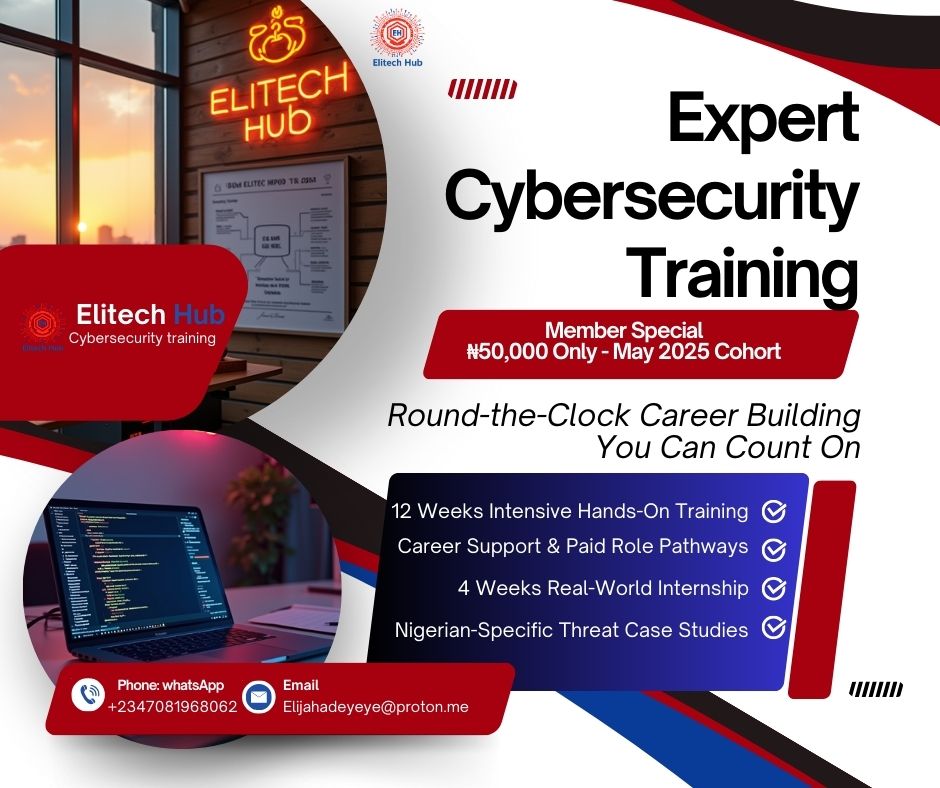
    Elitech Hub’s Cybersecurity Professional Program isn’t just another training course—it’s a complete career accelerator. Over 12 weeks of immersive training and a 4-week internship, you’ll gain the skills, experience, and industry connections to thrive in cybersecurity.

    Here’s why this program stands out:
    ✅ Nigeria-Focused Curriculum: Learn through local case studies like the Bureau of Statistics incident.
    ✅ Premium Resources Worth ₦80,000+: Access courses from Udemy, Coursera, and Simplilearn.
    ✅ Guaranteed Internship: Work on real-world projects with mentorship from experts.
    ✅ Paid Job Opportunities: Top performers earn ₦100,000/month roles or international remote work.


    Why Choose Elitech Hub’s Cybersecurity Program?

    1. Comprehensive Training for Real-World Impact

    Our 3-phase curriculum is designed to take you from foundational knowledge to advanced technical expertise:

    • Phase 1: Foundations of Cybersecurity
      Master core concepts like threat landscapes, network security, and digital hygiene.
      (Key modules: Cybersecurity Fundamentals, Social Engineering Defense, NIST Frameworks)

    • Phase 2: Technical Skills Development
      Dive into ethical hacking, digital forensics, and incident response.
      (Key modules: Penetration Testing, SOC Operations, Malware Analysis)

    • Phase 3: Professional Development
      Build your portfolio, optimize your LinkedIn profile, and prepare for interviews.

    2. Hands-On Internship Experience

    During the 4-week internship, you’ll tackle projects like:

    • Security audits for Nigerian SMEs

    • Developing phishing awareness campaigns

    • Building low-cost Security Operations Centers (SOCs)

    Outcomes:

    • Portfolio pieces to showcase to employers

    • Mentorship from industry professionals

    • Priority access to paid roles and international opportunities

    3. Premium Resources Included

    Your enrollment unlocks ₦80,000+ worth of courses:

    1. Cybersecurity Fundamentals 

    2. CompTIA Security+ Prep 

    3. Digital Forensics Masterclass

    4. Ethical Hacking 


    Who Should Apply?

    This program is perfect for:

    • Recent Graduates eager to enter a high-demand field

    • IT Professionals looking to specialize in cybersecurity

    • Career Changers with technical aptitude

    • Business Leaders responsible for organizational security

    Prerequisites:

    • Basic computer literacy

    • Strong problem-solving skills

    • Reliable internet connection


    Program Investment: Unbeatable Value

    Plan Price Key Benefits
    Standard ₦75,000 Full curriculum, group mentorship, internship eligibility, certificate
    Premium ₦120,000 1:1 mentorship, resume optimization, job search guidance
    Executive ₦180,000 Guaranteed internship, networking introductions, extended post-program support

    Founding Members Offer:
    🔥 First 15 Participants Pay ₦50,000 (Save ₦25,000!)
    Deadline: 15th of May


    How to Apply

    1. Contact Us: WhatsApp +2347081968062 or DM @elitechub on Instagram.

    2. Secure Your Spot: Choose your plan and complete enrollment.

    3. Start Learning: Begin your journey in May 2025!


    FAQ

    Q: Is the program fully remote?
    A: Yes! All training and internships can be completed online.

    Q: What if I can’t pay upfront?
    A: Flexible installments are available for Premium and Executive plans.

    Q: Are there job guarantees?
    A: Top performers secure paid roles, but success depends on your effort and performance.


    Don’t Miss Your Chance to Transform Your Career!

    With limited slots available, now is the time to act. Join Nigeria’s most comprehensive cybersecurity program and gain:

    • In-demand skills aligned with local and global threats

    • Industry-recognized certifications

    • Direct pathways to employers

    • Click HERE to visit Elitech Hub website

    👉 WhatsApp +2347081968062 to Apply Today!


    About Elitech Hub
    Founded by cybersecurity expert Adeyeye Elijah, Elitech Hub is committed to closing Nigeria’s cybersecurity skills gap through practical, hands-on training. Secure roles in top organizations—you could be next!

  • LISCON 2025 Call for Papers: Exploring Open Access in the Age of the 5IR

    LISCON 2025 Call for Papers: Exploring Open Access in the Age of the 5IR

    Open Access and the 5th Industrial Revolution: Call for Engagement at LISCON 2025

    In an era defined by rapid technological innovation and a renewed focus on human-centric development, the 5th Industrial Revolution (5IR) is ushering in unprecedented opportunities and challenges for knowledge creation, dissemination, and accessibility. At the heart of this transformation is Open Access (OA)—a paradigm that promotes unrestricted access to scholarly research and educational resources, enabling inclusive and equitable participation in global knowledge ecosystems.

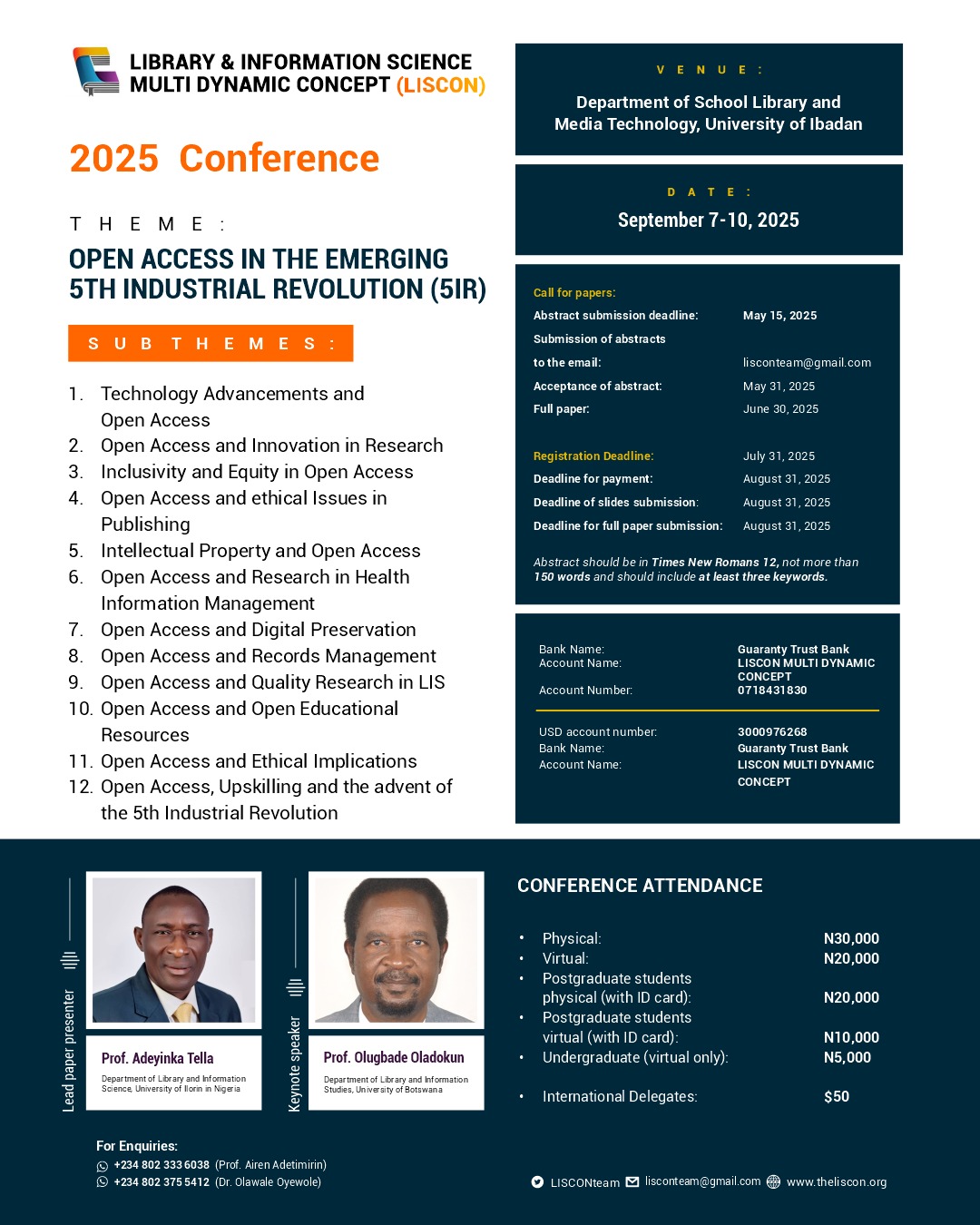
    It is against this backdrop that the Library and Information Science Multi-Dynamic Concept (LISCON) proudly announces its 2025 International Conference, themed:

    “Open Access in the Emerging 5th Industrial Revolution (5IR)”

    Scheduled to take place from September 7–10, 2025 at the Department of School Library and Media Technology, University of Ibadan, Nigeria, the conference will adopt a hybrid format, combining both physical and virtual participation to accommodate a diverse, global audience.


    Thematic Scope and Relevance

    The conference theme reflects the urgency of interrogating Open Access through the lens of the 5IR—a period characterized by the fusion of artificial intelligence, robotics, biotechnology, and human-centered design. In this new industrial paradigm, Open Access is more than a publishing model; it is a social and ethical imperative that shapes how knowledge is produced, shared, and preserved.

    The conference invites critical engagement with the following subthemes:

    1. Technology Advancements and Open Access

    2. Open Access and Innovation in Research

    3. Inclusivity and Equity in Open Access

    4. Open Access and Ethical Issues in Publishing

    5. Intellectual Property and Open Access

    6. Open Access and Research in Health Information Management

    7. Open Access and Digital Preservation

    8. Open Access and Records Management

    9. Open Access and Quality Research in LIS

    10. Open Access and Open Educational Resources (OER)

    11. Open Access and Ethical Implications

    12. Open Access, Upskilling, and the Advent of the 5IR

    These themes invite scholars, practitioners, and policymakers to critically reflect on how Open Access can serve as a catalyst for innovation, social justice, and sustainable development.


    Important Dates

    • Abstract Submission Deadline:  May 15, 2025

    • Notification of Acceptance: April 28, 2025

    • Full Paper Submission: June 30, 2025

    • Registration Deadline: July 31, 2025

    • Deadline for Payment & Presentation Slides: August 31, 2025

    • Final Paper Deadline: August 31, 2025

    Abstracts should not exceed 150 words, be formatted in Times New Roman, 12-point font, and include at least three keywords. Submissions should be sent via email to: lisconteam@gmail.com


    Keynote and Featured Speakers

    The conference will feature distinguished keynote presentations by:

    • Prof. Adeyinka Tella, Department of Library and Information Science, University of Ilorin, Nigeria

    • Prof. Olugbade Oladokun, Department of Library and Information Studies, University of Botswana (Virtual)

    Their contributions will anchor the conference dialogue around evidence-based strategies for embedding Open Access in institutional, national, and global knowledge infrastructures.


    Participation and Registration

    The conference is open to scholars, students, and professionals in Library and Information Science and allied fields. Registration details are as follows:

    Category Format Fee
    International Delegates Virtual $50
    Postgraduate Students Physical N20,000
    Postgraduate Students Virtual N10,000
    Undergraduate Students Virtual N5,000
    General Participants (Local) Physical N30,000

    Payment Information

    • Bank Name: Guaranty Trust Bank
      Account Name: LISCON Multi Dynamic Concept
      Naira Account: 0718431830
      USD Account: 3000976268

    A Call to Action

    LISCON 2025 invites critical papers, case studies, and theoretical reflections that explore how Open Access can be leveraged to bridge knowledge divides, enhance research quality, and support ethical practices in scholarly communication. As the world grapples with the complex dynamics of the digital age, this conference offers a timely and necessary forum for reimagining the role of Open Access in shaping the future of libraries, academia, and information systems.


    • For further enquiries, please contact:
      Prof. Airen Adetimirin: +234 802 333 6038
      Dr. Olawale Oyewole: +234 802 375 5412

    Join the discourse. Shape the future. Engage with Open Access in the 5IR at LISCON 2025.

  • Honouring a Librarian-Scholar at 40

    Honouring a Librarian-Scholar at 40

    Honouring a Scholar at 40: Celebrating the Impact and Journey of Dr. Adeoye Azeez Adebamgbola

    On April 11, 2025, the academic community in Nigeria and beyond celebrates a distinguished scholar and professional — Dr. Adeoye Azeez Adebamgbola — as he marks his 40th birthday. This milestone provides an opportune moment to reflect on a career marked by academic excellence, professional innovation, and meaningful contributions to knowledge, education, and society.

    A native of Oyo town in Oyo State, Dr. Adeoye’s educational trajectory reflects a commitment to intellectual growth and service. He began his academic journey at the Federal College of Education (Special), Oyo, and proceeded to the University of Ibadan, where he earned his PhD in 2024. Throughout this journey, his work has consistently demonstrated scholarly rigour and practical relevance.

    Currently serving as a Senior Librarian at the Federal University of Health Sciences, Ila-Orangun (FUHSI), Dr. Adeoye has played a pivotal role in the development and institutionalisation of the university’s library system. As a founding member of the library team, he has overseen critical components of its establishment, including staff capacity development, orientation programmes for new students, research support services, and the implementation of national grant-funded projects.

    In addition to his work at FUHSI, Dr. Adeoye holds a teaching appointment at Lead City University, where he lectures in areas such as library automation, ICT applications in library practice, academic writing, and soft skills development. His teaching philosophy emphasizes both technical competence and critical thinking, and he remains deeply engaged in mentoring undergraduate and postgraduate students, as well as academic staff.

    Dr. Adeoye’s professional impact is further underscored by numerous recognitions and awards. He received a State Commendation during his National Youth Service Corps (NYSC) year, was honoured by the Association for Information Science and Technology (ASIS&T) for his global contributions, and has secured competitive research grants from the Tertiary Education Trust Fund (TETFund). Noteworthy among his projects is a digital literacy initiative designed to reduce cybercrime among secondary school students in Ila-Orangun, as well as an ethnobotanical research project focused on curating indigenous herbal knowledge for community health interventions.

    His professional interests lie at the intersection of digital librarianship, scholarly communication, indigenous knowledge systems, and capacity building in research and soft skills. From his early engagement as a student librarian at the Institute of African Studies, University of Ibadan, to his leadership in library technology training at FUHSI, Dr. Adeoye has demonstrated a sustained commitment to enhancing knowledge infrastructures in Nigeria.

    As Dr. Adeoye turns 40, his story offers a compelling example of how librarianship, scholarship, and digital innovation can converge to shape more inclusive, knowledge-driven societies. His trajectory is not only a personal achievement but also an inspiration to the next generation of African scholars and information professionals.

    The academic world celebrates this milestone, confident that his next chapter will continue to expand the boundaries of knowledge, learning, and societal impact.

    Happy Birthday, Dr. Adeoye Azeez Adebamgbola. Your legacy continues to illuminate the path for many.

    — Published by Optimistic Scholar Blog | April 2025